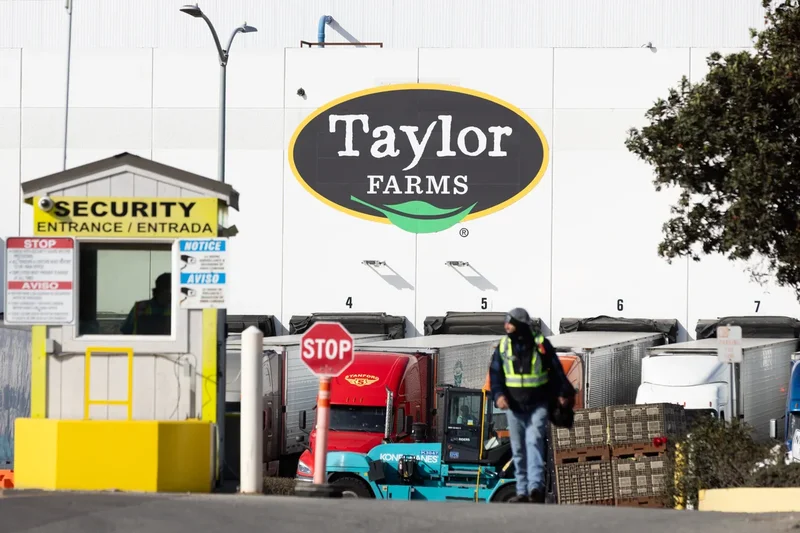
The numbers of the U.S. cyclospora outbreak are sobering – more than 22,000 have fallen ill and two have died from the diarrhea-inducing parasite found in lettuce shipped to retail stores and fast-food restaurants across the country, including Walmart and Taco Bell, according to the Food and Drug Administration.
The company at the center of the outbreak, Taylor Farms, is linked to early cases of the outbreak, although the Food and Drug Administration has not linked all cyclospora cases to the California-based producer.
Taylor Farms absorbed another blow this weekend when cases of jalapeno-borne salmonella were linked to it.
Can Taylor Farms survive these high-profile incidents? Marketing and business experts believe it can, but only if the company is intentional about fixing more than its image.
“The companies that recover best from a crisis are those that try to explain why the company became better because of the crisis,” said Scott Keever, CEO of public relations firm Reputation Pros.
Simply put, the key to the Taylor Farms crisis is swift action and transparency, experts said.
The reputational impact
While Taylor Farms has been linked to some of the cyclospora cases across the country, the Food and Drug Administration – which tracks outbreaks and traces their origins – has not said that the company is responsible for all cases.
That won’t matter to customers, though, Keever told The Independent in an email.
“Consumers now associate the Taylor Farms brand with salmonella, cyclospora and recalls,” he said. “Once they've established such an association, the company must provide them with enough evidence to change that perception and shift from fear to trust.”
Escaping that association is difficult, but it can be done if Taylor Farms rehabilitates itself through action and not just words, said Jenna Guarneri, CEO of New York City-based JMG Public Relations.
“The brand's reputation will ultimately be shaped less by what it says during the crisis and more by what it consistently does after it,” she said.
Companies that overcame outbreaks
The road ahead for Taylor Farms is long and arduous, experts said, but the company can take comfort knowing that other brands have survived similar situations.
Chipotle comes to mind for Guarneri. The fast-casual Mexican brand was the source of an E. coli outbreak in late 2015 that hammered the brand’s reputation and contributed to the company’s stock losing half its value by 2018.
“The company had to demonstrate that it was taking the issue seriously and make food safety a visible part of its business going forward,” she told The Independent in an email. “That experience shows that a crisis does not necessarily have to permanently damage a brand, but recovery requires more than a strong PR campaign.”
More than three decades before the Chipotle outbreak, drugmaker Tylenol faced a sobering situation – someone in the Chicago area was adding deadly doses of potassium cyanide to containers of Extra Strength Tylenol capsules on store shelves.
The brand responded with transparency and action, eventually rehabilitating its image, said Cyndee Harrison, founder of marketing and public relations agency Synaptic.
“Tylenol is a use-case in committing themselves to addressing an issue proactively, communication (over-communication), and prioritization of consumer health and safety,” Harrison said in an email to The Independent.
The right approach means action
Experts agreed that Taylor Farms’ future will depend on how much effort it puts into changing its safety procedures and how it communicates those changes to the public.
At present, Taylor Farms’ updates about cyclospora and the resulting recall include a section about its commitment to food safety.
The company notes it invests $200 million every year into food safety and uses “the latest FDA-validated testing method for cyclospora.”
Harrison believes the company needs to get more granular if it wants to pursue a full reputation recovery.
“They need to share the story of what they've learned and what has changed in their approach to processing produce safely,” she said. “This story should be told without defensiveness or excuse-making, just ownership of the process of continuously improving what they do and a commitment to continuing to deliver fresh and safe products.”
Coaxing back customers
Customers are expecting three key things from Taylor Farms, Gaurneri said: accountability, transparency and proof of significant changes at the operational level.
As the company repairs its reputation, it needs to put the customer at the center of its communication strategy.
“Consumers don't expect a company to be perfect, but they do expect it to be honest and accountable,” Guarneri said. “The brand should focus on giving consumers facts, showing them what is changing and then letting its actions reinforce the message.”
The company cannot undervalue effective communication, either, she said. They have to be unafraid to accept responsibility and avoid corporate jargon if they want to win back their customers’ trust.
“That means being transparent about what happened with these outbreaks and recalls, addressing concerns directly and avoiding corporate-speak that can make a crisis feel even more disconnected from the people affected by it,” she said.
Soothing supply chain fears
Taylor Farms’ supply-chain partners need reassurances that the company is doing everything it can to avoid another outbreak in the future. Those partners include farms from which the company buys its product and the brands it sells its food to.
Generally speaking, Taylor Farms should win back its supply-chain partners’ trust quicker than customer trust, said Mary Lou Panzana, a communications expert who has held roles as a senior employee communications leader at Bayer, Pfizer and Prudential.
“I would expect business-to-business trust to recover faster than consumer trust if Taylor Farms communicates well and demonstrates meaningful corrective action,” she said. “Buyers have contracts, quality standards, direct relationships, and access to information that consumers don't.”
Yet while supply-chain trust may be won back quicker than customer trust, it won’t be easy.
Taylor Farms needs to consider everything from audits of where its vegetables come from to how it handles lawsuits, said Amaury Allard, founder of global public relations and reputation management firm Elyseum Influence.
“Buyers will also be watching how Taylor Farms handles litigation,” Allard said in an email to The Independent. “A company that fights every claim in court sends a very different signal to procurement teams than one that settles quickly and visibly changes practice.”
Timeline to trust
In general, there’s no way to know how long it will take for Taylor Farms to return to pre-outbreak levels of trust with customers and its supply chain.
That being said, experts predict that rebuilding trust with customers could take as long as two years, while the timeline for supply-chain partners is shorter.
“Buyers of Taylor Farms products could take as long as six to 12 months to regain confidence,” Keever said. “Consumer trust may require 12-24 months to fully recover from the situation, provided there are no other significant problems with the company.”
Up to two years is a realistic timeline for Jay Aldebert, chief growth officer at business analysis and consulting firm International Services Inc.
“Realistically, this is 12 to 24 months of clean, verifiable operation before it stops driving purchasing decisions,” Aldebert told The Independent in an email.
If Taylor Farms handles the next two years well, it will have learned a valuable lesson, Panzano said.
“Trust is built in drops and lost in buckets,” she said. “Rebuilding it means filling the bucket again, one credible action at a time.”
The Independent has contacted Taylor Farms for comment.