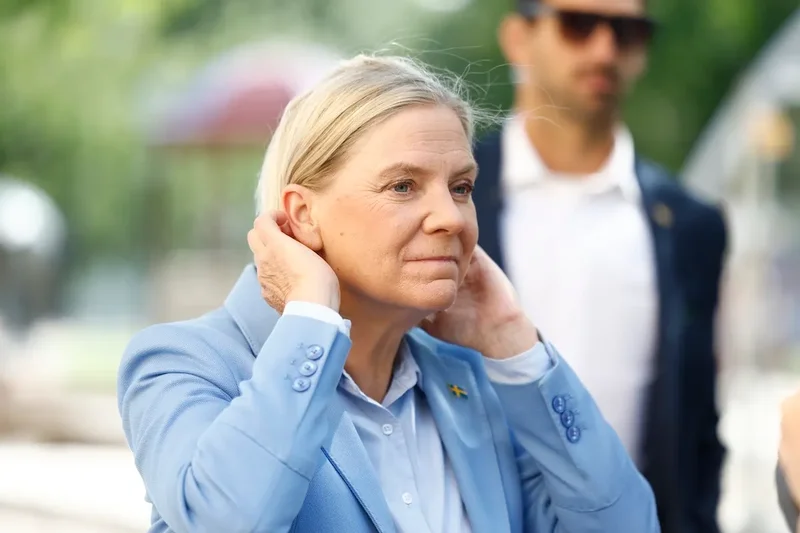
In an interview with Radio Sweden, Magdalena Andersson confirmed that she aimed to put a new law before parliament which would mean that people who had already submitted applications for citizenship before the new law came into force on June 6th should have their case decided on the basis of the law that was in force when they applied.
Asked if the promise from her party's migration spokesperson Ida Karkiainen would still stand after an election, Andersson said simply, "Yes, it does".
If a new government brought in transitional rules, the roughly 100,000 applicants for citizenship who applied before the new rules came into force on June 6th but who have not yet received a decision will have their cases decided under the old rules, meaning they will only have to have lived in Sweden five years rather than eight and will not have to meet language, civics knowledge and maintenance requirements.
The Fair Transition campaign has intensively lobbied politicians from all parties, first to vote for transitional rules when the bill went before parliament and then to bring the rules into force under a new government.
Andersson said her party also wanted to extend the solution to the issue of teen deportations so that it also covers children of long-term residents of Sweden who are over the age 21-years-old and was also against the proposal to revoke existing permanent residency.
The government and Sweden Democrats have said that they want to change this policy so instead of having to leave Sweden as a present for your 18th birthday, it will come when you turn 21," she said. "We don't think that is a solution to the problem. Instead, we want to have a completely different law where you see that people have really grown up here, who speak Swedish, who have got their education, have their family here, should be able to stay in Sweden also when they have turned 21."
She also said she was opposed to the plan to revoke existing permanent residencies, which Sweden Democrat migration spokesperson Ludvig Aspling told The Local earlier this month the party still hoped to drive through after the election.
"Once you have a permanent residency, that's permanent. You can't just reverse it," Andersson said. "But also looking forward, we want people that come to Sweden and get a temporary residency, that they should have a safer journey up until they have become Swedish citizens."
But otherwise, she said that the Social Democrats largely supported the government's tightening of migration rules, which she said had been necessary to reduce the number of migrants coming to Sweden so that it is easier for foreigners who are already living in the city to be integrated.
The difference between the Social Democrats and the right-wing parties was more in integration, she said.
"When it comes to people who want to come to Sweden who are not here yet, we have fairly similar policies, but the difference is how we view people who are in Sweden," she said.
"We want to have an inclusive society where people have moved to Sweden, who have the right to stay here, who have permanent residence here, who have grown up here, that they should feel safe, that they are welcome to stay in Sweden, and that they can be part of our community."
She said that she believed that the vast majority of Swedish citizens and also MPs in the Swedish parliament supported moves to tighten migration.
"The reason for that is that we have taken a disproportionately big responsibility for people that need asylum, and we have to focus on making sure that those people that already are here and have the right to stay here, but who still don't have a job, still don't speak Swedish, who still have problems with housing, to make sure that they can learn Swedish, get a job, get good housing, and be part of our society."
On work permits, Andersson said she opposed the minimum salary requirements imposed by the government – even though she said her party had voted for them – and instead wanted to return to a system where unions and employers agreed on which skills and jobs should be eligible for work permits.
"I think these thresholds are the wrong way of going forward. We have voted 'yes' to them in Parliament, but we want to have a completely different system," she said.
"If there's a lack of competence in an area, we think people should be able to come to Sweden and work. But if there is not a lack of competence, and you can find it in Sweden, then there's probably some reason why employers want to have people coming from third countries."
She said that in the past, work permit holders had sometimes had "very low wages" and "very bad living conditions", and that her party wanted to stop that.
"If there's a lack of competence in Sweden, people are welcome. If not, well, then not."