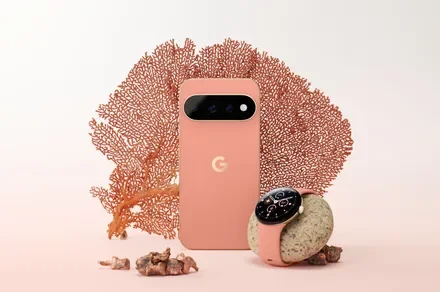
Google’s newest Pixels are finally here, and the Pixel 11 Pro and Pro XL are doing most of the heavy lifting this time around. While the standard Pixel 11 settles for a modest refresh, with a faster chip, double the base storage, and faster wireless charging, the two Pro models step up with a brighter, more durable display, better cameras, and HiLight, an array of LED lights around the flash that glow when the phone is face down, signaling whether it’s worth reaching for or better left alone.
A faster Tensor G6 chip and a storage bump for the Pro
Both Pro models move to Google’s new Tensor G6 processor and Titan M3 security chip, up from the Tensor G5 and Titan M2 in last year’s models. Google says the new chip delivers up to 20% better power efficiency, 25% faster browsing, and 15% faster app loading compared to the Tensor G5, alongside a 50% more powerful TPU that also drives features like the faster Instant Night Sight captures. More on that later. Titan M3 adds post-quantum cryptography to the security stack, which Google says meets the same certification standard used for SIM and bank cards.
Storage sees a jump on the Pixel 11 Pro, with the base tier doubling from 128GB to 256GB, while the Pro XL’s base model holds steady at 256GB. Although earlier reports suggested Google would cap storage at 512GB this year, the 1TB option has survived and remains available on both phones. Leaks about the RAM, however, have proved accurate. All configurations of the Pixel 10 Pro and Pro XL shipped with 16GB of RAM, but the Pixel 11 Pro and Pro XL start at 12GB on their base storage tier, with 16GB reserved for the 512GB and 1TB configurations.
A smaller battery, but faster wireless charging
Battery capacity has also shrunk slightly on both models. The Pixel 11 Pro now packs a 4,850mAh cell, down from 4,870mAh on the Pixel 10 Pro, and the Pro XL drops from 5,200mAh to 5,115mAh. It’s a marginal change, but still worth calling out, as it’s the second spec this generation to move in the wrong direction.
Charging specs are largely unchanged this year, with one exception. Wireless charging on the Pro has jumped from 15W to 25W, now matching the Pro XL’s 25W, which remains unchanged from last year. Google claims a 29% average wireless charging speed improvement on the Pro and 17% on the Pro XL over their respective predecessors, based on its own Pixelsnap charger testing. That 17% figure on the Pro XL stands out, since its peak wireless charging wattage didn’t change at all, suggesting the gain comes from efficiency improvements elsewhere.
Wired wattage remains the same at 30W on the Pro and 45W on the Pro XL, though Google claims a minor speed boost here as well. It says the Pro XL now reaches 75% in 30 minutes, an improvement over the 70% in 30 minutes claim it made last year, but with wattage unchanged, that gain is likely due to the smaller battery filling up faster. Both phones also gain a new Extreme Charging Mode, which devotes the phone’s performance entirely to charging for a faster boost. The Pro models also get a vapor chamber that pulls heat away from the processor and battery to keep performance steady during charging and sustained use.
A brighter display and a much longer zoom
While charging is a mixed bag, the display on both models is a clear upgrade. Google has bumped peak brightness from 3,300 nits to 3,600 nits and, while the devices still feature Gorilla Glass Victus 2, the company has added an anti-scratch shield that reportedly improves scratch resistance by over 2x compared to last year’s models. The rest of the display specs carry over unchanged, including the 6.3-inch 1280 x 2856 panel on the Pro and the 6.8-inch 1344 x 2992 panel on the Pro XL, both still running at 1-120Hz refresh rate.
The camera setup brings a mix of upgrades and unchanged hardware. The main camera holds at 50MP with an f/1.68 aperture and a 1/1.3-inch sensor, though Google claims 2x optical quality improvements over the Pixel 10 Pro. The 48MP ultrawide camera pairs an f/1.7 aperture with a 1/2.51-inch sensor and autofocus. The telephoto lens is where the real change sits. While it’s still 48MP with 5x optical zoom, it now has a larger 1/1.95-inch sensor that Google says pulls in 32% more light than before, and Pro Zoom climbs to 120x, up from 100x on the Pixel 10 Pro and Pro XL.
The 42MP selfie camera is unchanged, but Google has introduced two new camera models to the Pro models this year. The devices now offer Pro controls for manual adjustments and a High-Res mode that captures stills at the full 50MP resolution instead of the binned default. Instant Night Sight, which cuts down time in low light, is also exclusive to the Pro models. Video gets a boost too, with Pro Stable Video and 8K recording powered by Video Boost.
A refreshed design and new Pixel-exclusive features
Design-wise, the camera bar has been reworked with edge-to-edge glass flowing into the metal frame. The color options get a near-total refresh too, with Canyon, Olive, and Fog replacing last year’s Moonstone, Porcelain, and Jade. Obsidian is one name that carries over, but it now features a matte finish. Both the Pixel 11 Pro and Pro XL also gain HiLight, a new array of ambient LEDs around the flash that glows when the phone is face down, useful for flagging calls from favorite contacts or showing when Gemini is listening.
On the software front, the Pixel 11 Pro and Pro XL ship with Android 17, which brings a handful of new tools. Magic Capture automatically crops and unblurs shots in one tap, Camera Looks adds custom film-style presets, and Circle to Search is now built directly into the Pixel Camera app. Gemini Intelligence goes further too, letting the phones handle routine tasks like ordering groceries, booking a ride, or even calling businesses on your behalf, with a live transcript so you can watch the conversation unfold or take over at any point.
Live Translate now works on videos, podcasts, and voice messages as you watch or listen, and a new sign language translation feature lets the Pixel Camera convert sign language into text in real time. On the security side, Call Screen and Scam Detection work together to flag suspicious calls and texts, and voice-to-text has been updated to strip filler words like “umm” automatically as you dictate.
One perk shrinks alongside all this, though. The free Google AI Pro trial bundled with a Pro purchase, which includes expanded Gemini usage limits, 5TB of cloud storage, and Google Health Premium, drops from a full year to six months.
Both phones keep their IP68 rating and aluminum frame construction, and connectivity holds steady too, with Wi-Fi 7, Bluetooth 6, UWB, and USB-C 3.2 all carrying over from last year. The physical footprint hasn’t changed either, and the Pixel 11 Pro measures the same 6.0 x 2.8 x 0.3 inches, while the Pixel 11 Pro XL keeps the 6.4 x 3.0 x 0.3-inch footprint. Weight ticks down slightly, from 7.3 ounces to 7.2 ounces on the Pro and from 8.2 ounces to 8.0 ounces on the Pro XL, though neither change is close enough to notice in the hand.
Pricing and availability
The Pixel 11 Pro and Pro XL are now up for pre-order on the Google Store, Amazon, and Best Buy, with the entry-level 12GB+256GB configuration priced at $1,099.99 and $1,299.99, respectively. The devices are set to go on sale next week on August 20.