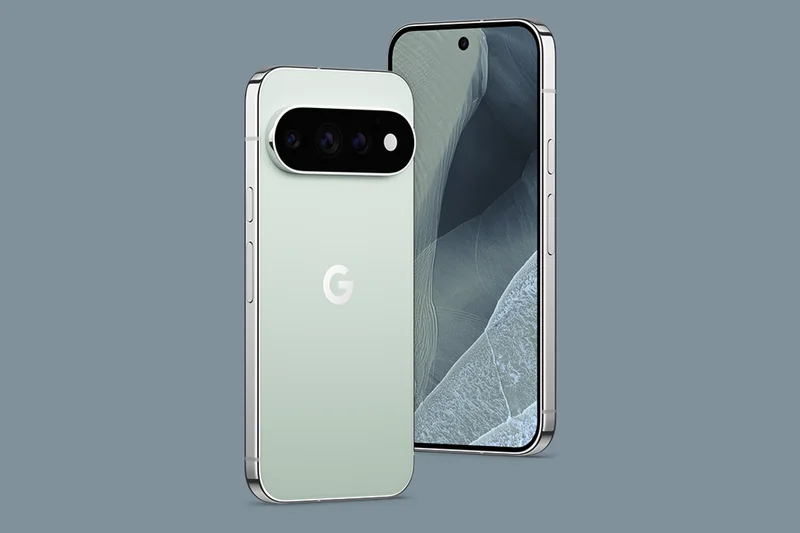
Google has just unveiled its latest generation of smartphones at its Made By Google event, launching the Pixel 11, Pixel 11 Pro and Pixel 11 Pro XL. They’ve all been refreshed for 2026 with some neat new features.
Running on the company’s new Tensor G6 processor, all three phones feature a redesigned camera bar, improved displays, longer battery life and improved cameras, with plenty of new Gemini-powered tricks up their sleeve. But it’s a new camera feature called Magic Capture that I’m most excited about.
Here’s everything you need to know about the Google Pixel 11, Pixel 11 Pro and Pixel 11 Pro XL, including their price and release date, design, cameras, battery life and more.
Read more: **Best Android phones, reviewed **
The Google Pixel 11 Pro and Pixel 11 Pro XL are as recognisably Google as ever, boasting that iconic Pixel camera bar on the rear. Except it’s now a more seamless slab of edge-to-edge glass that blends into the metal frame.
The biggest addition to the phone’s design, however, is something called HiLight, which is basically a feature borrowed from rival Android phone maker Nothing. Similar to Nothing’s Glyph Interface, there are now ambient LED lights built around the camera flash, which glow in different colours when the phone is placed face down. You can assign custom colours to your favourite contacts, letting you see who’s calling without picking up your phone. The lights also pulse to show when Gemini is listening, thinking or responding.
On the front, the Pixel 11 Pro features a 6.3in LTPO OLED Super Actua display and the Pro XL boasts a larger 6.8in panel. Both feature an adaptive 1Hz–120Hz refresh rate and reach a peak brightness of 3,600 nits, which Google says is 9 per cent brighter than before, while the new anti-scratch coating promises more than twice the scratch resistance.
In terms of the triple-camera system, Google has upgraded the 50MP main camera to a new, larger 1/1.3in sensor, and there’s a new 48MP telephoto lens that Google says pulls in 32 per cent more light than before and can now zoom all the way up to 120x. The Instant Night Sight feature also promises to capture low-light photos up to 4.5 times faster. Google’s Pro Stable Video feature can also record stabilised footage at up to 8K. On the front, there’s a pretty hefty 42MP ultrawide selfie camera with autofocus.
But the feature I cannot wait to test out is Google’s Magic Capture mode. Instead of having to perfectly time the press of the shutter button, you just tap once and your Pixel captures the moment as both a video and a series of high-quality photos, automatically cropping and unblurring the stills so they’re ready to cherish and share. As someone who always seems to capture my family with their eyes closed, or my dog looking away at the most inopportune moment, this is going to be an absolute lifesaver. It’s a feature that’s also coming to the regular Google Pixel 11.
There are loads of new Gemini features, too. Gemini’s new voice-to-text capabilities automatically remove filler words when you’re talking, letting you speak naturally and then formatting your spoken word into proper text. Google’s live translate feature can now even translate videos, podcasts and voice messages into select languages on the fly. You can also use Circle to Search directly in the Camera app now, helping you ask questions about your surroundings.
Both phones are powered by Google’s new Tensor G6 processor and Titan M3 security coprocessor. You can get it with either 12GB or 16GB of RAM depending on the storage configuration. Google says its new chip delivers 25 per cent faster web browsing, 15 per cent quicker app launches and up to 20 per cent better power efficiency. Both phones also launch with Android 17 and will receive seven years of OS, security and Pixel Drop updates.
In terms of battery life, Google claims you get more than 30 hours on a single charge on both models. The Google Pixel 11 Pro XL has a larger 5,115mAh battery compared with the smaller Pixel 11 Pro’s 4,850mAh. Google says the Pixel 11 Pro can reach 55 per cent in around 30 minutes with a 30W charger. The Pixel 11 Pro XL can get to 75 per cent in the same time with a 45W charger, and they’re both Pixelsnap certified for magnetic charging at 25W.
The Pixel 11 Pro comes in canyon, olive, fog and matte obsidian colourways and starts at £1,079 for 256GB of storage, £1,199 for 512GB and £1,429 for the 1TB model. The larger Pixel 11 Pro XL comes in the same four colours and starts at £1,279 for the 256GB model, £1,399 for 512GB and £1,629 for 1TB. That means the Pro is £80 more expensive than last year’s £999 Pixel 10 Pro, although Google has at least doubled the starting storage from 128GB to 256GB. It will go on sale on 20 August.
Just like the Google Pixel 11 Pro, the entry-level Google Pixel 11 boasts a new edge-to-edge glass camera bar design that sinks seamlessly into the frame, but you don’t get the flashy HiLight lights on the rear.
You do, however, get a 6.3in screen, although there are a few downgrades. It’s a regular Actua OLED rather than an LTPO OLED panel, with a 60Hz-120Hz refresh rate instead of the Pro’s more adaptive 1Hz-120Hz range. It’s also slightly dimmer, topping out at 3,000 nits – not the Pro’s 3,600 nits.
And despite being the entry-level model, the Pixel 11 still gets a triple-camera system, including a dedicated 5x telephoto lens, which is something usually reserved for pricier Pro-level phones. There’s a new 48MP main camera, which has 56 per cent more light sensitivity, as well as a 13MP ultrawide and 10.8MP telephoto. Google says its Super Zoom can reach up to 30x. You still get that neat new Magic Capture feature as well. The selfie camera isn’t quite as good as the one on the Pro, with a 10.5MP snapper.
You also get the same Gemini-powered features as the Pixel 11 Pro, including Magic Cue, which can proactively surface useful information from across your apps depending on what you’re doing, the improved voice-to-text feature, Live Translate for videos, podcasts and voice messages and Circle to Search in the camera app.
Under the bonnet, the Pixel 11 runs on the same Tensor G6 processor as the Pro models, so it should be just as snappy, though it only comes with 12GB of RAM (there’s no 16GB RAM option).
Interestingly, despite being the smaller and cheaper phone, battery life is rated to last as long as the Pixel 11 Pro, with more than 30 hours on a single charge. And it apparently even has a 4,985mAh battery, which is slightly larger than the 4,850mAh battery inside the Pixel 11 Pro. It supports wired fast charging and Pixelsnap magnetic wireless charging at up to 25W.
The Pixel 11 comes in frost, hibiscus, pistachio and obsidian colourways. It costs £879 for the 256GB model and £999 for the 512GB model. Google has also ditched the 128GB model this year, with 256GB now the starting storage across the entire Pixel 11 series.
**Best Google Pixel 11 pre-order deals **
**Best Sky Mobile Google Pixel 11 pre-order deals **
You can pre-order the latest handsets at Sky Mobile, which has some of the cheapest deals, though you will have to add on a data plan.
The Pixel 11 starts at £25 per month on a 36-month contract, and a 5GB data plan costs £12 per month, totalling £37 per month. The Pixel 11 Pro costs £30 per month, bringing the total to £42 per month with 5GB of data. The Pixel 11 Pro XL costs £38 per month, or £50 per month including 5GB of data. All three have a £12 upfront cost and come with unlimited calls and texts.
You can save even more by trading in your old phone. Sky has is currently running an enhanced trade-in bonus of £100 with the Pixel 11, £200 with the Pixel 11 Pro and £300 with the Pixel 11 Pro XL, on top of the value of your old phone.
For more, we’ve reviewed the best power banks