Governments around the world are increasingly debating how far they should go in restricting children’s access to social media amid concerns about online safety and young people’s digital wellbeing.
Australia became the first country to implement a nationwide minimum age of 16 for accounts on certain social media platforms.
The restrictions took effect on 10 December 2025 and require age-restricted platforms to take reasonable steps to prevent under-16s from holding accounts.
One social media platform that appears to attract many young people is TikTok.
| | |
|---|
And with mixed reactions trailing calls to restrict children’s access to social media, the likes of Adebayo Shehu Tijani have a different opinion.
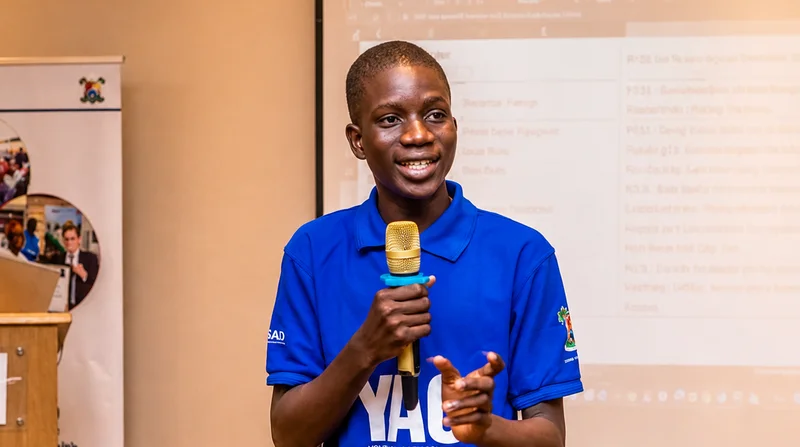
He claims that being online before he turned 16 did not merely mean scrolling through social media for entertainment. It exposed him to opportunities that he says helped shape the young advocate he is today.
A seat at an unusual table
Now, years later, the Nigerian Mass Communication student and film editor has a seat at an unusual table: TikTok’s Global Youth Council, where young people from different countries contribute their experiences and perspectives to conversations about how the social media platform can be made safer and more supportive for younger users.
Mr Tijani joined the council in 2024 after applying through Praesidio Safeguarding, TikTok’s partner on the initiative, and undergoing several interviews.
According to him, his journey gives him a personal perspective on a question increasingly confronting governments, parents and technology companies around the world: should children under 16 be kept off social media altogether, or can they be protected without shutting them out of the opportunities available online?
“Speaking from my own experience, I started discovering opportunities online before I turned 16. Those experiences helped me grow as a young leader and opened doors that have shaped my journey, including serving on TikTok’s Global Youth Council. If I had not been able to access those opportunities, my path might have looked very different,” he told PREMIUM TIMES on Wednesday.
Global debate
For Mr Tijani, the safety concerns driving such debates are legitimate, but restrictions should not become the only response.
He argued that social media is no longer simply a source of entertainment for young people but also a means of learning new skills, finding opportunities, connecting with mentors, expressing themselves and building communities.
He said, “Rather than asking whether young people should or should not be on social media, I think the bigger question is how we can help them use it safely and responsibly. That is why digital education, parental involvement, and strong safety features are so important.”
Mr Tijani is also the founder of Advocate for Youth Safety and Health Initiative (AYSHI), a youth-led initiative focused on youth safety and health.
He says his membership of TikTok’s Global Youth Council has allowed him to contribute to discussions about young people’s experiences on the platform.
He said council members participate in discussions, workshops, and meetings with TikTok teams and online safety experts, where they provide feedback on issues affecting younger users.
Since joining, Mr Tijani said he has contributed feedback on digital wellbeing, privacy, reporting systems and safety tools.
He cited TikTok’s Well-being Missions, meditation feature and updates to the TikTok Teen Safety Centre among initiatives to which members of the council have contributed perspectives.
“Knowing that our input can influence real changes on a global platform is very empowering,” he said.
“It has also taught me valuable skills such as teamwork, communication, leadership, and how to advocate for young people’s needs.”
For Mr Tijani, the experience also illustrates a broader problem with conversations about children’s online safety: young people are frequently discussed. Still, they are not always included in the decisions that affect them.
“Young people are the ones using these platforms every day. We understand the opportunities they create, but we also experience the challenges firsthand,” he said.
“That lived experience is valuable and should be part of the conversation when decisions are being made.”
Digital education
Beyond giving young people a voice, Mr Tijani believes digital education should become a fundamental part of preparing children for life online.
“I believe digital education is just as important as learning subjects like Mathematics or English, because young people today spend a significant part of their lives online,” he said.
“It’s not enough to know how to use social media. Young people also need to understand how to use it safely, responsibly, and positively.”
Such education, he said, should teach young people how to protect their privacy, identify misinformation, report harmful content, respond to cyberbullying and develop healthy digital habits.
He also believes responsibility cannot be left to technology companies alone.
Parents, schools, governments, civil society organisations and technology companies, he said, all have roles to play in creating safer online environments.
What platforms can do
Mr Tijani pointed to parental controls and digital-wellbeing tools as examples of interventions that can give families greater oversight without necessarily excluding teenagers from social media.
Among the TikTok measures he highlighted are Time Away Scheduling, which allows parents to set screen-free periods, and tools that enable parents to see accounts their teenagers follow, accounts that follow them, and blocked accounts.
He also cited a wind-down feature for users under 16, which interrupts the For You feed after 10 p.m. with a full-screen reminder and calming music intended to encourage them to stop scrolling.
Mr Tijani said members of the Global Youth Council played a role in providing input into such tools.
But he argues that individual features cannot, on their own, solve the challenges young people encounter online.
And while governments continue to debate whether keeping under-16s away from social media is the best way to protect them, Mr Tijani believes safety and opportunity do not necessarily have to be competing goals.
“I believe the goal should be to create an internet where young people are both safe and empowered.”