A thymus-derived peptide reduced inflammatory immune activity and improved immunotherapy responses in aged mice, suggesting a potential strategy to address age-related barriers to cancer treatment.
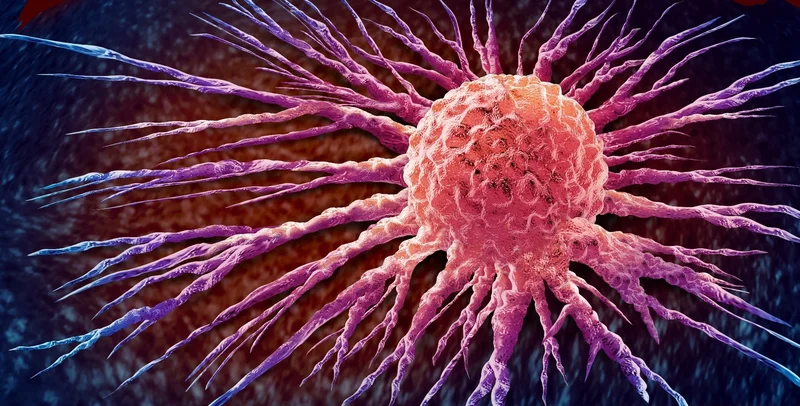
Study: Thymulin restrains age-associated myeloid inflammation and enhances cancer immunotherapy. Image Credit: Lightspring
A recent study published in the journal Nature Communications suggests that thymulin, a thymus-derived peptide, may suppress age-related myeloid cell inflammation and enhance responses to anti-programmed death-ligand 1 (anti-PD-L1) immunotherapy in aged mice with breast tumors.
The researchers found marked enrichment of pro-inflammatory myeloid cells in the breast tumor microenvironment of aged mice and a greater proportion of myeloid cells in breast tumors from older patients, with increased cytokine production in mice and inflammatory gene expression in human tumors, including tumor necrosis factor-alpha (TNF-α) and interleukin-1 alpha (IL-1α), interleukin-1 beta (IL-1β), and interleukin-6 (IL-6). In mice, these cells were also associated with accelerated disease progression.
As age advances, chronic inflammation levels can increase in the body. These age-related inflammatory changes may contribute to cancer onset and progression. Older individuals with these changes may also respond less well to cancer treatment. An improved understanding of the molecular mechanisms underlying these processes could help researchers design more personalized strategies for cancer care in older adults.
About the Study
In the present study, researchers report an age-related increase in myeloid cells and inflammatory cytokine release in mice and humans. These changes were associated with faster breast cancer progression in mouse models, suggesting that targeting myeloid cell-related inflammation may enhance antitumor immune responses.
The team used heterochronic parabiosis, in which young and older mice were surgically joined to share a common circulation, along with bone marrow chimeras. Heterochronic parabiosis allowed them to investigate whether factors circulating in young murine animals could suppress age-related inflammation, while heterochronic bone marrow chimeras helped them identify the origin of the factors. The researchers could then distinguish hematopoietic from non-hematopoietic sources.
Researchers also performed preclinical experiments using murine breast cancer models to investigate the effects of systemic factors obtained from young mice on inflammation-related aging, or inflammaging, and tumor progression. They used AT-3 and E0771 breast cancer cell lines to assess the functional relevance of the inflammatory changes. They also performed an Ingenuity Pathway Analysis (IPA) to identify candidate molecular mediators of inflammaging. Flow cytometry helped quantify cytokine-producing cells.
Researchers then obtained peripheral blood mononuclear cells (PBMCs) from healthy individuals to quantify cytokine-producing CD33+CD11b+ myeloid cells and compare the findings. They also analyzed single-cell ribonucleic acid sequencing (scRNA-seq) data from 26 primary breast tumors, including 10 triple-negative tumors, 11 estrogen receptor-positive (ER+) tumors, and five human epidermal growth factor receptor 2-positive (HER2+) tumors. The affected individuals ranged in age from 35 to 88 years.
The team then performed differential gene expression analysis to characterize the age-related differences. They subsequently performed luciferase reporter assays to explore the role of nuclear factor kappa B (NF-κB) signaling in thymulin-mediated suppression of inflammatory cytokine release. They also investigated whether thymulin could enhance the efficacy of anti-PD-L1 drugs in mouse models.
Results
The team found an age-related enhancement in inflammatory processes and myeloid cell populations, including monocytes, granulocytes, macrophages, and dendritic cells, in the tumor microenvironment of mice and humans. Circulating factors in the bloodstream, which were not derived from the bone marrow of young hosts, suppressed this myeloid inflammatory activation. Previous research indicates that thymulin declines with age; in this study, the peptide suppressed age-related secretion of inflammatory cytokines by inhibiting the NF-κB pathway. The peptide enhanced T-cell activity, improved tumor control, sensitized tumors in aged mice to PD-L1-targeting drugs, and prolonged survival in these models.
Aged mice showed accelerated breast cancer progression and reduced survival compared with young mice. Cluster of differentiation 11b (CD11b)-expressing myeloid cells producing inflammatory cytokines were more numerous in tumor tissues from aged mice. In humans, the frequency of cytokine-producing CD33+CD11b+ myeloid cells positively correlated with age. These cells were more numerous in individuals aged 60-87 years than in those aged 21-33 years.
In the human breast cancer dataset, myeloid cells from younger individuals showed enrichment for genes involved in antigen presentation and myeloid cell maturation. On the other hand, these cells obtained from older patients showed an elevated expression of inflammatory cytokines, damage-associated molecular pattern (DAMP) molecules, and inflammasomes.
Ingenuity Pathway Analysis identified FOXO3, LMNA, and SIRT family genes as candidate regulators of inflammaging. Previous studies have linked deficiencies in these genes with increased pro-inflammatory cytokine release, while thymic atrophy is a shared phenotype in relevant knockout models. These findings prompted the hypothesis that thymus-derived systemic factors produced by thymic epithelial cells may help suppress myeloid cell-related inflammation. Supporting this, thymulin treatment for one week reduced the frequency of circulating cytokine-producing myeloid cells in aged mice. In separate experiments, thymulin reduced inflammatory cytokine production and NF-κB p65 DNA-binding in lipopolysaccharide (LPS)-activated bone marrow-derived macrophages from aged mice. In an IL6 promoter reporter assay, mutations in the NF-κB binding site also abolished the inhibitory effects of thymulin. This peptide also enhanced adaptive immunity by boosting interferon-gamma (IFN-gamma) production by tumor-infiltrating CD4+ and CD8+ T cells in aged mice, alongside reduced myeloid inflammation.
Conclusions
The findings suggest that the thymus gland regulates myeloid cell-related inflammaging, and thymulin may suppress the release of inflammatory cytokines by these cells. In addition, thymulin could enhance the effectiveness of immunotherapeutic agents and retard tumor growth in aged murine animals. This finding needs to be confirmed in additional models with different cancer types and in human studies.
Further research, including clinical studies, is needed to determine whether thymulin can reduce age-associated myeloid inflammation and improve antitumor immunity in older adults.
Journal reference:
- Kanemaru, H., Luong, S., Yamamoto, Y., Mizukami, Y., \& Ito, F. (2026). Thymulin restrains age-associated myeloid inflammation and enhances cancer immunotherapy. Nature Communications, 17(1), 6534. DOI: 10.1038/s41467-026-75383-0, https://www.nature.com/articles/s41467-026-75383-0