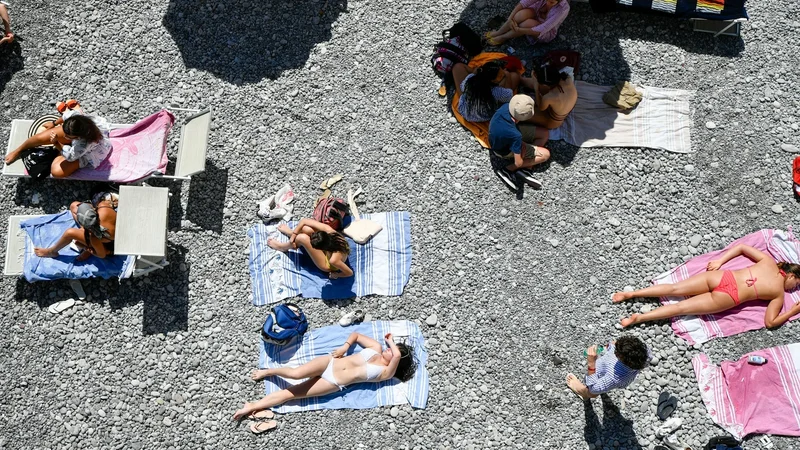
Very few national laws govern what is and isn't allowed at the beach in Italy. Almost all rules are decided at the local level, which means there can be significant differences between municipalities.
It's most important to pay attention to these differences when you're in more protected areas or natural parks, where rules tend to be more stringent. Sardinia in particular is famously strict about its beaches.
However, there are a few standard rules that apply at pretty much all Italian beaches, from appropriate clothing to pets.
Nudity
True to the European stereotype, women going topless at the beach in Italy is widely accepted though it's not as popular as it once was. However full nudity is definitely not normal – the practice is prohibited everywhere except dedicated 'naturist' beaches.
If you're into that, the naturist federation of Italy maintains a map of beaches where nudity is embraced (scroll to the bottom of the page to see the Google Map).
But beware that no matter your level of nakedness at the beach, there's definitely no tolerance for sexual exhibition in public – atti osceni ('obscene acts') in public are punishable by up to 4.5 years in jail and a fine of €30,000, per Article 527 of the Italian criminal code.
Proper dress
Simply not being in the nude isn't enough for many Italian beach towns, however.
If you venture off the shore, you'll need to be aware of the increasingly popular "decorum ordinances" (ordinanze sul decoro) that take aim at people treating the town square like an extension of the beach club.
Bans on being shirtless, in swimsuits or barefoot have been increasing in recent years, including in cities such as Gallipoli, Sorrento, Portofino and Tropea. Transgressors risk a fine of up to €500 in some places.
Last summer, the Sorrento police proved they were actually enforcing the rule when a US tourist was fined for being shirtless in Piazza Torquato Tasso.
READ ALSO: 'Go somewhere else’: The Italian hotspots tiring of badly-behaved tourists
Smoking
Italy lags behind other European countries in prohibiting smoking on beaches – France for example has an outright ban on it – but it is becoming more common to find smoke-free Italian beaches.
Increasing numbers of municipalities are enacting smoking bans on their beaches. In Rome's seaside of Ostia, smoking within five metres of the shoreline was banned starting this summer season.
Even where smoking is permitted on the beach, littering is a huge no; fines for dropped cigarette butts can run in the hundreds of euros.
Pets
Italian culture is very welcoming to furry friends, and the beach is no exception.
Though there's no nationwide rule on allowing dogs (or not) at the beach, it's generally considered allowed unless signs indicate otherwise. It's up to the municipality and individual beach clubs (stabilimenti) to decide whether to admit dogs.
Technically dogs in public, including at the beach, should be on a leash (and muzzled if necessary), though it's not commonly enforced.
"Reserving" a good spot
It's not uncommon for people to try to save a good spot on the public beach by leaving an umbrella or chairs overnight to be able to return to it the next day, but this is strictly prohibited.
READ ALSO: Why Italy's 'top-ranked' beaches are among the most restricted
While it can seem harmless, the authorities actually consider this practice an illegal occupation of public property. Local authorities can and likely will confiscate any items you leave unattended on the beach.
While you can't "reserve" a spot on a public beach by leaving your things there, you can make sure you get a prime spot on the beach by booking ahead of time at a private beach club through websites like Spiagge.it.
Camping on the beach
You can't get around the rule above by staying overnight with your items, either: pitching a tent on the beach is illegal and can land you with a fine of anywhere between €100 and €500.
Shell collecting
Searching for shells, a beloved childhood pastime for many, is actually illegal in Italy.
The rule applies to sand and pebbles as well, and is particularly monitored at protected and fragile marine environments.
If you get caught trying to take home a natural souvenir from any Italian beach, you're likely to incur heavy fines that can be thousands of euros.
This is unlikely to be enforced if a child takes home one small memento, as the law is intended for people who try to traffic large amounts of organic beach materials.
Your rights at the beach in Italy
While there are many rules, you also have some rights when it comes to the beach in Italy.
Keep in mind that you have many more rights at the beach than you do at private swimming pools. While most pools are strictly private property, beaches are all public property.
**Free access to the shore **
Many people aren't aware that Italian law grants everyone free access to the beach – including beaches controlled by private, pay-to-access beach clubs.
This is because these beach clubs don't actually own the land; rather, they're granted use of it under a concession issued by the state.
What that means for beachgoers is that you can swim or stroll along the entire shoreline, and you cannot be turned away or asked by a beach club to pay to access the water – so long as you're not using their facilities.
READ ALSO: MAP: Where Italy's private beaches cost the most – and where you can save money
Outside food
You also can't be forced to pay for the pricey meals and snacks served at beach clubs. Italian law protects people's right to bring in outside food or drinks – even if they're renting an umbrella from the private club.
Even if you see signs posted at the club saying outside food isn't allowed, these do not carry any legal weight.
This rule often causes controversy with beach club operators, who want people to purchase food from their restaurants and bars. Puglia's governor is currently at odds with the region's beach club owners, who are making international headlines over the fight to protect the right to picnic lunches.
However you are not allowed to barbecue or any sort of open flame, including bonfires, at any Italian beach.