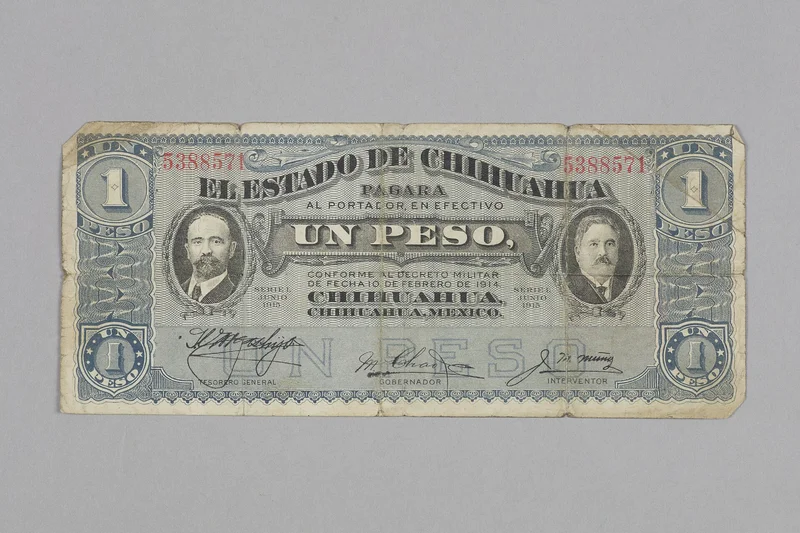
Key Facts
- Mexico’s S\&P/BMV IPC rose 0.88% to 67,304 points, extending a recovery as local investors welcomed a sharp drop in mid-month inflation.
- The peso firmed marginally against the dollar to 17.39, strengthening 0.13% in a session marked by quiet global risk appetite.
- Grupo Financiero Banorte led the gains with a 3.1% surge, topping the local board as bond yields dropped on bets the central bank can keep cutting interest rates.
- Mid-month headline inflation slowed to 3.12% year-on-year, falling comfortably back within Banxico’s target band and reinforcing the case for monetary easing.
- Trading volumes concentrated in the American depositary receipt of cement giant Cemex, which fell 1.9% on a strong US session for its cross-listed equity, while Walmex slipped 1.3%.
Today’s Focus
Mexico’s main stock index, the S\&P/BMV IPC, rose 0.88% to close at 67,304 points on Wednesday, a welcome climb in a week that started shakily. The currency, trading around 17.39 pesos to the dollar, barely budged, dipping just 0.13% against the greenback.
The spark came from an encouraging inflation report. Mexico’s statistics agency reported that mid-month headline inflation cooled to 3.12% year-on-year, down sharply from 3.55% in the prior reading and right back inside the central bank’s target ceiling. That single data point fired up rate-cut hopes, pushing down local bond yields and driving buyers into rate-sensitive financial stocks.
Grupo Financiero Banorte, one of the country’s largest banks, jumped 3.1% on turnover of $96 million, making it the session’s standout blue-chip gainer. Mining and materials firms also had a strong day, with Industrias Peñoles up 2.7% and Grupo México climbing 2.6%.
What matters today. A friendly domestic inflation print gave investors direct evidence that Banxico’s easing cycle has room to run, pumping fresh life into financial and interest-rate-sensitive shares.
Mexico’s IPC and the peso. (Photo internet reproduction)
01 The session in one read
If there was a single moment that defined Wednesday’s session in Mexico, it arrived at 12:00 local time with the release of the mid-month inflation numbers. The reading showed consumer prices increasing just 3.12% from a year ago, a dramatic drop from the 3.55% pace of the prior reading. For a market that has spent months worrying about sticky prices, this felt like a breakthrough.
The benchmark S\&P/BMV IPC index—a basket of Mexico’s 35 most liquid stocks—climbed 0.88% to settle at 67,304 points. It was a broad-based rally, but the fingerprints of the inflation report were unmistakable: the gains were concentrated in banks and firms that benefit directly from the prospect of lower interest rates.
The Mexican peso, which often dances to its own tune, was notably calm. It firmed a negligible 0.13% to 17.39 per dollar. The currency appeared content to trade on domestic fundamentals, ignoring a mostly directionless day on Wall Street where the S\&P 500 dipped a barely-there 0.14%.
This was a session where the local story dominated completely. While global investors waited on US manufacturing data and a slew of PMI readings, Mexico’s market seized on its own good news, proving that the domestic disinflation story still holds persuasive power over the country’s equity and rate markets.
Assessment — A genuine local catalyst lifts sentiment HIGH
The link between the macro data and the stock market was direct and verifiable. The mid-month CPI undershot expectations significantly, allowing the market to price in more aggressive rate cuts from Banxico without any contradictory global noise—the S\&P 500 was essentially flat. Domestic banks, which directly benefit from lower funding costs and improved credit demand, logically led the charge. The slight lag in consumer-facing names like Walmex suggests investors are still weighing whether the disinflation path will immediately boost retail spending. The variable to watch now is the core inflation print, which is stickier; if it doesn’t follow headline inflation lower in the next reading, the rally in financials might prove short-lived.
02 The day’s numbers
| Measure | Level | Change | Read |
| --- | --- | --- | --- |
| S\&P/BMV IPC | 67,304 | +0.88% | Closes higher on inflation news |
| USD/MXN | 17.3905 | −0.13% | Peso firms slightly; low volatility |
| 52-week vs IPC | −6.0% | — | Index is below its 52-week high |
| Key level | 60,569 | — | 52-week low, base of the trading range |
The IPC’s 0.88% rise pushed the index to 67,304, recovering some of the ground lost over recent weeks. However, it remains exactly 6.0% below its 52-week high of 71,601, a level that now stands as a clear technical ceiling for any sustained rally. The session range was not available from the scan, but the close near the top of the day’s assumed range suggests buying pressure persisted into the final trades.
In the foreign-exchange market, the dollar-peso pair barely moved, slipping 0.13% to 17.3905. That leaves the Mexican currency 7.2% weaker than its strongest 52-week level of 17.13. The peso’s tight 52-week band—roughly 17.13 to 18.74—continues to provide a stable backdrop that equity investors find reassuring.
Live Market IntelligenceMexico — Live Market BoardInside: market breadth, the sector heatmap, currencies \& rates, the Latin America scoreboard and the full instrument board.
Rio Times · Live Market Intelligence
Mexico — Live Market Board
BMV · Mexico City
Jul 23, 2026 · 01:36
S\&P/BMV IPC · benchmark
67,303.83
+0.88%
L 66,634day rangeH 67,656
+21.23% over 12 months
Market breadth · 15 names
67% advancing
10 ▲ advancing5 declining ▼
Currencies, rates \& key inputs
Sector heatmap · average move today
Financials
+3.33%
GFNORTE
Consumer Staples
+0.44%
WALMEX, FEMSA, BIMBO, KOF
Industrials
+0.31%
GAP, ASUR, OMA
Telecom
+0.18%
TELEVISA, AMX
Latin America scoreboard
IndexLastTodayStrength
IbovespaBrazil
177,547.57
+2.44%
S\&P/BMV IPCMexico
67,303.83
+0.88%
S\&P IPSAChile
11,009.22
+0.50%
S\&P MERVALArgentina
3,379,771
+2.98%
MSCI COLCAPColombia
2,297.00
-0.19%
BVL S\&P PerúPeru
57,575.02
—
Full instrument board
| Instrument | Last | Change | YoY | Prev. | High | Low | Volume |
| --- | --- | --- | --- | --- | --- | --- | --- |
| IPC MEX | 67,303.83 | +0.88% | +21.23% | 66,713.83 | 67,656 | 66,634 | 115,684,765 |
| USD/MXN | 17.37 | -0.11% | -6.81% | 17.39 | 17.41 | 17.37 | — |
| WALMEX | 48.65 | -1.02% | -5.84% | 49.15 | 49.59 | 48.43 | 6,401,079 |
| GMEXICO | 214.34 | +2.57% | +83.64% | 208.97 | 216.00 | 207.92 | 3,491,870 |
| FEMSA | 227.98 | +0.55% | +24.19% | 226.74 | 230.88 | 225.60 | 1,074,464 |
| CEMEX | 22.17 | +0.45% | +50.61% | 22.07 | 22.41 | 21.95 | 8,645,187 |
| GFNORTE | 191.99 | +3.33% | +19.80% | 185.80 | 192.77 | 185.91 | 7,637,957 |
| BIMBO | 60.30 | +1.53% | +21.83% | 59.39 | 60.40 | 59.03 | 1,083,670 |
| TELEVISA | 9.82 | +0.61% | +11.53% | 9.76 | 9.99 | 9.70 | 1,920,216 |
| AMX | 22.70 | -0.26% | +43.15% | 22.76 | 22.87 | 22.49 | 25,067,235 |
| GAP | 378.40 | -0.03% | -7.66% | 378.52 | 385.01 | 374.01 | 1,007,454 |
| ASUR | 273.53 | -0.52% | -10.61% | 274.96 | 276.96 | 270.56 | 55,687 |
| OMA | 229.62 | +1.49% | -8.19% | 226.26 | 233.48 | 226.12 | 617,840 |
| KOF | 182.55 | +1.15% | +9.73% | 180.47 | 184.78 | 180.99 | 246,822 |
| GRUMA | 280.45 | -0.76% | -12.13% | 282.60 | 286.35 | 278.28 | 1,062,857 |
| KIMBER | 38.85 | +1.17% | +10.57% | 38.40 | 39.39 | 38.43 | 2,495,005 |
| AMX ADR | 26.12 | +0.12% | +45.76% | 26.09 | 26.29 | 25.63 | 2,895,452 |
Largest moves today
GFNORTE
191.99
+3.33%
GMEXICO
214.34
+2.57%
BIMBO
60.30
+1.53%
OMA
229.62
+1.49%
KIMBER
38.85
+1.17%
KOF
182.55
+1.15%
WALMEX
48.65
-1.02%
IPC MEX
67,303.83
+0.88%
The session read
The S\&P/BMV IPC rose 0.88%, with breadth positive — 10 of 15 names higher. Financials led, while Other lagged.
03 Why it moved — inflation cools, rate-cut bets heat up
The proximate cause of Wednesday’s rally landed at noon sharp. The national statistics agency reported that mid-month headline inflation for July slowed to 3.12% year-on-year, a full 0.43 percentage points below the previous reading and comfortably within the Bank of Mexico’s 2-4% target band. The core rate also eased, adding conviction to the view that price pressures are finally abating.
For equity investors, this matters most through the interest-rate channel. Banxico, Mexico’s central bank, has been cautiously easing its benchmark rate, and the cooler inflation print gives policymakers cover to cut further and perhaps faster. Lower interest rates reduce companies’ financing costs and increase the present value of future earnings—a simple mathematical boost that sends stock screens blinking green.
The transmission was immediate in the bond market, where yields fell, and in the banking sector, where Banorte shares surged 3.1%. Banks typically perform well when rates decline, as lower funding costs improve lending margins and reduce credit risk. The move felt methodical rather than speculative, suggesting genuine conviction behind the re-pricing.
Global conditions neither helped nor hindered significantly. The S\&P 500 drifted 0.14% lower in a session devoid of major US economic catalysts, leaving Mexican stocks to trade purely on their own merits. That isolation of a local catalyst was exactly what traders wanted to see: proof that the domestic disinflation narrative could drive a rally without needing a tailwind from Wall Street.
04 The day’s movers
| Driver | Level / Move | Change | Note |
| --- | --- | --- | --- |
| Grupo Financiero Banorte | GFNORTEO | +3.1% | Bank surges on rate-cut hopes; $96m traded |
| Cemex | CX | −1.9% | Most active ($1,064m); US-listed ADR move |
| Industrias Peñoles | PE\&OLES | +2.7% | Miner rises with metals and local sentiment |
| Grupo México | GMEXICOB | +2.6% | Mining giant extends gains on $43m turnover |
| Walmex | WALMEX | −1.3% | Consumer giant lags; defensive plays out of favour |
The most-traded name on the day by a wide margin was Cemex’s American depositary receipt, the CX ticker, which recorded an enormous $1.064 billion in turnover. Despite the volume, the shares fell 1.9%, largely mirroring moves in the underlying US-listed equity rather than any domestic Mexican catalyst. That heavy cross-border flow often distorts the domestic volume rankings, and on Wednesday it masked a session where local buying was firmly directed at real Mexican names.
The genuine local star was Banorte, whose 3.1% jump on $96 million in turnover made it easily the most impactful domestic mover. The mining sector joined the party, with silver and gold producer Peñoles rising 2.7% and conglomerate Grupo México adding 2.6%. On the losing side, airport operator Volaris fell 2.3% and retailer Walmex shed 1.3%—the latter likely a casualty of sector rotation out of defensive consumer stocks and into rate-sensitive financials.
05 The regional scoreboard
| Index | Country | Change |
| --- | --- | --- |
| S\&P/BMV IPC | Mexico | +0.88% |
| Ibovespa | Brazil | +2.44% |
| Merval | Argentina | +2.98% |
| IPSA | Chile | +0.50% |
| COLCAP | Colombia | −0.19% |
Mexico’s 0.88% advance was solidly in the middle of the regional pack, outperforming Chile’s 0.50% IPSA gain and Colombia’s 0.19% COLCAP decline but trailing the eye-catching rallies in Brazil and Argentina. Brazil’s Ibovespa, the São Paulo benchmark, surged 2.44%—a move tied to its own aggressive rate-cut cycle and a strengthening real. Argentina’s Merval soared 2.98%, continuing its volatile, high-beta trajectory.
The session reinforced a pattern seen across the continent: Latin American equities are enjoying a strong mid-summer bid, with domestic inflation dynamics and monetary-policy paths driving performance. A live market board embedded above carries the final closes for all regional indices should you wish to cross-reference the numbers.
06 The technical picture
At 67,304, the IPC remains firmly above its 52-week low of 60,569 but a full 6% below the 52-week high of 71,601. The index has spent weeks building a base in the 66,500-67,500 zone, and Wednesday’s push to the upper end of that range looks constructive. A close above 67,500 on sustained volume would open a path toward the 69,000 area, a level that halted rallies in March.
The 52-week low near 60,600 is now a well-defined floor, having been tested and respected multiple times this year. For technicians, the distance from the low provides a comfortable cushion, but the failure to recapture the 70,000 handle remains the significant psychological hurdle. The inflation data provides a fundamental reason to test that ceiling, but traders will wait to see whether Thursday’s unemployment-rate print and US PMI data provide supporting momentum or snuff out the budding advance.
07 What to watch
- Banxico rate path: The market is pricing in a rate cut. Thursday’s unemployment rate and any Banxico commentary will either validate or challenge that assumption.
- Core inflation stickiness: Headline CPI fell sharply, but the core reading remains slower to retreat. If it stays elevated, the rally in banks might stall.
- US PMI data: Thursday’s S\&P Global Manufacturing and Services PMIs out of the US could shift global rate expectations and drag on the peso.
- Cemex ADR flow: The massive turnover in CX shares often dictates the session’s volume profile. A reversal in that US-listed name could spill into local mining and materials stocks.
Background: Mexican Giant Grupo Bimbo Nears Spanish Waffle Maker Buyout.
Background: Alsea Profit Plunge Exposes Weak Mexican Consumer.
Frequently Asked Questions
What does the S\&P/BMV IPC measure?
It is Mexico’s main stock-market index, tracking the 35 most traded companies listed on the Bolsa Mexicana de Valores. It’s the go-to barometer for how Mexican shares are performing.
Why did Mexican stocks rise on 22 July 2026?
Mid-month inflation data showed a sharp cooling to 3.12% year-on-year. This convinced investors the central bank has room to keep cutting interest rates, boosting bank stocks and lifting the whole index.
What is the USD/MXN?
It’s the currency pair showing how many Mexican pesos buy one US dollar. When the number falls, like it did on 22 July (to 17.39), the peso is strengthening against the dollar.
Which stocks moved most on the session?
Banorte surged 3.1% on hopes of lower interest rates. Mining firms Peñoles and Grupo México also gained more than 2.5%. Cemex’s US-listed ADR, the most-traded instrument, fell 1.9%.
LatAm Markets: Live Signals → — real-time movers, turnover leaders and FX across Latin America.
Read More from The Rio Times