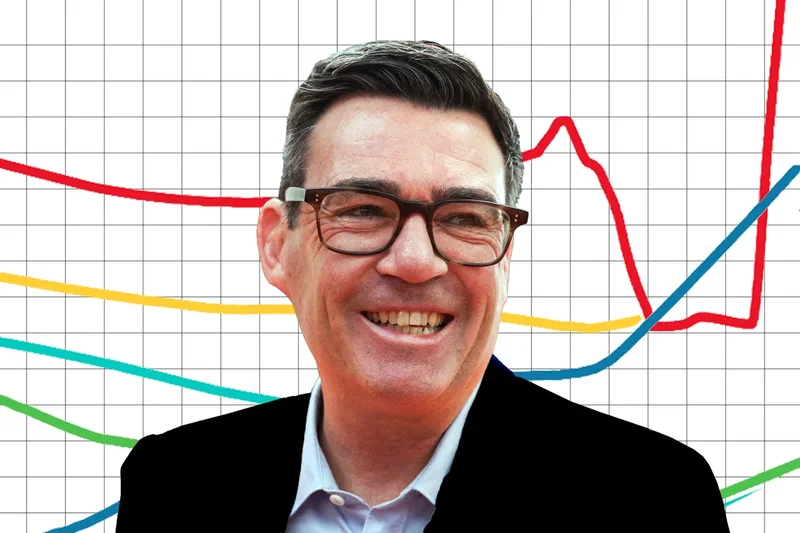
Andy Burnham’s Labour continues to surge above Reform in the polls, quickly overtaking Nigel Farage’s party in popularity for the first time in over a year.
The new prime minister has enjoyed a sudden bounce in both personal and party popularity, with a third poll in three days putting Labour on top for Westminster voting intention.
A YouGov poll released on Monday put Labour at 24 points to Reform’s 22, marking a two-point lead. It followed an Ipsos poll on Sunday showing a three-point lead, and an Opinium poll on Saturday which marked two points.
There have now been five national polls putting Labour ahead since Mr Burnham was appointed prime minister, in a major boost for the government.
Nigel Farage’s Reform overtook Labour in popularity in April 2025, just nine months after Sir Keir Starmer recorded a landslide victory at the general election.
The former leader and his party recorded ailing figures for the rest of his tenure, which have only now begun to see a boost.
Recent polling results will come as a blow to Mr Farage and Reform, which had been the main beneficiary of Labour’s slump in the polls.
Alongside the election of Mr Burnham, the move has coincided with a major downturn in support for Reform and its leader, whose personal popularity has slumped in the week he stood down as the MP for Clacton, triggering a by-election that he is standing in.
The Greens may also have suffered from Mr Burnham’s rise in popularity, with the YouGov figures showing a drop from 21 points at the end of February to just 12 points.
Around 16 per cent of people surveyed who voted Green in 2024 said they would vote Labour now, alongside 12 per cent of Liberal Democrat voters.
The figures suggest that Mr Burnham may also be winning back voters to his party who may have previously turned away from it under the leadership of Sir Keir.
Only 49 per cent of former Labour voters said they would support the party when the former prime minister stood down in June – a figure that has risen to 60 per cent in the latest poll.
There has also been a notable boost among 18 to 24-year-olds under Mr Burnham, with support rising from 14 per cent to a quarter over the same time period.
Anthony Wells, head of politics and elections for YouGov, told The Times: “What you see in the numbers is not only that Labour has increased its vote share but both the Greens and the Liberal Democrats have seen a substantial drop in their support, which had been boosted by Labour defectors.”
Labour’s surging popularity under Mr Burnham has prompted calls for him to call an early election which, if he won, would secure him a mandate for at least five years to deliver the bold changes he has pledged as prime minister.
It would also be tricky timing for Mr Farage, who still faces a parliamentary standards investigation upon his likely return to Westminster this week – one which could ultimately unseat him for good.
Against this backdrop, the Conservatives are also gaining traction, levelling off from a peak of 22 points in June down to 21, just three below Labour.
Leader Kemi Badenoch has enjoyed a personal popularity boost at the same time, rising to an average 1 point net approval from a low of -26 points in September.
Should the new prime minister decide to call a general election before he runs out of road in 2029, it may well turn out to be an old-fashioned Labour vs Conservative clash – despite the ‘five horse race’ that has been seen at the past few local elections.