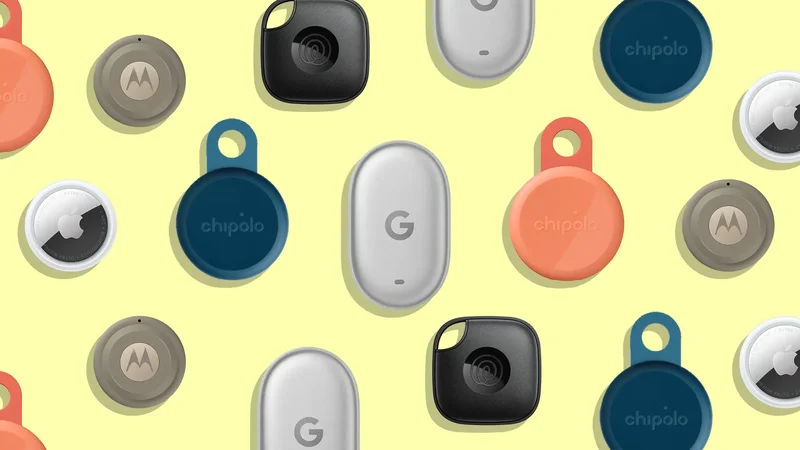
The most interesting announcement of Made By Google 2026 for me was the Google Pixel Tag. The Pixel 11 lineup and the Pixel Watch 5 are evolutions of previous Pixel devices, but the Pixel Tag is something brand-new.
Or at least, brand-new for Google. Trackers are nothing new. Life360, Chipolo, Apple, and Motorola have established themselves as reliable manufacturers of tracking devices.
So what can the Pixel Tag offer? Turns out, a lot, but not enough.
The Pixel Tag offers the features you would expect from a modern tracker
It will help you find your things
The Pixel Tag features Ultra-Wideband (UWB) and . These features ensure that you'll be able to locate your lost keys to within a meter with the widest range of devices.
It also features reverse phone finding, over 300 days of battery life, and Find Hub integration.
In short, it's an Apple AirTag made by Google. But bigger, a lot bigger.
I feel confident saying that if I were to start using a Pixel Tag today, I would be happy with my purchase a year later. It's easy to get too involved in the specifications of a device, and the Pixel Tag looks like it'll do its job well.
But why buy one in the first place?
Google is trying to mimic Apple, but I'm not sure it will work.
Style doesn't trump utility when it comes to trackers
I'm a staunch believer in "if it ain't broke, don't fix it." With that in mind, I've kept hold of the same Tile trackers I've used since 2022 despite there now being better options on the market.
Every time I lose my wallet or my keys, I open the Tile app, and within minutes, I've located them. Sure, they aren't compatible with Find Hub or UWB, but they have never failed me.
But if I decided to replace my Tile devices, I wouldn't settle for the Pixel Tag. I want a tracker that prioritizes substance over style, and that's why I would buy a Chipolo Loop.
The Chipolo Loop is the only tracker that I think comes with too many features. I've never felt the need to control my camera with my keys, but left-behind alerts and USB-C charging are fantastic features I think are standard.
If the Chipolo Loop didn't exist, it would be the Moto Tag 2. While it offers slightly fewer features than the Loop, it's more stylish and incredibly useful. The lack of left-behind alerts and USB-C tracking sets it back. It also offers a whopping 600 days of battery life.
The Pixel Tag, by comparison, lacks left-behind alerts (as it isn't compatible with the Find Hub API) and USB-C charging. It has half the battery life of the Moto Tag, and it's bigger than both these trackers. It also requires a case, which is a mandatory purchase if you don't want to lose it.
Instead, Google has opted for the style approach. The pill-shape is distinctive, and it will look great attached to your keys, luggage, or handbag. Unfortunately, it should have been much more.
The Pixel Tag is missing obvious features
It doesn't offer enough to be truly competitive
The Pixel Tag is launching into a competitive environment. No big deal. Google has the money and presence to make the Pixel Tag a success. Unfortunately, the brand seems to be the only reason to buy one.
The shape of the Pixel Tag is begging for a USB-C slot and a loop. Would these features make the tracker thicker? Certainly. Would it have been a problem? No.
This would distort the Pixel Tag's sleek, minimalist shape. Can you guess what else would distort it? A case.
The Pixel Tag case turns the svelte tracker into a block bigger than my keys. I can't understand why Google couldn't just build a hole in the tracker.
Oh, but you can ask Gemini to find your Pixel Tag. Yippee. At least it has a button to find your phone.
The thing is that the Pixel Tag isn't a bad tracker at all. If this had launched alongside the Pixel 6 or Pixel 7, I would be first in line to buy one.
However, it just isn't as good as other trackers. When the Chipolo Loop and , the decision becomes even easier.
The only reason I could have for buying one is that I can expect a nifty software experience when setting up and managing the Pixel Tag. But a tracker is something I never think about until I need it.
The Pixel Tag just doesn't have enough going for it
Other trackers do the same job but better
Google has had years to develop an Android-compatible tracker that is superior to every other tracker on the market.
But in the end, it developed something that's aggressively fine. Yes, it'll work great and have that Pixel sheen, but there are better trackers out there.
For a device I think about for a few minutes every week, I don't care how stylish it is. I think it's time for me to replace my aging tile trackers, but I'll be utilizing the .