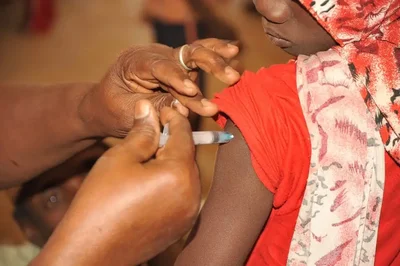
The World Health Organisation (WHO) has urged African governments to strengthen national hepatitis programmes and expand access to vaccination, testing, and treatment, warning that millions of people across the continent continue to miss out on life-saving services despite the availability of effective interventions.
In a statement issued ahead of World Hepatitis Day, the WHO Regional Director for Africa, Mohamed Janabi, said viral hepatitis remains a major public health challenge across the region, even though new hepatitis B infections declined by 25 per cent between 2015 and 2024.
Mr Janabi noted that while effective vaccines, diagnostics, and treatments are available, many people are still diagnosed too late or cannot access care, leading to preventable deaths.
“No one should die from a disease that can be prevented, diagnosed and, in many cases, treated,” he said.
He called on governments, development partners, health workers, and communities to remove barriers preventing people from accessing hepatitis services.
“Eliminating viral hepatitis is within our reach, but only if proven interventions are available to everyone who needs them,” he said.
Bringing services closer to communities
Mr Janabi said the region already has the tools needed to eliminate viral hepatitis as a public health threat.
According to him, the hepatitis B vaccine, introduced in the early 1990s, provides up to 95 per cent protection against infection, while reliable diagnostic tools enable early detection. He added that hepatitis C can be cured, and lifelong treatment for hepatitis B can prevent complications such as liver cirrhosis and liver cancer.
He stressed that integrating hepatitis prevention, testing, and treatment into primary healthcare would make services more accessible and affordable, while also reducing pressure on health systems.
Mr Janabi said the challenge is no longer scientific but one of political commitment, financing, and equitable access.
He noted that countries in the WHO African Region have recorded progress by expanding the universal hepatitis B birth dose vaccine, advancing the elimination of mother-to-child transmission of HIV, syphilis, and hepatitis B, and pioneering hepatitis C elimination pathways.
However, he said these gains must be sustained and expanded across all 47 WHO African member states.
Late diagnosis
Mr Janabi warned that many people living with viral hepatitis remain unaware of their infection until serious liver damage has occurred.
He attributed the problem to inadequate access to testing and treatment, particularly in underserved communities, as well as stigma and limited public awareness.
To close these gaps, Mr Janabi urged countries to integrate hepatitis services into routine healthcare throughout a person’s life while investing in research and innovation to improve access to new diagnostic tools and treatments, including for hepatitis B and hepatitis D co-infection.
He also called on development partners to sustain technical and financial support to help countries achieve the global target of eliminating viral hepatitis as a public health threat by 2030.
World Hepatitis Day
Observed annually on 28 July, World Hepatitis Day raises awareness about viral hepatitis and promotes actions to prevent, diagnose, and treat the disease.
This year’s theme, “Hepatitis: Let’s break it down,” calls for breaking down financial, social, and systemic barriers that prevent people from accessing hepatitis services and accelerating progress towards eliminating the disease.
According to the WHO, viral hepatitis causes inflammation of the liver and can lead to severe complications, including liver cirrhosis, liver failure, and liver cancer if left untreated.
Nigeria’s burden
According to the WHO, Nigeria remains one of the countries most affected by viral hepatitis globally. The organisation estimates that more than 20 million Nigerians are living with hepatitis B, hepatitis C or both, yet over 80 per cent do not know their status. Data from the 2018 Nigeria HIV/AIDS Indicator and Impact Survey (NAIIS) also showed a hepatitis B prevalence of 8.1 per cent and a hepatitis C prevalence of 1.1 per cent among adults aged 15 to 64 years.
The burden extends beyond Nigeria. WHO estimates that more than 90 million people across the African Region are living with viral hepatitis, accounting for about 26 per cent of the global burden. Despite ongoing efforts to strengthen hepatitis control programmes, PREMIUM TIMES has previously reported persistent challenges, including low testing rates, limited access to treatment, and gaps in the uptake of the hepatitis B birth dose vaccine, leaving many infections undetected until serious liver complications develop.
Against the backdrop of the region’s high hepatitis burden, Mr Janabi reaffirmed WHO’s commitment to supporting African countries in strengthening health systems and expanding equitable access to hepatitis services.
“Together, we can prevent new infections, save lives and ensure that viral hepatitis is no longer a barrier to healthier lives for the people of Africa,” he said.