People along the path of the Aug. 12, 2026 total solar eclipse will know exactly when darkness is coming. They will gather with eclipse glasses, cameras, and carefully chosen viewing spots. The animals around them will receive no warning.
A new study hints at how they might respond when daylight suddenly fades. During the 2024 eclipse, Japanese macaques at a closed Quebec zoo climbed into the branches and became still, zebras ran, and a red-crowned crane stopped calling. Most of the 12 species, however, barely reacted.
On Aug. 12, 2026, the path of totality will cross northern Russia, Greenland, Iceland, Spain, and a small corner of Portugal. Most of Canada, parts of the northern U.S., much of Europe, and northwestern Africa will see a partial eclipse, according to NASA.
For anyone wondering whether animals will notice, the study led by Zoo de Granby conservation researcher Louis Lazure offers a fitting answer. It depends on the animal. The findings were published in Zoo Biology.
Read More: The 2026 Total Solar Eclipse Is Here — How and Where to See It, and Why Totality Is a Rare Event
What Happens to Zoo Animals During a Solar Eclipse
Lazure and his team got their chance to find out when the Moon’s shadow crossed southern Quebec on April 8, 2024. Zoo de Granby sat directly in its path, where totality lasted exactly three minutes and turned the sunny afternoon about as dark as civil twilight. For the observers, that meant just three minutes to record what the animals did in the darkness.
The zoo was closed to visitors, removing the cheers and commotion that often accompany an eclipse. Twelve observers stood quietly at different habitats while animal care staff kept their distance. Every minute, the observers recorded whether the animals were eating, resting, running, climbing, vocalizing, or displaying other behaviors.
They watched the animals during three-hour sessions on eclipse day and several days before and afterward. By returning on ordinary days, the team could tell which behaviors were unique and which were simply part of a typical April afternoon.
Read More: 5 of the Longest, Shortest, and Most Important Solar Eclipses Ever Recorded
Macaques Climbed While Zebras Ran
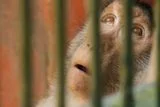
The zoo’s 13 Japanese macaques were hard to miss. As totality began, many stopped what they were doing and climbed onto higher branches. Their activity fell by 57 percent before returning to normal within 15 minutes.
To the people watching below, the macaques looked “contemplative.” But they sat with their backs to the Sun, and not one appeared to look up.
While the macaques became still, the zebras grew more active and showed more signs of stress, running during totality and eating less. Because prey animals often cut back on feeding when they sense danger, the change suggests the sudden darkness may have put the zebras on edge. After the Sun reappeared, the observer also noticed more friendly and hostile interactions within the herd.
Across the rest of the zoo, the reactions unfolded more quietly, with Bactrian camels moving closer to their night quarters and snow leopards becoming more vigilant. Himalayan monals and ostriches reduced their activity, while a red-crowned crane stopped calling throughout totality.
But the zoo never settled into one shared response. Red pandas and Asian black bears mostly rested, while many of the other animals barely seemed to notice anything had changed.
Read More: Not Every Solar Eclipse Brings Darkness — Here's Why Every Eclipse Is Unique
Humans May Be Part of the Reaction
The researchers also found a gap between what observers remembered seeing and what they had recorded. A week later, their impressions matched the minute-by-minute data only half the time. In one-third of the comparisons, the records captured a change the observer had missed.
Most observers had little formal experience studying animal behavior, but the mismatch shows how easily people can read their own expectations into what animals do. A motionless macaque may look awestruck, but researchers cannot tell from its behavior whether it experienced awe.
On Aug. 12, 2026, as people gather beneath the Moon’s shadow, nearby animals may climb, run, or fall silent. Others may barely look up. Either way, the study offers one more reason to watch what happens on the ground while everyone else is watching the sky.
Read More: Why Some Eclipse Maps May Miss the True Edge of Totality During the 2026 Solar Eclipse
Article Sources
Our writers at Discovermagazine.com use peer-reviewed studies and high-quality sources for our articles, and our editors review for scientific accuracy and editorial standards. Review the sources used below for this article:
- This article references information from a study published in Zoo Biology:Behavioral Responses of Zoo Animals During a Total Solar Eclipse in the Absence of Visitors