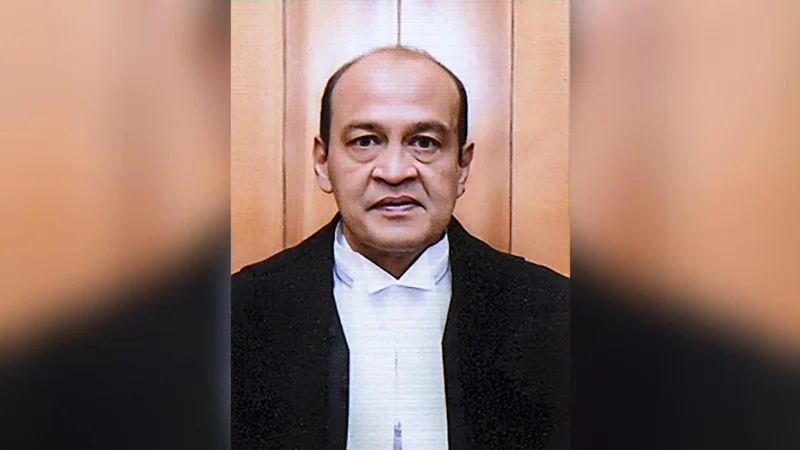
The three-member committee constituted to investigate the discovery of ‘burnt currency notes’ at the official residence of Justice Yashwant Varma has said that the former judge withdrew from the committee’s proceedings too late.
The committee’s report, in a way, responds to questions in the public domain such as why it chose to continue its work and submit the report to Parliament even after Justice Varma ceased to be a judge with his resignation, with immediate effect, on April 9.
The report, tabled in Parliament on Wednesday (August 12, 2026), found the charges against Justice Varma “proved”, holding that his explanations were “evasive and unsatisfactory”. The discovery of the currency notes occurred in the national capital when he was a Delhi High Court judge.
In a communication sent to the committee on April 9, the former Allahabad High Court judge had informed it of his decision to withdraw from the proceedings. Parallel communications were sent to the President and Chief Justice of India on the same day.
The committee report said Justice Varma, in the April 9 communication, had further found fault with the inquiry
For one, the committee said rather than making allegations, the former judge ought to have entered the witness box. It said Justice Varma withdrew from the inquiry proceedings at the crucial point of
“The least that could have been done by the judge was to enter the witness box and deny the charge, which he did not choose to do, but abandoned (withdrew) from further participation in the inquiry,” it said.
The panel said a statutory inquiry cannot depend on the “unilateral” decision of a judge under inquiry, especially after the “evidence has substantially come on record”.
“This was not a case where the inquiry had not commenced, or where the judge had not been heard, or where the material had remained untested,” the committee said.
The committee proceedings were neither erratic nor episodic. The former judge withdrew in the midst of a live, advancing and continuous process, the committee said.
It said the articles of charges against the judge had already been framed, defence statements had been received; material to be relied upon for the inquiry had been supplied and inspection done; applications had been heard and decided; nine witnesses had already been examined; and documents and electronic material had been marked. Even witnesses had been cross-examined on behalf of the judge himself.
“The proceedings had, therefore, crossed the stage of mere procedural arrangement and entered, and substantially completed, the evidentiary stage,” the report said.
The inquiry committee said Justice Varma was given a reasonable opportunity to make his case before it.
It said the inquiry could proceed even in the absence of the judge if there was sufficient proof that he was given the opportunity to join the proceedings.
“The present case, however, does not rest merely on absence. It is a case where the judge had participated through advocates, contested the procedure, cross-examined the witnesses, inspected the records, and reached the stage where he was required to establish his defence,” the report said.
Published - August 12, 2026 11:23 pm IST