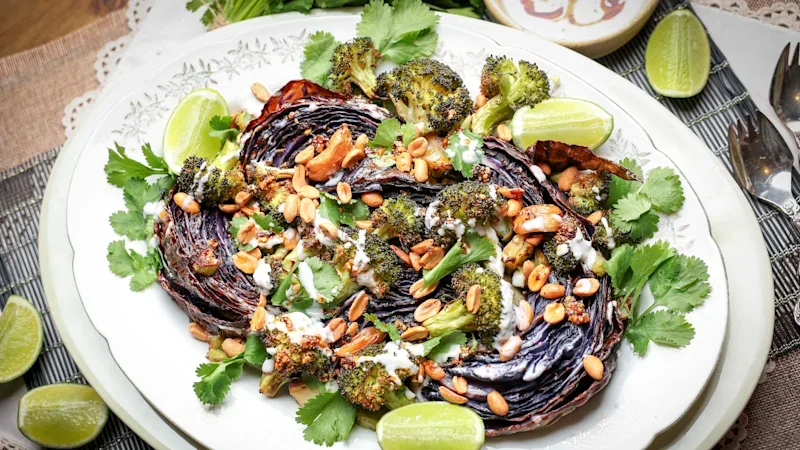
When the temperature drops, I find myself seeking warmth from cosy casseroles and piles of pasta. But a constant rotation of carb-heavy comfort food can leave me feeling sluggish. The trick is finding a dish that satisfies that craving for a hot, hearty meal without the post-dinner food coma.
My answer is a properly executed tray of roasted vegetables. When done right – with deeply caramelised, crispy edges and tender centres – roasted veg can be just as comforting as any classic casserole.
Nailing it comes down to basic heat and timing. It might sound like a balancing act, but once you master a few fundamentals, you can confidently roast just about any combination in your fridge.
Choose your fighters
Different vegetables cook at different speeds. The trick is grouping them by firmness. Hard roots need time to turn tender and sweet, while delicate greens just want a quick blister to char the edges without losing their crunch. Mastering this timing is the foundation of the staggered roast – giving you the freedom to cook whatever you have on hand, knowing it will all finish at the same moment.
Quick cooking (10-15 minutes):
- Robust greens: cavolo nero, kale, silverbeet.
- Asian greens: bok choy, pak choy, gai laan.
Medium cooking (20-30 minutes):
- Brassicas: broccoli, broccolini, Brussels sprouts, cabbage, cauliflower (thick wedges and “steaks” may need longer).
- Alliums: onions, leeks, shallots.
Slow cooking (40-50 minutes):
- Pumpkins: butternut, kent, golden nugget.
- Root vegetables: carrots, parsnips, potatoes, sweet potatoes, swedes, turnips.
The game plan
You can play your tray two ways: keep it simple by grouping veg from the same time bracket, or build a mixed tray by staggering them – roots first, greens last – so everything finishes together. Great roasted veg isn’t a fluke; like a well-seared steak, it comes down to careful execution. Here’s how:
- Preheat the tray:Don’t just heat the oven – slide your empty baking tray inside too, then crank the dial to 200C fan-forced (220C conventional). Tossing oiled veg onto a screaming-hot tray triggers instant caramelisation and keeps them from sticking.
- Keep each veg uniform:You don’t need every vegetable on the tray cut to the same size, but each- typeshould match. Keep all your potato chunks similar, and your carrot rounds equal.
- Choose the right fat:Opt for neutral oils with high smoke points, such as rice bran or grapeseed. To dial up the richness, reach for ghee, schmaltz or duck fat.
- Toss in a bowl:Combine your oil and seasonings in a large bowl and toss the veg to coat before roasting. Drizzling oil directly on the tray leads to patchy coverage and burnt spots.
- Give them personal space:Keep everything in a single, uncrowded layer. Overcrowding traps steam, causing the vegetables to steam rather than roast. Use two trays if necessary.
- Roast in phases:When cooking a vegie medley, drop the dense roots first, set a timer, and add faster-cooking veg to the tray when the buzzer sounds.
Building flavour
Salt, pepper, and a squeeze of fresh lemon will never let you down. But half the fun of a staggered tray is playing with complementary flavour pairs. These are some of my favourites:
- Brussels sprouts and onion:Crispy crunch meets jammy sweetness.
- Pumpkin and leeks:A classic soft and sweet pairing.
- Sweet potatoes, shallots and kale:A textbook staggered tray (roots first, kale at the end).
- Carrots and cauliflower:High-heat heroes that sweeten as they char.
Flavour boosters
Once your core combinations are sorted, layer in extra texture and seasoning:
- Garlic:When roasting for more than 20 minutes, use whole, lightly crushed cloves with the skins attached, rather than minced garlic. This prevents burning while still imparting flavour. Squeeze the soft, caramelised cloves out at the end.
- Hard herbs:Add rosemary and thyme stems to the baking tray whole. As you toss your vegies, the leaves will fall from the stems on their own.
- Soft herbs:Dill, parsley, coriander and mint are best added after roasting.
- Seasoning:Experiment with dried herbs and spices added to your oil mix, or try umami-boosting options like nutritional yeast, chicken powder, tomato paste, miso or Dijon to dial up the savoury flavours.
- Finishers:Add bright finishers such as a drizzle of vinegar, a squeeze of citrus, or a dollop of yoghurt. For something a little richer, add a bit of coconut milk or cream. If you’re feeling extra fancy, add a handful of nuts, or a smattering of salty cheese like feta or parmesan. To make it a meal, scatter cooked legumes onto the tray for the last 10 minutes to crisp.
Recipe inspiration
Ready to practise? Here are two simple recipes to help you get started.
Coconut cabbage and broccoli
Creamy coconut transforms cheap winter staples into a deeply savoury, slightly saucy showstopper.
INGREDIENTS
- 2 tbsp neutral oil (such as rice bran)
- 1 tbsp soy sauce
- 2 tsp chicken stock powder
- 10g fresh ginger, cut into thin matchsticks
- 4 whole garlic cloves, lightly crushed (skins left on)
- ½ head red cabbage (about 400g), cut into 6 intact wedges
- 1 head broccoli (about 300g), florets separated, stem sliced into half-circles
- ¼ cup raw peanuts
To finish
- juice of 1 lime, 15g torn fresh coriander, a drizzle of coconut milk
To serve
- cooked rice and chilli-crisp oil
METHOD
- Preheat your oven and a baking tray to 200C fan-forced (220C conventional).
- In a large mixing bowl, whisk together the oil, soy sauce, chicken stock powder, ginger and garlic cloves.
- Carefully toss the cabbage wedges and garlic in the seasoned oil, taking care not to break the wedges apart. Transfer the cabbage and garlic to the preheated tray and roast for 10 minutes.
- Toss your broccoli florets and stems in the remaining seasoned oil. Flip the cabbage wedges on the hot tray, then scatter the broccoli pieces around them. Roast for another 10 minutes.
- Scatter the raw peanuts across the tray and roast for a final 10 minutes until the peanuts are toasted and the broccoli edges are charred.
- Remove the tray from the oven. Pluck out the garlic skins. Squeeze the fresh lime juice over everything, scatter with coriander leaves and finish with a drizzle of coconut milk. Serve hot over rice with chilli-crisp oil.
Serves 4
Maple-Dijon mustard root vegie salad
Sweet maple, tangy Dijon mustard, and woodsy rosemary meet hearty root vegetables and crispy kale for a satisfying, warming winter salad.
INGREDIENTS
- 2 tbsp neutral oil
- 1 tbsp maple syrup
- 1 tbsp Dijon mustard
- 1½ tsp fine sea salt
- ½ tsp garlic powder
- ½ tsp onion powder
- ½ tsp smoked paprika
- ½ tsp black pepper
- 8 garlic cloves, lightly crushed (skins left on)
- 800g root vegies (such as carrots, swedes and turnips), cut into uniform chunks
- 10g fresh rosemary sprigs
- 4-6 kale leaves, stems removed, leaves roughly chopped
- 1 x 400g can chickpeas, drained, rinsed and patted dry
To finish
- 2 tsp apple cider vinegar, a handful of parmesan flakes
METHOD
- Heat the oven and a baking tray to 200C fan-forced (220C conventional).
- In a large bowl, whisk together the oil, maple syrup, Dijon mustard, sea salt, garlic powder, onion powder, smoked paprika and black pepper.
- Toss the root vegetable chunks and garlic cloves in the dressing until thoroughly coated. Spread them in a single layer on your hot baking tray, tucking rosemary sprigs around them. Roast for 30-40 minutes, until a knife easily pierces the largest piece.
- While the roots roast, toss the chopped kale in the mixing bowl to catch any remaining seasoned oil (add a splash more oil if the bowl is dry).
- Once the roots are tender, pull the tray out of the oven. Scatter the oiled kale and dried chickpeas across the top. Return to the oven for a final 5-7 minutes until the kale is crisp at the edges and the chickpeas are warmed through.
- Drizzle with apple cider vinegar, toss gently and finish with parmesan flakes before serving.
Serves 2
Troubleshooting
Everyone has the occasional kitchen mishap. That’s just part of cooking! Learning how to reroute an off-course roast will make you a more confident cook.
Problem: Uneven cooking (burning on the outside, raw inside)
Solution: Tent the tray tightly with aluminium foil. This traps steam and forces dense interiors to cook through without darkening the surface any further.
Problem: Soggy vegies
Solution: To evaporate excess moisture, switch your oven to the grill and put the baking tray on the top rack. Keep a close eye on it – grills burn food fast.
Problem: Dry or leathery vegies
Solution: Pull the tray out and toss the vegetables with an extra drizzle of oil to revive them.