Developers don’t always set out to make the most influential games they can. A lot of them are just trying to provide players a good time, blissful escapism, mental stimulation, or thoughtful commentary. But sometimes, the sum of those efforts amounts to more than that. Every so often, a game comes along that forever shifts the landscape of the medium, and it doesn’t even have to be as big as Grand Theft Auto 6 to do it (though we’d bet that one will have influence, one way or another). Every new game in a particular subgenre owes something to those trailblazers, and by extension, so do we. Here’s our list of the 13 most influential games of all time.
Pac-Man (1980)
In 1981, Jerry Buckner and Gary Garcia released a popular song called “Pac-Man Fever,” which referenced the 1980 arcade game from Namco. That’s certainly not the only time a video game has been referenced in popular music, but this was decades ago, when such things were far less common. It’s a good indicator of how big the game got in just two years. And even before Mario gave Mickey Mouse competition, Pac-Man proved the power of the mascot to inspire people to become players. That probably wouldn’t have happened if the game weren’t also a joy to play, with its effective maze and score chasing mechanics. The game earned its props, and inspired numerous clones in years to follow. Pac-Man, meanwhile, remains a pop-culture icon to this day, appearing across a wide variety of platforms and even in the Smash Bros. games.
Rogue (1980)
Over the years, a lot of games have made much of the concept of “lives,” which give players additional chances to pursue a higher score or perfect a level. Rogue built a whole game around the notion that you get just one chance at the world, which always comes back different on any subsequent attempts. Suddenly, the goal isn’t to get from one point to another as quickly as possible; it’s to get to that next destination while making choices about resources that will allow you to push ever further. The rogue-like and the rogue-lite wouldn’t exist without that concept, and Rogue explored it first. Despite the rudimentary visuals, it still offers an engaging experience today.
Zork (1980)
Adventure games owe quite a lot to Zork, one of the most famous text adventures ever created. It wasn’t the only game of that sort, or even the first, but it gave players more freedom to explore the environment as they saw fit. Other similar games limited interaction to basic two-word commands, but Zork thrived with a larger vocabulary and injected plenty of humor and personality into the experience, including the infamous grues. Later games from studios like Sierra and others would build on the work of text adventures, offering a visual interface to go on top of all that creativity, but Zork and its sequels helped pave the way for all of that. It’s still enough fun to explore that in 2017, we ranked it number 32 on our list of the best 500 games of all time.
Wizardry: Proving Grounds of the Mad Overlord (1981)
These days, it’s easy to point to Final Fantasy and Dragon Quest as the foundational games of the JRPG genre. And while they certainly played a large role, they wouldn’t even exist without inspiration drawn from the early Ultima games, and from Wizardry: Proving Grounds of the Mad Overlord. The first-person RPG introduced the combat of an adventuring party with character classes, which lie at the heart of most games in the genre. It built combat around the player party, and sent heroes wandering through expansive dungeons. Many of the foundational elements of the genre built on Wizardry. The game had far more magic in it than anyone realized, and it’s now available in a remastered version with welcome quality-of-life improvements.
Tetris (1984)
It might not seem like you could build a lasting legacy with a concept as simple as blocks falling into a container, but that’s exactly what Tetris accomplished. In the process, it proved that even people who don’t like games might actually like them, if they are introduced to something sufficiently simple and engaging that they find themselves powerless to resist. Tetris served as the perfect way for Nintendo to build an audience for its first portable gaming system, the Game Boy. Once the system launched in North America and Europe with that title, we suddenly saw it played just about everywhere: on airplanes, in coffee shops, at the park… The game’s simple mechanics made satisfaction easily attainable, even in quick bursts that kept some of us playing long past our bed times. Later puzzle sensations might never have come about if not for the foundational work of Alexey Pajitnov.
Super Mario Bros. (1985)
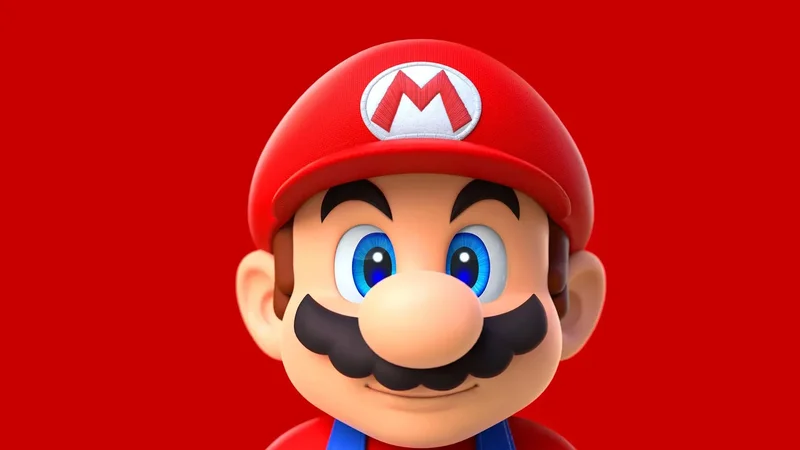
Super Mario Bros. was one of the earliest platformers to break free of a single screen, which let it provide a proper adventure where virtually every level presented something new and exciting. Mario and Luigi had worked together to stop a parade of crabs, turtles, and flies in the past. Now they explored dank dungeons, wandered the halls of dark castles, leaped between grassy ledges, and even climbed vines into cloudy wonderlands littered with coins. Pursuit of a higher score was replaced by so much more, paving the way for a genre that remains alive and well to this day.
The Legend of Zelda (1986)
Nintendo developed The Legend of Zelda during the same period it created Super Mario Bros., but with vastly different aims in mind. The team’s goal was to create a massive world the player could explore in the manner they saw fit, while solving puzzles and collecting equipment to aid their discovery. The game might have taken inspiration from other similar titles of the time, such as Hydlide and Tower of Druaga, but Nintendo established a formula all its own, one that also appears – with modifications – in Metroid. It’s fun to remember just how many games released even now borrow huge chunks of the Zelda formula, or adapt features introduced in other games that The Legend of Zelda inspired.
SimCity (1989)
While most contemporary games guided players through fixed storylines with a definite endpoint in mind, SimCity tried something different by offering fairly unremarkable environments. Players then built a town, a city, or even a metropolis. The game established rules players had to follow as they considered residential, commercial, and industrial zoning, transit problems, pollution, and even natural disasters. Immediately, those simple restrictions became the basis for hours of fun, without relying on the violence or extensive storylines some other games provided. Instead of merely satisfying objectives, players now felt like the architects who created them, a change in dynamic that many later games like The Sims would explore with additional success.
Street Fighter 2 (1991)
Fighting games go way back. But when Street Fighter 2 arrived, something shifted. The characters were lively, full of personality that made them almost impossible to forget. Each one could use a set of special moves that helped define their characters, while balancing perfectly with the moves other fighters possessed. Against developer expectations, advanced players mastered and relied upon uninterruptible combos to force opponents into the corner and pummel them mercilessly with a mix of fierce kicks and special moves. Newer players gathered around cabinets at arcades and convenience stores to drop a quarter for one more attempt at dethroning local legends. Other fighting games followed, from Capcom and its many competitors. The genre and its dynamic characters have lasted decades, across platforms and even media types. There’s even another Street Fighter movie on the way.
Doom (1993)
It’s a running joke to ask if hardware can run Doom, and there have been a lot of efforts in the modding community to explore the classic game in new ways. Committed developers even made Doom playable with piano keys. All of that attention started in the early ‘90s, when Doom revolutionized what a shooter could be. Since the original game’s release, the genre has exploded in popularity. “Deathmatch,” a term the title coined, became part of our regular vocabulary. And we gained new appreciation for chainsaws. The series has been going strong ever since. An ambitious expansion for Doom: The Dark Ages dropped just last month.