Kruger National Parkâs centenary has prompted renewed conversations about its past, the realities of managing one of Africaâs largest protected areas and its megaherbivores, and ways forward.
The Kruger inspires both fierce debate and deep affection. It is at once a place of historical injustice, scientific inquiry, tourism, conservation and national pride. This necessitates a management approach that balances ecology, biodiversity, wildlife and people.
Rhinos and elephants
Few conservation issues generate more public debate than rhinos and elephants.
Rhinos are at the centre of South Africaâs long-running poaching crisis, while elephants continue to spark arguments over whether there are âtoo manyâ in the park.
As part of SANParksâ #Kruger100 webinar series, Danie Pienaar and Sam Ferreira offered a rare glimpse of what managing these species actually involves. Their message challenged one of the biggest misconceptions about conservation: that wildlife management is simply about counting animals.
Instead, they described a far more complicated picture involving animal behaviour, movement, landscape dynamics, crime, neighbouring communities and long-term ecological change.
The battle against rhino poaching
Kruger remains one of the worldâs most important strongholds for rhinos, making it central to global conservation efforts.
Between 2010 and 2022, poachers killed 5,628 rhinos in the park. Although annual losses have declined, another 411 rhinos have been poached since 2023.
Research has shown that dehorning is one of the most effective ways to reduce poaching. While Kruger has not adopted widespread dehorning, very few rhinos across South Africaâs parks and reserves now retain full horns. That, however, presents new challenges as authorities must continually adapt to changing tactics used by organised criminal syndicates.
Ferreira also highlighted research showing that law enforcement alone cannot solve the crisis.
A 2016 study he co-authored challenged the long-held belief that rhino conservation could be funded through legal horn sales. Instead, it found that the greatest gains come from combining action against trafficking syndicates with better economic opportunities for communities living alongside protected areas.
In other words, protecting rhinos also means addressing poverty, inequality and organised crime.
After nearly two decades of heavy losses, SANParks has shifted its thinking. Rather than simply reacting to poaching incidents, the focus is increasingly on growing rhino populations, improving monitoring and intelligence, and strengthening relationships with neighbouring communities.
The webinar also acknowledged another often-overlooked challenge: protecting the wellbeing of rangers themselves. Years of working on the front line of wildlife crime have taken a heavy toll, and conservation increasingly recognises that caring for people is just as important as protecting wildlife.
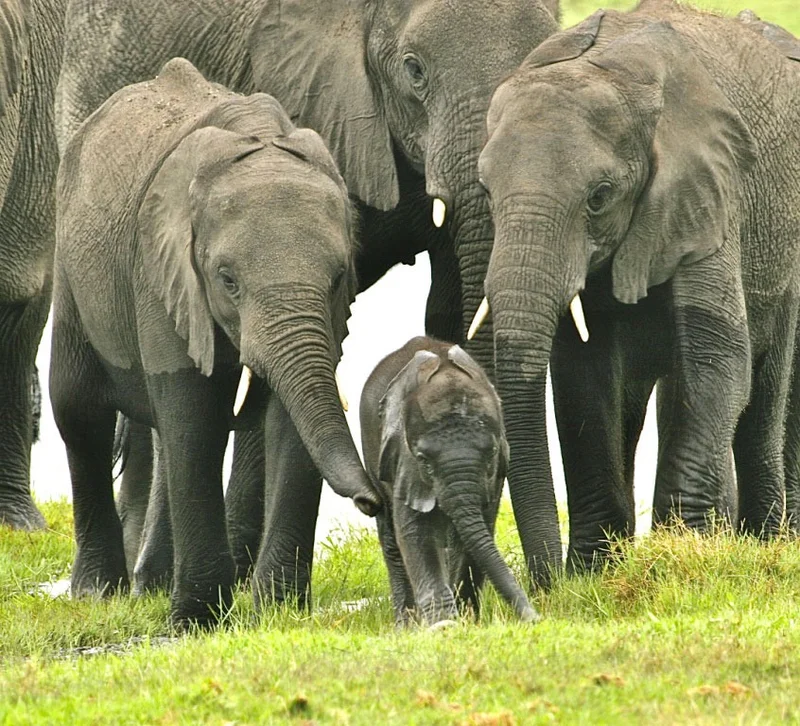
The elephant debate
Few topics divide public opinion like elephants.
Mention Kruger on social media, and it is only a matter of time before someone argues there are âtoo many elephantsâ and that culling should resume.
But the science is far less straightforward.
Much of the public debate is based on how visitors think Kruger should look. Yet landscapes naturally change over time, and those changes are driven by many interacting factors.
For example, the loss of large trees continued even during the three decades when approximately 14,000 elephants were culled. Fire, flooding and rainfall all influence tree survival and regeneration. While mature trees have declined in some areas, smaller trees and shrubs have increased across much of the park.
The landscape is changing, but that does not mean elephants are solely responsible.
Questions about elephant carrying capacity also surfaced during the webinar.
Ferreira explained that carrying capacity is now regarded as an outdated concept for large, open ecosystems like Kruger. Rainfall, food availability, disease, water, predators and human activity all vary across the landscape, meaning there is no single âcorrectâ number of elephants.
Instead of focusing on an ideal population size, managers increasingly ask different questions: where are elephants spending their time, how are they using the landscape, and what local impacts are they having?
That shift has important implications for management.
Rather than trying to reduce elephant numbers across the entire park, interventions are increasingly focused on specific places where local impacts become significant.
Why culling remains controversial
Calls to resume elephant culling often overlook both the scientific uncertainty and the ethical questions involved.
South Africaâs National Norms and Standards state that culling should only ever be considered as a last resort. The practice raises profound animal welfare concerns because of the stress experienced by elephant family groups and the difficulty of ensuring humane deaths.
Those concerns have become even more significant following judgments by the Supreme Court of Appeal and Constitutional Court recognising animals as sentient beings with intrinsic value.
Ferreira emphasised that decisions about elephants cannot be based on numbers alone. Managers must weigh biodiversity conservation, animal welfare, tourism, livelihoods and the fact that scientists still disagree about the broader ecological impacts of elephant populations.
For that reason, deciding whether to cull is neither simple nor purely scientific. It is a question that sits at the intersection of ecology, ethics and public policy.
Leaving a legacy
A century after Kruger was established, SANParks is moving away from the idea that nature can be managed towards a fixed endpoint. Instead, the emphasis is increasingly on adapting to changing ecological and social realities, learning from evidence, and recognising that conservation is as much about people as it is about wildlife.
The centenary conversations made one thing clear: there are no simple solutions to complex conservation challenges. Whether tackling rhino poaching, managing elephants or rebuilding relationships with neighbouring communities, success will depend on balancing biodiversity, animal welfare, social justice and human wellbeing.
Krugerâs greatest legacy may not be that it has remained unchanged for 100 years. Rather, it may be its willingness to keep evolving by learning from its past while adapting to the challenges of the century ahead. DM