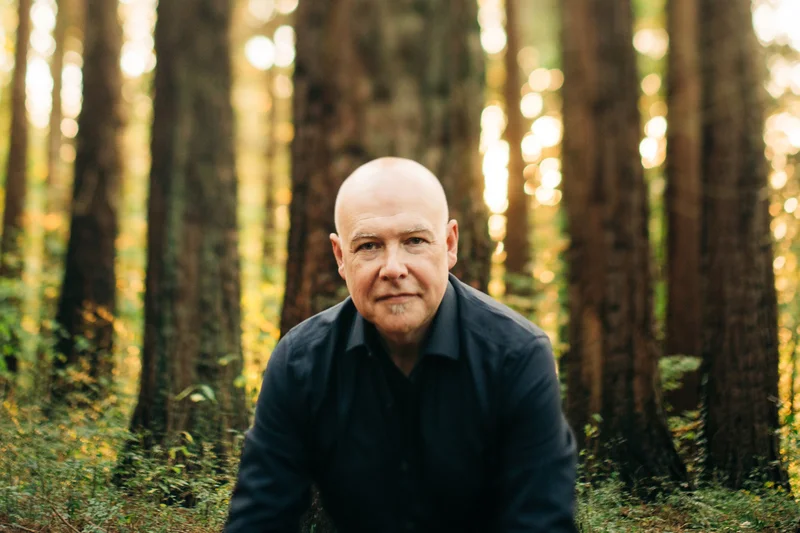
Guiding religious tradition onto a new path is neither safe nor simple. Yet in the late 20th century, when Protestant churches began wrestling with modernizing their music and breaking their dependence on lyrics from the 19th century, Canadian musician Brian Doerksen became the guiding light for a new approach to worship.
“In the whole planet, there is likely not a Protestant church that does not know his songs; there is nowhere you can go that they do not know Refiner’s Fire, or Come, Now is the Time To Worship; his songs are everywhere. In India, in the U.K., in Canada, in America, they are singing Brian’s songs,” said Steve Bell, a musician admitted to the Order of Canada and long-time friend of Mr. Doerksen’s.
“Brian basically wrote the better songs of the whole worship music movement. He just had the ability to create intimacy with Christ with his music; it was very significant,” Mr. Bell said. The worship music movement, in which Brian Doerksen featured so prominently, began in the late 20th century, and saw traditional church hymns often replaced with guitar-driven anthems that had drum and percussion accompaniment and free-flowing emotion.
Mr. Doerksen died in his sleep at his home in Abbotsford, B.C., on July 21 after a difficult six-month illness. He was 60.
The tone of Mr. Doerksen’s career in sacred song seemed to set when he was a young father. In an interview last winter on 100 Huntley Street, a Christian television talk show, Mr. Doerksen described how at the age of 23 he was watching his infant daughter reach for him and feeling love for her as he picked her up and held her close. Mr. Doerksen said he remembered thinking, “This is the kind of relationship I have longed to have with God. Just as my daughter could experience me holding her close, I wanted to experience Father God holding me.”
Inspiration struck as Mr. Doerksen described feeling a whispered invitation from God, who seemed to ask, “Why don’t you write this into a song, your own song that you can sing to me?” The resulting tune, Father I Want You to Hold Me, launched Mr. Doerksen’s entry into a new church music style called Vineyard Music. Vineyard songs were typically written for guitars, drums and percussion instruments, rather than church organs, with lyrics focused on the Holy Spirit and reconciliation with God.
“At a time when churches were wrestling with making faith relevant to the baby boomer generation, Brian was one of the wonderful examples of the reformer side,” said Christine Longhurst, associate professor of worship and music at Canadian Mennonite University, in Winnipeg. “Vineyard Music didn’t stick to any pattern at all; it was about how we can use music to get a sense of the presence of God, and Brian was a pivotal player in how he tapped into the hunger for people to express themselves to God in a deliberately intimate approach.”
At 15, Brian met Joyce, who became his high-school sweetheart and the love of his life. They married at 19 and were a close team in the music business.
Mr. Doerksen spent his early career in small churches as a worship leader. “I felt this invitation, you know, to lead worship with a whisper and sing over the suffering. And those two phrases have never left me,” Mr. Doerksen said in describing his musical approach.
As he began songwriting and performing in the late 1980s, he found success in the Canadian church scene and in the United Kingdom, where he lent his expertise to Vineyard churches. (Vineyard churches belong to a global neocharismatic evangelical Christian movement that originated in California in the 1970s and spread around the world.)
Buoyed by the success of his first album, Father’s House, Mr. Doerksen attempted to launch a stage musical on the same theme. The effort was a financial disaster and cost the couple their first home and years of royalty cheques to pay back the debt. More storms were to come.
“The deepest hard experience was finding out that our second son had the same condition of Fragile X that our first son has,” said Joyce Doerksen. The family also includes four daughters.
“On the day we found out, Brian wandered the property and cried out to God that he resigned,” Ms. Doerksen said. He felt he couldn’t keep travelling and singing in worship when his prayers weren’t answered at home. But then, she said, he heard God tell him to keep singing to people, but to sing about the realities of his own sorrows, too.
The couple accepted a job offer in England with the growing Vineyard church movement, and looked for a new start. “I was walking the streets of London, and all of a sudden, I had the same, similar experience that I had on the day when I wrote Refiner’s Fire, where all of a sudden the air around my physical body was crackling with … electrical-type energy. It’s hard to even put it into words. I remember literally looking to the heavens, going, ‘Now?’ You know, ‘Now is the time?’ And my question back then was, ‘I’m a mess. Like I’m barely hanging on to my faith.’
“I came back home and ran over to the piano and plunked out the melody to the song Come, Now is the Time to Worship. That was the beginning almost of my rebirth into writing songs. Some of the other songs that kind of like I’m known for, they came in a context of me being utterly bewildered and confused,” he said in a recent episode of the podcast Scripture Untangled.
Mr. Doerksen would go on to be a signed artist with Integrity Records, an American label where he recorded multiple solo albums of Christian worship music. His recordings won numerous awards in Canada and the United States, including a Juno Award and the U.S. Gospel Music Association’s International Award.
Mr. Doerksen took various roles in churches, including preaching pastor, and taught songwriting. He toured extensively across Canada and the United States and always found his grounding in nature near his home in rural Abbotsford. He fastidiously tended roses and gardens; he enjoyed trail walking, and as a primary caregiver for his two sons with Fragile X, he loved to walk with them into the silence of the woods and let nature do its restorative work on them all. According to Mr. Doerksen’s family, he requested to be able to die at home so his disabled adult sons, who lived with him and his wife, could have their best chance to understand their father’s coming absence from their lives.
Earlier this year, Mr. Doerksen described his songwriting ethos, saying, “I believe place matters, story matters, history matters. … There are these subtle markers in who we are as a people, and nobody else can write that song other than the people in that place,” he said.
He would challenge churches to personalize music to reflect the realities of life. “Like the Psalms, which have one-third lament to two-thirds song of praise, you need a healthy balance of songs of gratitude, songs of praise, songs of lament, songs of intercession, songs of repentance,” Mr. Doerksen said. “Lead with a gentleness so that those who are barely hanging on feel included.”
Brian Robert Doerksen was born Nov. 17, 1965, in Abbotsford to Mennonite parents. His father was an elementary school principal, his mother a kindergarten teacher, and both left an impression on his understanding of God and music.
Mr. Doerksen told audiences that his mother’s frequent practice of sitting quietly, reading Scripture and praying Scripture had deeply influenced his life. Mr. Doerksen said that each Saturday night, his father would prepare the hymns to be sung in church on Sunday. Curious to be a musician, but uninterested in hymns as a youth, young Brian told himself, “I’m not doing that music, those hymns.” Decades later, during the COVID-19 pandemic, Mr. Doerksen and his father did plan and eventually produce an album of hymns together.
Mr. Doerksen recently told The Canadian Bible Society that he considered the Psalms of the Bible to be “the most emotionally healthy, comprehensive expression of spirituality ever written.”
“These Psalms are songs of desire and desperation, songs that demand justice for the oppressed, songs that honour the innocent praise of children, songs about everyday things like sleep,” Mr. Doerksen said.
He was recording right into this past spring, despite experiencing increasing pain from his illness. During that time, Mr. Doerksen recorded an album called Breathing, a collection of songs intended to comfort people struggling with anxiety or insomnia, his business partner, Luke Vandevert, said. The album has not yet been released.
Mr. Doerksen leaves his wife, Joyce Doerksen; their children, Rachel (who is married to Mr. Vandevert), Esther, Ben, Joy, Mercy and Isaiah; Brian’s brother, Rev. Allen Doerksen; and his father, Harry Doerksen. A private memorial has already been held and the family is considering select locations for a memorial concert tour in honour of Mr. Doerksen’s life.
You can find more obituaries from The Globe and Mail here.
To submit a memory about someone we have recently profiled on the Obituaries page, e-mail us at obit@globeandmail.com.