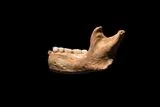
A new finding from a Spanish cave complex has revealed that the ancient human species Homo antecessor, which lived across Europe between 1.2 million and 600,000 years ago, may have been more similar to modern humans than first thought. The new findings have been published in the Journal of Human Evolution.
The Gran Dolina cave complex, part of the larger Sierra de Atapuerca site near Burgos in northern Spain, was the first and, so far, only place where H. antecessor remains have been discovered. Samples of between 13 and 15 individuals have been dug up from the cave since the first H. antecessor sample was found in 1994.
Recently, researchers dug up 24 new human fossils from Gran Dolina. Among this hoard were three fragments of parietal skull, which form the top and sides of the human skull. Insight into skull thickness is useful to paleontologists because it can reveal details about cranial structure, growth, and evolutionary relationships.
Comparing Cranial Thickness Layer by Layer
Most of the previous H. antecessor samples from Gran Dolina were from juveniles, so researchers were excited to find that these new skull fragments were from adults.
The researchers analyzed the samples using an imaging technique called micro-computed tomography. This process separates images of the three layers of the skull and allows tiny features, such as bone markings and tiny channels — called microforamina that permit the passage of immune and blood cells between skull layers — to be visualized.
H. antecessor skulls had not previously been visualized in this level of detail, said Rafael Gallareto-Sande, an archaeologist at the National Research Center on Human Evolution (CENIEH) in Spain and co-author of the new study, in a statement.
“This is the first time we have been able to compare the cranial thickness of this species quantitatively, layer by layer, with the available data for other members of the genus Homo. This provides extremely valuable information that helps us interpret the evolutionary position of the species,” he said.
The comparison found remarkable similarities between modern-day humans and their ancient relatives. The middle layer of the skulls of both H. antecessor and modern humans is made of a spongy material called the diploë. In the ancient samples, this layer was the thickest of the three, making up roughly half of the total skull thickness. This is similar to what is seen in modern humans. There were differences, too – H. antecessor had thinner outer skull layers and thicker inner layers compared to modern humans.
Ancient Ancestors With a ‘Mosaic Anatomy’
The new data suggests that H. antecessor had a “mosaic” anatomy. Some bone features, like some of the skull densities measured in the new paper, are shared with modern humans, whereas other features, like H. antecessor’s teeth, more closely resemble those of more ancient species.
Despite these new findings, the authors conceded that the number of H. antecessor samples identified remains small, which somewhat limits the interpretations they can draw.
“The available sample is still limited and fragmentary, so any new fragment could refine these results. We hope that future excavation campaigns will continue to yield new cranial remains that allow us to test these observations and explore their implications in greater depth,” concluded Gallareto-Sande.
Article Sources
Our writers at Discovermagazine.com use peer-reviewed studies and high-quality sources for our articles, and our editors review for scientific accuracy and editorial standards. Review the sources used below for this article:
- This article references information from a study published in the Journal of Human Evolution:Parietal thickness and Homo antecessor: A description of three new fragments from Gran Dolina, Atapuerca, Spain