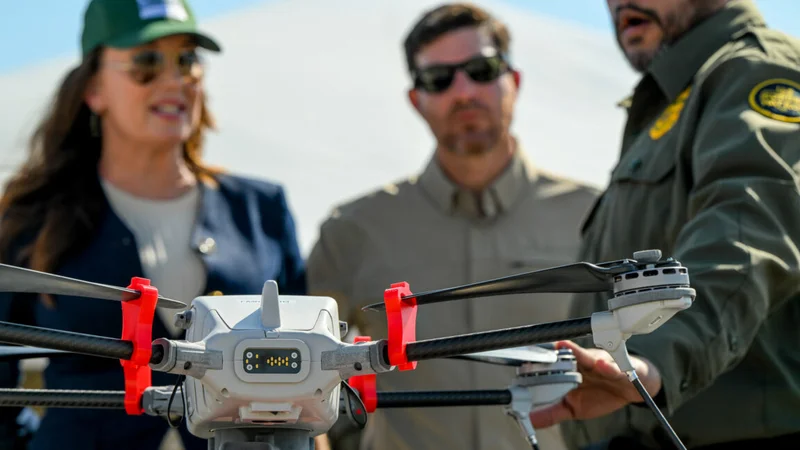
Hundreds of US government drones have switched from border surveillance to a different surveillance mission this summer—looking for signs of screwworm infestations in wild animals and livestock herds.
The flesh-eating New World Screwworm is the parasitic larva that emerges from eggs laid by flies in the open wounds or body openings of warm-blooded animals and humans, with untreated cases potentially leading to severe injury or death. Since the first screwworm cases were detected in South Texas in June, the US Department of Agriculture and US Customs and Border Protection have been conducting “one of the most extensive animal-health surveillance operations in the country,” according to the USDA in social media posts on platforms like X and Facebook on August 10.
The effort involves at least 200 drones owned by the Department of Homeland Security, which includes the Customs and Border Protection (CBP) agency. The USDA has described performing more than 1,000 drone flights and surveying more than 22,000 animals so far.
However, it’s unclear if any of the drone flights may have led to detections of animals infested by screwworms in the United States. The USDA dashboard showed 45 confirmed cases in domesticated animals across South Texas and New Mexico as of August 12. Most infestations involved cattle or sheep, with several dogs and a goat also being listed.
Ars reached out to CBP and USDA for additional information on the number of drones involved in the surveillance campaign and how many screwworm cases were detected as a result of such drone surveillance.
How drone surveillance of animals works
The main drone featured in the animal health surveillance campaign appears to be the Skydio X10 quadcopter, which carries a thermal imaging sensor capable of detecting temperature differences. Such infrared sensors can detect higher body temperatures in animals that may have a fever related to secondary bacterial infections from screwworm infestation.
Drone operators working for the Animal and Plant Health Inspection Service under the USDA can also use high-resolution color imagery to look for open sores on animal bodies or check for abnormal behavior, such as “loner” animals, according to a USDA article and video that described an operation at a ranch in Junction, Texas, on June 18.