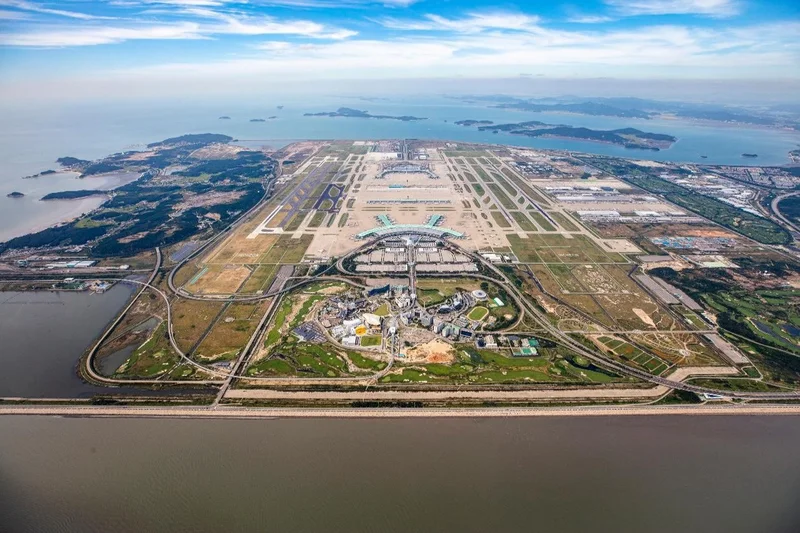
Incheon International Airport handled the highest number of international passengers in the first half of this year globally, surpassing long-standing international hubs in Dubai and London, the airport operator said Thursday.
This also marks the first time it has topped the ranking since opening in 2001.
The airport welcomed 38.39 million international passengers in the January-June period, up 6.3 percent from a year earlier, according to Incheon International Airport Corp. (IIAC). The figure put Incheon ahead of London Heathrow Airport, which serviced 37.79 million passengers, and Singapore Changi Airport’s 34.53 million.
The ranking is based on international passenger traffic compiled by Airports Council International.
Incheon’s rise to the top underscores the airport’s growing role as a global aviation hub and highlights the impact of Korea’s long-term policy of developing Incheon as a Northeast Asian gateway.
The airport ranked 10th globally shortly after its opening, climbed to fifth in 2018 and reached third in 2024 before claiming the global top spot this year.
Its performance was helped by shifts in global air traffic following heightened geopolitical tensions in the Middle East. Disruptions at major Middle Eastern transit hubs redirected some passenger flows toward Incheon, boosting both direct and transfer traffic.
Incheon handled about 4.24 million transfer passengers in the first half, up 18.1 percent from a year earlier. Transfer passengers on European routes jumped 63.2 percent to about 214,000, while total passengers on those routes rose 11.2 percent to 2.5 million.
Foreign travelers also accounted for a growing share of traffic. Foreign nationals represented 44.4 percent of all passengers in the second quarter, the highest quarterly proportion on record, driven largely by rising arrivals from China and Japan.
The airport’s strong performance has been supported by continued investment in infrastructure and its extensive flight network. Following the completion of its fourth-phase expansion in November 2024, Incheon can now accommodate up to 106 million passengers annually, making it the world’s third-largest airport by international passenger capacity.
The airport is connected to 183 cities in 53 countries through 101 airlines, with 158 international passenger destinations. Its network has continued to expand this year with new carriers and routes.
Incheon also reached another milestone on July 7, becoming the fastest major airport to handle a cumulative 1 billion passengers, achieving the mark 25 years and three months after opening.
The airport said its growth reflects consistent government support, investment in infrastructure and the efforts of thousands of airport workers.
Looking ahead, IIAC plans to focus on service innovation and strengthen future capabilities, including artificial intelligence and urban air mobility infrastructure. It also plans to improve connections between the airport and major regions across Korea to support the government's goal of attracting 30 million foreign tourists.
“Building on this achievement, we will accelerate service innovation while staying true to the airport’s fundamental mission of ensuring safe operations and improving passenger convenience,” IIAC Acting President Kim Bum-ho said.