- Published
The future of endangered species across the world could be affected unless the government brings in new laws soon, to make it easier to transfer animals around the globe, conservationists say.
Zookeepers at Twycross Zoo warn that Brexit significantly affected their ability to move animals between Europe and the UK.
"It's a huge blow to have to spend a lot more transferring animals than we previously have done," Dr Rebecca Biddle, from the zoo, said.
Ministers were already negotiating an agreement with Europe in order to make it easier for zoos by "cutting red tape", a spokesperson for the Department for Environment, Food and Rural Affairs (Defra) said.
When the UK left the European Union in 2020, zoos in this country were not able to use EU agreements which were in place, for the transportation of animals between European countries.
Since then, animal transfers need bespoke agreements, often requiring paperwork to be completed between the UK and several European countries.
"We need different requirements in terms of animal health testing and quarantine periods," Biddle, Twycross' director of conservation, said.
"We need multiple licences from countries, we need to get the governments to align on regulations."
Consequently the number of imports and exports at the site in Atherstone, on the Leciestershire/Warwickshire border, have declined significantly, affecting their ability to bring in mating pairs for breeding.
"It's hugely increased in cost and staff resource. As a conservation charity we are really careful about our resources and where they go," Biddle added.
"It's a huge blow to have to spend a lot more transferring animals than we previously have done. "
Twycross Zoo's resident snow leopard arrived in 2025, one of just nine international arrivals last year, compared to 33 in 2019.
Biddle warned this reduction was replicated at zoos across the UK.
"Zoos within the UK have gone from transferring about 1400 animals between the UK and Europe each year, to last year only about 390," she said.
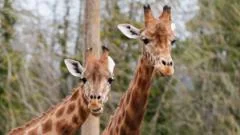
Twycross is home to the UK's only heard of Kordofan giraffes and staff hope a 10-month-old female will become the mother of the next generation, if a suitable mate can be imported.
"It's really stagnating our populations here, because we need to be able to move animals to create healthy breeding pools to look after the genetics of our populations," Biddle said.
Twycross is also home to two female Sumatran tigers, one of which was recently located from West Midlands Safari Park in Bewdley, Worcestershire.
Their species is critically endangered and zoologists have found a suitable male breeding match at a zoo in The Netherlands.
However his relocation, via Belgium and France, is proving difficult to co-ordinate.
"We focus our efforts on the species that are the most endangered, that really need out support," Biddle said.
"We work with zoos all around the world, particularly zoos in the rest of Europe, because we can't do it by ourselves."
In May, the government announced legislative plans for an agreement on animal transfers between the UK and the EU and Twycross is calling on the new prime minister to continue the task.
"What we need is for Andy Burnham to keep the pressure on," Biddle said.
Work was continuing with other governments in Europe around the importing and exporting of zoo animals, the Defra spokesperson said.
"The government is currently negotiating a Sanitary and Phytosanitary Agreement with the European Union," they added.
"[This] will make it easier for zoos to import and export into the European market by cutting red tape and removing barriers to trade."