Brazil · Politics
Key Facts
—Federation move. The PP-União Brasil federation opted for national neutrality, reversing a recent tilt toward Flávio Bolsonaro’s presidential bid.
—State freedom. State chapters are now free to form local alliances, but no formal national support will be given to the campaign.
—Internal friction. Tensions between Flávio Bolsonaro and PP president Ciro Nogueira helped drive the decision to retreat.
—Centrão blow. Losing the federation’s formal backing deprives the campaign of significant party machinery and broadcast time.
—2026 impact. The move fragments the centrist field and makes a unified coalition around Flávio Bolsonaro less likely.
The União Brasil federation has abruptly stepped back from a potential national alliance with Flávio Bolsonaro’s presidential campaign, adopting a position of strict neutrality just days after signals pointed toward formal support. The decision, consolidated in a meeting on Tuesday, July 21, 2026, frees state directories to negotiate local alliances but denies the candidate the organized national backing he had sought.
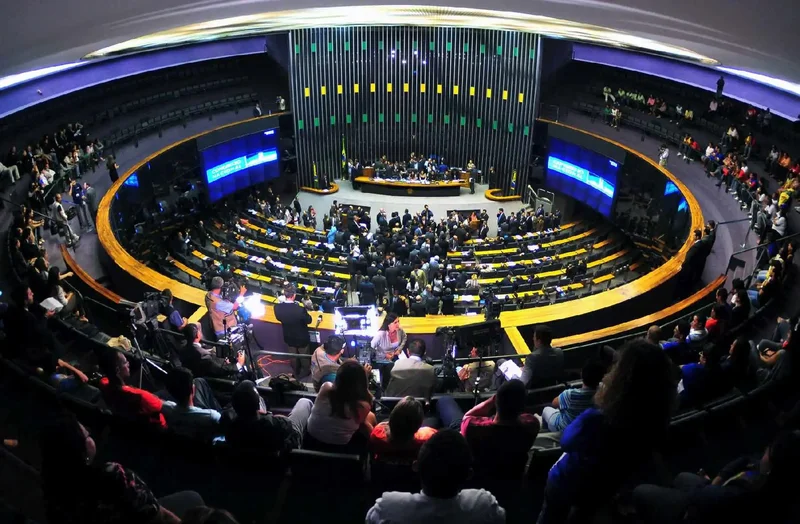
Brazil’s National Congress makes the country’s laws and is formed by multiple political parties.
One-stop reference
Company Intelligence
Every listed company in Latin America — financials, ownership and structure for 1,450+ companies across 26 exchanges, in one place.
RTAsk Rio TimesWhat this means, and what's next›
What Changed Inside the União Brasil Federation
Earlier in July, the PP-União Brasil bloc was treated as a likely supporter of Flávio Bolsonaro, the son of former President Jair Bolsonaro and the Liberal Party’s (PL) pick for the 2026 race. That posture dissolved when federation leaders decided to stop considering a formal national endorsement.
Instead, the group’s leadership instructed state chapters to defend their own local platforms. The new orientation is one of total neutrality at the national level, meaning the federation will not join the PL’s presidential ticket or commit its national structure to the campaign.
Why the Federation Reversed Course
Political friction between Flávio Bolsonaro and key federation figures, especially Progressistas (PP) president Ciro Nogueira, eroded the initial momentum. Nogueira, a central actor in the talks, could not sustain the pro-Bolsonaro line against mounting internal resistance.
State leaders also pressed hard to avoid a rigid national posture, arguing that local flexibility would better preserve their electoral prospects. The prevailing view inside the federation was that a full embrace of the Bolsonaro candidacy carried political and territorial costs that outweighed any benefits.
What the União Brasil Shift Means for Flávio Bolsonaro
The candidate loses access to a major Centrão bloc, a loose coalition of centrist parties that controls significant campaign resources, television airtime, and ground-level organization. Without that machinery, his candidacy looks more fragile across Brazil’s diverse regions.
The neutrality clause does not block all support. In some states, PP and União Brasil directories may still align with Flávio Bolsonaro if it makes local sense.
But those will be scattered, ad-hoc arrangements rather than a cohesive national front.
How the 2026 Presidential Race Is Reshaped
The decision shrinks the prospect of a unified centrist front forming around Flávio Bolsonaro. It pushes the race toward fragmented, state-by-state alliances instead of a solid national coalition, complicating the PL’s strategy of presenting him as a candidate who can attract large parties beyond the hardcore Bolsonarista base.
Reactions inside the Bolsonaro camp treated the move as a clear setback, especially after weeks of work to lock in Centrão support before party conventions. Federation leaders defended the neutrality as the best way to preserve state autonomy, and internal reports indicate the line was practically sealed even before a public announcement was made.
Background: The Centrão and Brazil’s Coalition Politics
To understand the weight of this decision, foreign readers should know that the Centrão is not a formal party but a powerful grouping of pragmatic, center-right parties that has long acted as kingmaker in Brazilian politics. Its members, including PP and União Brasil, often trade support for cabinet positions and influence over the federal budget.
The federation between PP and União Brasil was designed to pool their resources, creating a single bloc with more parliamentary seats, more television airtime during campaigns, and stronger bargaining power. Losing its formal endorsement means Flávio Bolsonaro cannot count on that consolidated machine to amplify his message or build a disciplined national campaign structure.
What It Means for Expats and Investors Watching 2026
For expats and foreign investors, the fragmentation of the centrist field introduces more uncertainty into an already unpredictable election cycle. A weaker, less cohesive coalition around Flávio Bolsonaro could open the door for a more polarized runoff or a surprise centrist candidate, both of which could shift economic policy platforms significantly.
Brazilian markets tend to react sharply to shifts in coalition strength because a fragmented Congress makes fiscal reforms harder to pass. This early sign that the Centrão is keeping its options open suggests that whoever wins in 2026 may face tough negotiations to govern, a scenario that often delays key infrastructure and privatization agendas that international investors watch closely.
Frequently Asked Questions
Did União Brasil fully break with Flávio Bolsonaro?
The federation adopted national neutrality, so there is no formal break. State chapters remain free to support him locally, but no national alliance exists. This means the relationship is now optional and decentralized rather than a structured partnership at the top.
Who is Ciro Nogueira and why does he matter?
Ciro Nogueira is the president of the PP party and a powerful Centrão leader who served as chief of staff under former President Jair Bolsonaro. His friction with Flávio Bolsonaro was a key factor in the federation’s decision to retreat from a national endorsement, and his inability to hold the pro-Bolsonaro line reveals the limits of even influential power brokers inside the bloc.
How does this affect Flávio Bolsonaro’s campaign resources?
Without the federation’s formal backing, the campaign loses access to a large share of television airtime, party infrastructure, and organized ground support that a Centrão bloc normally provides. In Brazil’s electoral system, free TV and radio slots are distributed according to a coalition’s size in Congress, so missing out on this bloc directly reduces his visibility in the crucial final weeks before the vote.