Two Melbourne universities are not accepting applications from Iranian students to study research degrees such as PhDs, as they take a hardline approach to complying with federal government sanctions.
The tightening of enrolments has led Australian-based Iranian academics to call for the universities to reconsider the policies, which they say have unfairly prevented students from adding to fields such as medicine, food science and architecture.
Deakin University and Swinburne University are not taking new enrolments from higher degree by research students – including master’s and PhD students – from sanctioned countries such as Iran.
“This decision follows advice from government and the university’s broader compliance and risk obligations in relation to certain Australian sanctions,” a Deakin University spokesperson said. “There are both legal and regulatory considerations.”
A Swinburne spokesperson said the university was following government advice and legal requirements related to sanctions and research security. “We regularly assess and update our procedures in light of an evolving and complex regulatory landscape,” the spokesperson said.
Iran, which has been in a conflict with the US and Israel since February, is governed by a regime whose nuclear program has caused unease among the international community. Australia has sanctions against Iran through the UN Security Council and imposes its own autonomous sanctions on it.
The tightening of enrolments of researchers with Iranian citizenship comes after the federal government updated advice last month for universities to enhance their due diligence to ensure they do not breach sanctions by providing banned services to that country, or dealing with specific entities or individuals within it.
Penalties for the universities breaching the sanctions can be up to $3.64 million, or greater for breaches worth large sums of money.
Whether a researcher’s activity could be a breach can depend on their nationality, recent travel history, prior education and involvement in fields “that are sensitive or dual use in nature, such as nuclear technology, advanced weaponry, or cybersecurity”, the Australian Sanctions Office advice states.
However, the office also clarifies it “does not consider a blanket restriction on enrolling all such persons to be the only way to mitigate risk”.
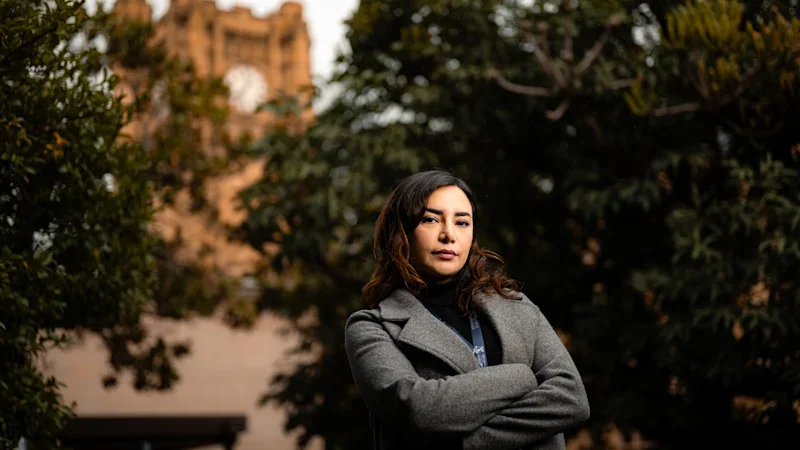
University of Melbourne political science researcher Afsaneh Seifinaji has been in contact with several Iranian researchers who have been unable to enrol at Deakin and Swinburne after applying to study fields such as food science, endometriosis in women and environmentally sustainable architecture.
“Iranian students are some of the really hardworking and top students among international students in Australia. I don’t think this is fair because of an ongoing conflict. I think this is too conservative [of the universities],” Seifinaji said.
“It is understandable that Australia takes a conservative approach of not admitting certain [researchers] – for example, a nuclear scientist or some sort of research that can be used in weapons manufacturing.
“But I believe that if you are not conducting highly sensitive research, you should not be included in this. A lot of people wanted to have the opportunity to conduct study in a better country all their lives, and that is now on pause for who knows how many years.”
She is also aware of students who have been awarded PhD scholarships at one of the universities but are now unable to gain enrolment due to the blanket ban.
In May, Monash University arts faculty staff received an email, seen by this masthead, saying the university was “putting a temporary pause on processing enrolment offers to potential [higher degree by research] candidates from Iran”. However, it has since lifted the pause.
“Students from sanctioned countries can apply for admission as PhD students at Monash, and may enrol if admitted, subject to standard screening and visa processes,” a Monash University spokesperson said.
Other universities such as RMIT are also taking a more nuanced approach, assessing research students on a case- by-case basis. “RMIT has introduced enhanced due diligence checks on prospective students from sanctioned countries, aligned with Australia’s foreign policy settings and relevant laws,” a spokesperson said.
The University of Melbourne is also not restricting enrolments based on student citizenship. Vice-chancellor of global, culture and engagement Michael Wesley said the responsibility to adhere with the government’s expectations was being taken seriously, and that the university was alert to the risks of foreign interference, and “devotes considerable resources to identifying and mitigating these risks”.
The Morning Edition newsletter is our guide to the day’s most important and interesting stories, analysis and insights. Sign up here*. *