On Thursday, 6 August, taxi industry body Gibela Namela Holdings and urban renewal movement Jozi My Jozi signed a memorandum of understanding (MOU) at Constitution Hill that aims to improve the taxi industryâs operations and promote dignity and safety for inner-city commuters.
Against recent reports of the imminent collapse of Bree Street Taxi Rank in the CBD, and all-too-frequent news of taxi road accidents and non-compliance, the MOU marks a positive step towards saving lives and ensuring the cityâs overall rejuvenation.
The partnership will work towards creating a more structured operating environment that benefits both the industry and commuters who rely daily on taxi transport.
âIn Johannesburg, millions of people take minibus taxis every day, and commuters, whether they ride in minibus taxis or drive their own vehicles, deserve safer roads. That is what this MOU is all about. If we fix taxis, we positively shift the trajectory of the whole city,â said Jozi My Jozi CEO Innocent Mabusela.
âThe taxi industry is one of Johannesburgâs most important economic sectors,â he continued.
âIn the lead-up to the historic signing of this MOU, we have spent many months engaging with industry leadership because lasting solutions have to be developed with the people who operate the system every day.â
âAs the CoJ taxi industry, we believe this partnership with Jozi My Jozi will derive many valuable initiatives that change the landscape of this extensive industry going forward, from the associations and operators, to taxi rank infrastructure and the commuters at large,â said Themba Gcabashe, Gibela Namela Holdingsâ Business Development Executive.
The Executive Director for City of Johannesburg Transport, Lutando Maboza, was also present at the signing of the MOU, and said that the partnership is supported by the city in its endeavour to improve the overall public transport user experience.
The MOU sets out a business model framework whose long-term goals include using tech to strengthen record-keeping, boosting operational compliance, and laying down the formal groundwork required for future public integration and government subsidisation.
So what are the nuts and bolts?
Jozi My Jozi will work with taxi associations to improve the systems that support public transport, from taxi rank safety and cleanliness to driver well-being and skills development.
There are four pillars to the agreement:
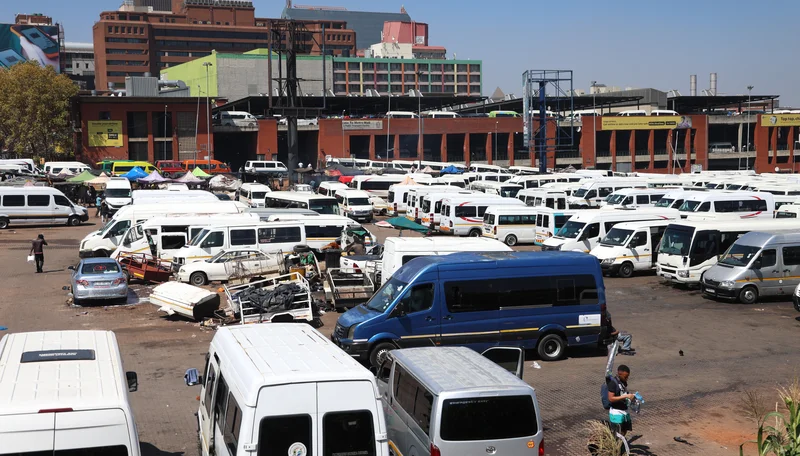
Project Dignitywill work towards cleaner and more dignified public spaces. Inner-city ranks, which are notoriously congested, should undergo infrastructural upgrades and more consistent cleaning and maintenance.
Project Protectwill improve high-traffic commuter zones through better coordination between queue marshals and implement tighter on-the-ground security as well as solar lights and smart safety cameras.
Project Healwill address driver wellbeing, and mental and physical health and support. Last year, Jozi My Jozi and the South African Heart Association ran the Check My Beat â Heart Health Tracks campaign, which set up mobile screening centres at Bara Taxi Rank in Soweto and Park Station to assess driversâ health and offer medical support.
Project Learnwill introduce targeted road safety educational and training programmes for professional taxi drivers.
The partners believe technology will play a central role in supporting the proposed business model by establishing a Smart Mobility Transit system to start digital record-keeping and lay the foundations for modern electronic ticketing.
Smart mobility transit is basically the integration of advanced technologies, data-driven systems, and sustainable practices into public and urban transportation to optimise how people and goods move. DM
Bridget Hilton-Barber is a freelance writer who writes for Jozi My Jozi.