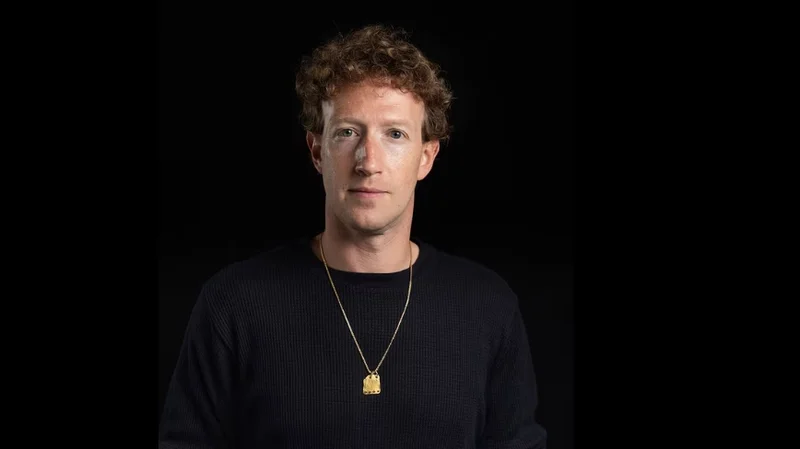
In a roughly 6,500-word essay published a couple of weeks ago, Meta’s chief executive, Mark Zuckerberg, laid out a vision of “personal superintelligence”, an artificial intelligence built for everyone rather than a centralised system that automates people out of a job.
The slope was expansive, occasionally utopian, and it landed less as a settled manifesto than as a Rorschach test.
The core claim is that Meta will hand a capable personal agent to billions of people, free or at low cost, complete with a fully private mode. Mark Zuckerberg describes it helping with health, careers, finances and relationships, an intimate assistant that knows you and quietly works on your behalf.
He is at pains to dispute the fear that superintelligence will hollow out the labour market. Rather than a machine for automation, he frames it as “a tool of invention”, something that amplifies human ambition rather than replacing it.
Radical abundance, in his telling, arrives without mass job losses, a striking bet given how much of the current AI conversation is about which jobs go first.
An open-source thread runs through all of it. Meta will “resume releasing some open source models soon”, he wrote, including a model called Muse Glimmer and an open-weight version of its Muse Spark coding model.
That fits a stance he has defended before, having argued that the US should not block Chinese AI models.
To soften the local impact of Meta’s building spree, he announced a $1bn “Future is for Everyone Fund” aimed at data-centre communities, covering electricity costs and worker training.
The gesture sits against a 2026 capital budget of roughly $145bn, most of it poured into the data centres superintelligence demands. Meta is even putting its own AI chip into production to double its computing capacity.
The spending has been matched by an aggressive hunt for talent. Meta’s Superintelligence Labs has been poaching rival researchers at pace, including a systematic raid on Mira Murati’s Thinking Machines Lab.
Mark Zuckerberg also floated a few concessions to caution, suggesting Meta might share “intermediate training checkpoints” with governments and work with law enforcement against the worst kinds of misuse.
For all that, the reception was sharply divided, and the balance tilted towards suspicion.
Some critics argued the essay was long on utopian language and short on specifics, a familiar complaint about grand AI declarations that gesture at abundance while staying vague on how any of it will actually work. The sharper worry, though, concerns who is making the promise.
An “intimate” agent embedded in your health, finances and relationships is, by design, a formidable data-harvesting and dependency engine, and it comes from the company behind Facebook and Instagram.
To sceptics, “personal superintelligence” reads as fresh branding for the same engagement-and-ads machine, dressed up in the language of empowerment. Promising both radical abundance and no job losses, they add, strains credulity.
The tension is not merely reputational: as we have argued, AI’s real bottleneck is no longer chips but capital and consent, and consent is exactly what a company with Meta’s history has to earn.
Which is why the essay works better as a Rorschach test than a roadmap. Read one way, it is a genuine bid to democratise a technology that could otherwise concentrate in a handful of hands.
Read another, it is the most surveilled corner of the internet asking to move into your health records and your relationships. Both readings can be true at once, and that ambiguity, more than any missing specification, is what Mark Zuckerberg still has to resolve.
Get the TNW newsletter
Get the most important tech news in your inbox each week.