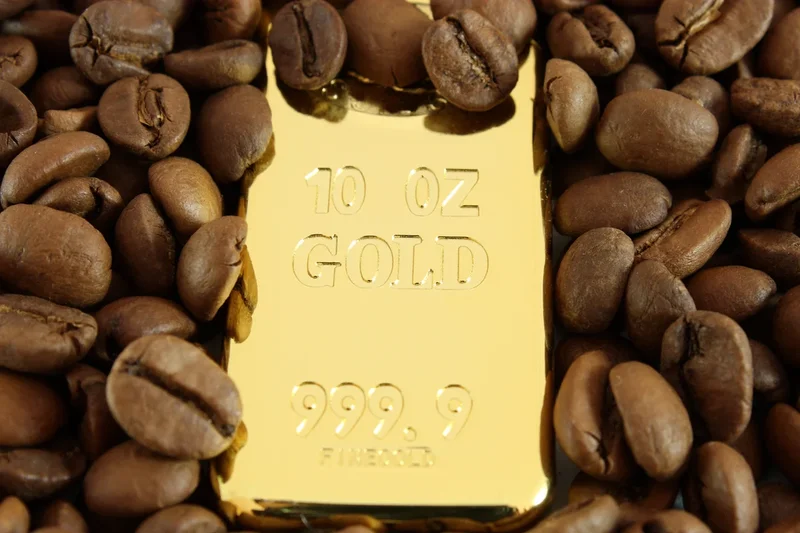
Commodities are often in the shadow of the stock market, bonds and property when it comes to considering options for investments, but overlooking them could be a mistake.
The principal reason professional investors include them in their portfolios of assets is diversification.
Commodities prices are usually de-correlated from stocks and bonds, so prices move differently, which can help reduce overall risk when investing.
They can also be very profitable investments in their own right, if bought at the right times and held long term.
Commodities can you invest in - and what changes prices
There is a wide range of commodities to invest in, and no universally accepted list. They can be grouped into broad categories, which include fuels like crude oil and natural gas, metals such as copper or zinc, and agricultural produce like coffee beans.
Gold and silver are technically commodities too but sit within their own sub-category of precious metals, rather than being seen in the same terms as other commodities.
In the simplest terms, commodities prices are set like any other asset through supply versus demand. However, there are complex aspects to how each side of this equation is formed due to commodities being physical goods that must be produced and transported.
Factors that reduce or hinder supply such as wars, other shipping route blockages or adverse weather in the case of agricultural commodities, push prices up.
Demand can also fluctuate with the cyclical variations in the strength of the global economy or shifts in consumption preferences.
Pros and cons of investing in commodities
The main reasons to invest in commodities are the diversification benefits and potential for high returns.
With commodities having different risk and reward characteristics to the stock market and bonds, and prices often moving in the opposite direction, they act as a powerful diversifier.
We have seen this play out in recent months, with the oil price rising as stocks fall, and vice versa.
Having assets that are de-correlated in this way greatly reduces the overall risk of investing.
Commodities prices are very sensitive to global events, particularly military conflicts or other disruption to trading routes, such as the blockage of the Suez Canal by a stuck ship in 2021.
In the case of agricultural commodities, they can be highly sensitive to the weather, as growing conditions can cause significant variation in how much can be produced in a given year. Droughts, floods or unusual cold snaps can cause havoc for farms.
This being so, prices are volatile. While this can arguably be a pro as it creates opportunities to make money for experts in trading and investing, it can more broadly be seen as a con, as it makes commodities risky investments for the average person.
One other thing to be aware of is investing in commodities well, independent of professional advice, requires a good understanding of geopolitical events and close following of the global news cycle. While some will relish this challenge, it is not necessarily for everyone.
How to invest in commodities
For most, investing in commodities involves buying into a commodities fund, exchange-traded fund (ETF) or exchange-traded product (ETPs).
ETPs are very similar to exchange traded funds (ETFs) and the terms are often used interchangeably. ETPs which focus on specific commodities are also referred to as exchange-trades commodities (ETCs).
Physically acquiring commodities is not practical for most investors due to the transportation and storage required, so investment firms create financial products tied to the prices of the commodities.
These can all be bought through a standard investment platform account and held in an ISA or SIPP, in the same way as stocks and other funds.
There are broad funds and ETFs that target a whole range, or ETPs providing investment exposure to specific commodities.
**Oil **
Crude oil is arguably the first thing that comes to mind for most people when considering commodities investments.
The price of oil is one of the key inputs into the global economy as it directly impacts the cost of everyday life in many ways. Not only does it factor into petrol prices for drivers, the price of fuel indirectly impacts every physical good we buy due to the costs of transportation.
The price of a barrel of oil has risen around 32 per cent over the past year alone, largely due to the Middle East war, and is up 35 per cent over five years.
One straightforward way to invest in oil is through an oil ETF such as the iShares Oil and Gas Exploration and Production UCITS ETF.
Coffee beans
A daily morning coffee is a ritual shared by many millions of people all around the world, so coffee prices cannot be dismissed when looking at the health of the world economy.
The price of coffee beans has risen around 3 per cent over the past year and around 70 per cent over five years.
An example of how to invest in coffee is the WisdomTree Coffee ETC.
Copper and other industrial metals
Copper is another vital component of the world economy as it has so many applications in electronics and infrastructure such as plumbing systems.
The price of copper has risen around 38 per cent over the past year and 55 per cent over five years.
One such place you could invest in copper is the iShares Copper Miners UCITS ETF.
Cocoa
Cocoa is used as an ingredient in many different food products and is a primary ingredient in chocolate.
Its value can vary a lot due to farming yield variations year to year, and its price has risen significantly in recent times.
The price of cocoa has fallen back around 30 per cent over the past year but is still up 120 per cent over five years.
An example of where to invest in cocoa is through the WisdomTree Cocoa ETC.
When investing, your capital is at risk and you may get back less than invested. Past performance doesn’t guarantee future results.