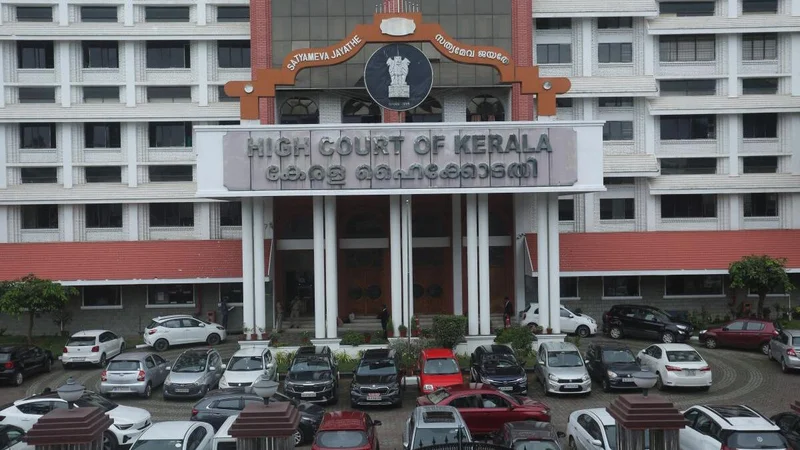
Closing the appeals filed by members of the Jacobite faction relating to the management of six churches in Palakkad, Ernakulam and Kollam, the Kerala High Court has expressed hope that measures proposed by the State would ensure “lasting peace” in the Orthodox-Jacobite Church dispute.
The Division Bench of Justices A.K. Jayasankaran Nambiar and A.K. Preetha, while disposing of the plea against granting police protection over Church properties, on Thursday (August 13, 2026) stated that the claim over the management of the Church and possession of Church properties needed to be decided by a competent civil court first, before deciding on protection.
The court acknowledged the report filed by Additional Advocate General P.A. Mohammed Shah stating that the Chief Minister of Kerala proposed to mediate between the denominational heads of both the Orthodox and Jacobite factions to settle the long-standing dispute. The Bench stated that in general, it was preferred that the State “remain neutral” in religious matters. However, when the disputes led to disruption of law and order, it was the duty of the State to restore peace through mediation, or as a “last resort”, through executive action or legislation.
The Orthodox faction had sought police protection based on a Supreme Court order which affirmed its right to manage the Malankara churches.
Previously, the court had directed District Collectors of Ernakulam and Palakkad to take over possession of the respective churches, in contempt petitions filed by the Orthodox faction citing non-compliance of a court order granting police protection.
However, the court had, in March 2026, examined whether a High Court can direct civil administration to take over physical possession of religious places and if so, to what extent such intervention would be justified in a dispute relating to religious affairs. In this regard, the court found that while the Supreme Court order could be used to resolve disputes regarding management of the Church, a police protection order to enforce a civil right can only be passed if there was a violation of a civil court order that has concluded such a right.
The Division Bench concurred with this decision, finding that the dispute over the Church and its properties had not been decided in a civil court as it should have been, and held that it would be “an abuse of the process” to permit a person to approach the court for protection of a claimed property without establishing his right of possession first in a civil court.
Published - August 13, 2026 03:50 pm IST