Your support helps us to tell the story
From reproductive rights to climate change to Big Tech, The Independent is on the ground when the story is developing. Whether it's investigating the financials of Elon Musk's pro-Trump PAC or producing our latest documentary, 'The A Word', which shines a light on the American women fighting for reproductive rights, we know how important it is to parse out the facts from the messaging.
At such a critical moment in US history, we need reporters on the ground. Your donation allows us to keep sending journalists to speak to both sides of the story.
The Independent is trusted by Americans across the entire political spectrum. And unlike many other quality news outlets, we choose not to lock Americans out of our reporting and analysis with paywalls. We believe quality journalism should be available to everyone, paid for by those who can afford it.
Your support makes all the difference.
Read more
A sunseeker’s dream, recreating your heavenly escape in your own living space has its rewards, especially from a wellbeing angle – holidays make us happy!
But the reality can be a bit daunting when trying to nail the right aesthetic; sometimes the temptation is to overthink it, and end up getting bogged down with the finer details.
The good news is, interior designers suggest you don’t need a passport to capture the feeling of a favourite holiday destination at home.
From the tropical calm of Bali to the indoor-outdoor flow of Florida, designers suggest destination-inspired ideas are less about the exact recreation of a place – and more about borrowing the colours, textures and atmosphere that make it feel memorable.
To put you on the front foot, home and design platform, Houzz have worked with four interior-design firms to create 3D floor plans inspired by some of the most sought-after holiday spots around the world.
Here, tastemakers share their pro tips to get the look at home…
1. Italy… focus on texture, not accessories
Caroline Couzens of Caroline Couzens Design, a multi-disciplinary, award-winning interior designer and ceramist, created an Italian-inspired kitchen and dining room which combines old-world grandeur with contemporary living.
The sun-baked terracotta, olive greens, arched windows, patterned tiles and a bold red range cooker create a warm and inviting space made for cooking and gathering.
For Couzens, the starting point is texture. “Think about textures and surface finishes, what sparkles, what absorbs. Material richness starts from the get-go… it’s not about adding cushions at the end.”
This could be limewashed walls, stone surfaces, zellige-style tiles (Moroccan mosaic tiles), aged timber, marble, plaster, ceramic lighting or woven seating.
She says the key is to think about how materials behave in the light and how they sit next to each other.
Colour should feel warm, layered and liveable. Couzens used earth tones as the foundation, then added jewel colours in a way which feels rich without overwhelming the room – keeping the majority of the scheme neutral makes it easier to update over time.
The designer also encourages homeowners to embrace eclecticism. Rather than buying everything from one range, she suggests mixing old and new pieces, such as a contemporary table with antique ceramics; a traditional dresser with modern lighting; or a bold tiled splashback with simple cabinetry.
The result should feel collected, not overly coordinated. An Italian-inspired room has space to evolve, with objects, artwork and furniture gathered over time.
2. Bali… make it a full sensory experience
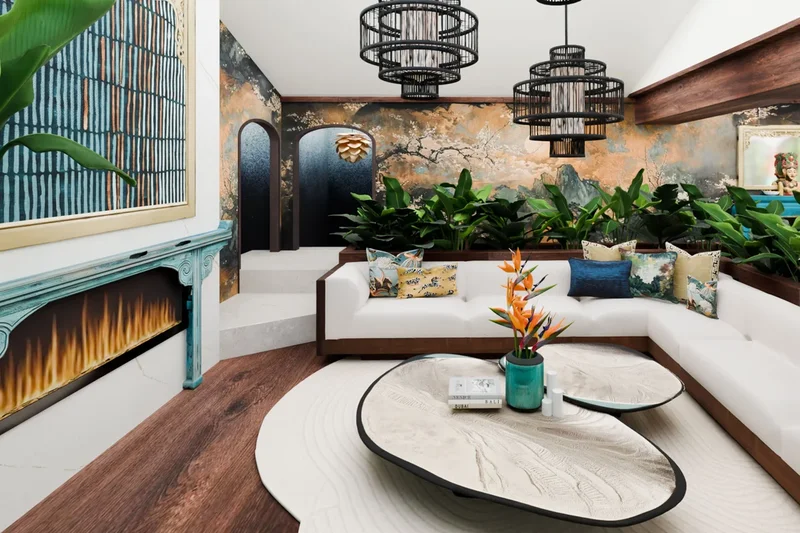
For Camille Mongeon, founder of Bleu Canard Design, with a background in fine arts and antiques, and lifelong passion for interior design, a Bali-inspired home is not only about adding tropical plants and choosing dark wood.
She suggests the whole experience should feel immersive. “A tropical oasis isn’t just a look, it’s a full sensory experience,” says Mongeon, who imagined warm, humid air, a cooling breeze, linen drapes lifting gently, the sound of air moving through dense leaves and reflections of water dancing across the walls.
To achieve the look, she recommends blurring the boundaries between indoors and outdoors. Large-leafed plants, such as bird of paradise, can instantly create a more tropical feel, she highlights, especially when layered with long, flowing linen curtains.
Moreover, the Bali-inspired design uses saturated turquoise, rich woods and emerald foliage to create the feeling of a Balinese jungle retreat.
Materials are key, too. Mongeon suggests mixing light-toned stone with dark, warm woods in furniture and finishes, then adding contrast with small accents of black and warm gold.
A dramatic wallpaper, large tapestry or living wall can help anchor the space and bring in texture, particularly if it draws on a palette of off-whites, deep greens, dark browns and watery blues.
Water is another important element. While a pool may not be possible, she says a trickling fountain, water feature or even an aquarium can create the same sense of calm.
Moreover, scent can also help complete the effect, whether through incense, a diffuser or tropical notes such as ylang-ylang.
Her final advice is to avoid making the space feel too polished. Noting antique markets are a good place to look for South Asian-inspired furniture, silk cushions, artwork and decorative pieces that bring personality and authenticity.
3. Florida… connect indoors and outdoors
Kristin Parr, owner and principal designer of Anna Gray Designs, brings a background in fashion and luxury branding to her interiors.
She looked to Marco Island in southwest Florida for her coastal concept, focusing on the region’s screened lanais (outdoor living space) and water-facing homes.
Anna Gray Designs reimagines coastal Florida living in this design generated using Houzz Pro, with a seamless indoor-outdoor layout, layered neutrals, warm wood tones and spaces designed for relaxed entertaining (Anna Gray Designs/Houzz Pro/PA)
“This design is about the continuous experience of coastal living,” explains Parr.
In the Florida-inspired space, a large opening connects the living room, kitchen, dining area and pool terrace, creating one continuous environment.
The design uses warm wood tones, layered neutrals, tactile materials and low, sculptural furniture to create a calm, elevated take on coastal style.
Parr’s advice is to treat indoor and outdoor spaces as one connected experience rather than separate areas. Suggesting large sliding doors, French doors, or even a clear view through to the garden can help.
Continuity is important, too, use similar tones, materials or flooring colours across adjoining spaces so the transition feels seamless.
Indoors, she says to keep the palette restrained with warm neutrals, soft whites, wood, stone and tactile textiles.
Anna Gray Designs reimagines coastal Florida living in this design generated using Houzz Pro, with a seamless indoor-outdoor layout, layered neutrals, warm wood tones and spaces designed for relaxed entertaining (Anna Gray Designs/Houzz Pro/PA)
In the open air, think about creating zones for lounging, dining and entertaining, even in a small garden or patio.
An outdoor kitchen or bar may not be realistic for every home, but she says the same principle still applies – make hosting feel easy. A compact BBQ area, weatherproof dining table, good lighting and comfortable seating can turn an outdoor space into a holiday-style extension of the home.
Parr also recommends using greenery architecturally. Instead of scattering plants at random, she says to line them up to frame a view, soften a boundary or add privacy without closing the space in.
Nantucket… keep coastal style elevated
Megan Vogeler-Lappan, associate designer at Flourish Interiors, brings a degree in fine art and an associate’s degree in interior design to her work.
She turned to the island of Nantucket, off the coast of Cape Cod, Massachusetts, for bedroom inspiration and a breezy coastal sophistication.
Flourish Interiors captures a breezy Nantucket feel in this design generated using Houzz Pro, with pale blues, crisp whites, woven textures and tailored coastal details (Flourish Interiors/Houzz Pro/PA)
The design highlights pale blues, creamy whites, warm wood, stripes, natural fibres and crisp architectural details to create a bedroom which feels fresh, calm and pulled together.
Vogeler-Lappan says she “leaned into layered neutrals, tailored upholstery, woven textures and crisp architectural details”, with nods to East Coast elegance, Hamptons polish and classic Nantucket style.
To get the look, begin with a soft coastal palette. Think sky blue, warm white, sand, oatmeal, pale grey and natural wood. Stripes work well, but suggests using them with restraint… on an armchair, rug, cushion or headboard rather than everywhere at once.
She goes on to say natural fibres are essential. For example, a woven bed frame, rattan chair, jute rug, linen bedding or grasscloth-style wallcovering add depth.
Meanwhile, tailored details, such as wall panelling, neat upholstery, crisp lampshades and well-framed artwork keep the space feeling smart.
The mood should be relaxed but intentional, with a focus on light, texture and craftsmanship. A single artwork which references the sea, paired with beautiful bedside lamps and generous pillows, can be enough to bring in the holiday feeling.
The takeaway…
“Across all four looks, the strongest holiday-inspired interiors are not about copying a destination too literally,” underlines Kiya Kelly-Paine, home design trends expert at Houzz, who specialises in trends and how people are improving their homes.
“They are about identifying what makes that place feel special, whether it’s Bali’s lush sensory calm; Italy’s material richness; Florida’s indoor-outdoor ease; or Nantucket’s crisp coastal polish.”
“Start with atmosphere, then build through colour, texture, light and layout,” she suggests.
“Even small updates, from a water feature or linen curtains to woven textures or terracotta tones, can help make everyday rooms feel more like somewhere you would choose to escape to.”
Kelly-Paine continues: “Visualising those ideas in 3D can also help you see how colours, materials, layouts and finishing touches will work together before making changes in real life.
“Giving you greater confidence in creating your own staycation-inspired space.”