What Europe’s heatwave teaches the Philippines about energy security
This summer, Europe found itself in a strange bind. Record heat baked France, Germany, Spain, Italy, and the UK. Air-conditioners ran nonstop, and solar panels, drenched in strong summer sun, had their best season yet. Yet wholesale electricity prices reached their highest level, public advisories and warnings were issued, and France — Europe’s nuclear powerhouse — saw reduced nuclear output and a drop in power exports. How does a heatwave, with all that free sunshine, strain the grid instead of easing it?
The answer is that no single energy source, however reliable it looks on paper, is immune to a system shock. Resilience comes from the mix, not the star player.
Start with nuclear, long regarded — rightly — as stable, dispatchable baseload power. Several French reactors had to cut output because the river water used to cool them grew too warm. Rules require utilities to scale back nuclear power generation when river temperatures hit a threshold in order to protect the surrounding environment.
Article continues after this advertisement
As of writing, curtailments touched over a tenth of French nuclear capacity, with several gigawatts offline exactly when the country needed every megawatt. Swiss reactors also faced similar constraints and have undergone temporary reductions. The takeaway isn’t that nuclear is unreliable; it’s that even the most trusted baseload technology has physical limits climate stress can expose.
Then there’s wind, and a German word worth learning: Hitzeflaute, literally “heat lull”. It describes a phenomenon that isn’t coincidental — the same high-pressure heat domes that trap hot air also suppress wind speeds. The UK, with one of the world’s largest wind fleets, watched wind generation decrease during the same window in June when their demand was increasing. Scale doesn’t buy resilience if the pattern stressing demand also starves supply.
Solar was the qualified good news. Higher summer irradiation gave midday output a real boost. But solar’s blessing has an expiration time: it falls to zero exactly when people get home, turn on appliances, and evening demand climbs. With nuclear constrained and wind quiet, gas and coal had to fill that gap.
The market told the story plainly. Wholesale prices across the region climbed, an indication of just how thin its reserve margin was.
Article continues after this advertisement
But here is the detail Philippine readers should sit with: Europe still had an escape hatch. Even with its reduced nuclear capacity, France remained a net electricity exporter throughout the heatwave, still sending gigawatts of power to neighbors owing to nuclear, as well as solar power generation during daylight hours. Vice versa, France occasionally receives power from Spain, Switzerland, Belgium, the UK, and Germany.
That is the quiet advantage of a continent wired together: when one country’s sun, wind, or reactors fall short, electrons can flow in from next door within minutes.
The Philippines has no such escape hatch. As an archipelago with no submarine interconnection to another country’s grid, our Luzon, Visayas, and Mindanao grids can lean on each other only up to a point, and none can call on Vietnam, Malaysia, or Taiwan for emergency gigawatts. Whatever shortfall we face during heat waves, dry spells, or plant outages, we absorb entirely within our own fences.
Article continues after this advertisement
That difference should sharpen, not dull, the lesson from Europe. When discussing the case for a flexible and hybrid energy system, the underlying message is that the energy transition is not a relay race with one baton passed from fossil fuels to renewables. It’s a relay with several runners who all have to be ready to run at once. In Europe, if one runner stumbles, a runner from the next country over can step in. In the Philippines, we only have our own team on the track.
Our own heat and El Niño-driven dry spells already stress hydro output and thermal efficiency. Our growing renewable fleet, like Europe’s, will have days when the sun is sufficient but the wind is not, or vice versa — and unlike Europe, we cannot dial up an import when that happens.
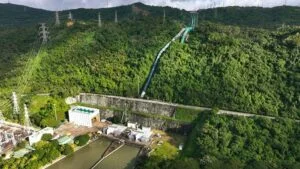
That is precisely why variable renewable sources need a real boost in domestic capacity, reserves, and storage to back them up. Pumped hydro and battery systems like the Kalayaan Pump Storage Units aren’t nice-to-haves; for an unconnected archipelago, they are the buffer that must substitute for an electricity exporting neighbor we don’t have.
A balanced portfolio — renewables, natural gas, existing thermal capacity, and storage — isn’t a hedge against uncertainty over which technology wins. It’s an acknowledgment that failure modes are converging, and no single source can carry the grid alone. A country that cannot borrow power from a neighbor must build that redundancy at home.