Africa Intelligence Brief August 13, 2026: Repaired On Paper
Executive Summary
Africa Intelligence Brief for August 13: Zambia votes on whether a debt restructuring reached its households, with more than 70% of its people living on under three dollars a day.
Rio Times · Africa Intelligence Brief August 13
Inflation is down, the currency is up, and seven in ten people live on under three dollars a day.
Zambia – A Vote On Whether Repair Reached the Kitchen
Queues before dawn
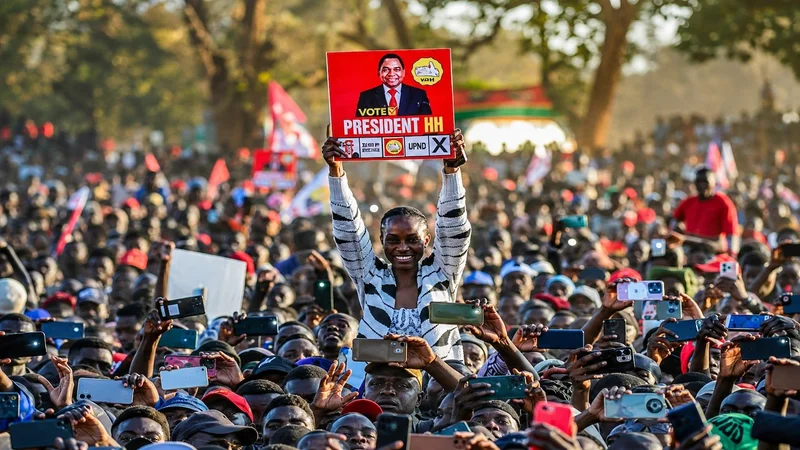
Polls opened at six on Thursday morning and close at six in the evening, with results expected on Monday. Before dawn, voters in thick jackets formed long lines outside polling stations across Lusaka, some huddled around small fires against the cold while officials arranged ballot boxes.
The register holds 8,786,300 voters, of whom 53.1% are women and 46.3% are under 35. They are choosing among 14 presidential candidates, 973 parliamentary candidates and 5,099 aspiring councillors.
The two facts that define the contest
Inflation fell to 6.8% in April and the kwacha has strengthened, after a debt restructuring that followed the 2020 default. More than 70% of the country’s 22 million people live on less than three dollars a day, according to World Bank data, and unemployment is about 10%.
Both statements are true at the same time, which is the entire election. A country that repaired its balance sheet is asking whether anyone noticed.
The Candidates – An Incumbent and a Splintered Field
Hichilema’s argument
President Hakainde Hichilema has led the country since 2021 and is running on his economic record, arguing he inherited a crisis, restructured the foreign debt and courted investors. He says he needs another five years to create jobs, improve infrastructure and expand public services.
Before voting he urged Zambians to vote peacefully and to remember, in his words, one Zambia and one nation. He needs more than half the vote to avoid a run-off against the runner-up.
A challenger with a divided base
Brian Mundubile, a former minister in the Patriotic Front government that ruled from 2011 to 2021, leads an opposition alliance backed by supporters of the late former president Edgar Lungu. He has campaigned on the cost of living, agriculture and restoring freedoms.
One historian noted the ruling party is likely to prevail despite large crowds at opposition rallies, because the opposition camp is splintered. In some places candidates from Mundubile’s party are competing against those of his own running mate’s party.
The Machinery – A Country Counting Itself
Thirteen thousand polling stations
The commission is running 13,529 polling stations across 1,858 wards and 226 constituencies, with more than 81,000 poll staff trained and deployed between the tenth and twelfth of August. Ballot distribution ran from the second to the eighth.
The register was cut from a provisional 8,888,912 after removing 101,439 duplicates and around 1,173 deceased voters. That is an administration doing unglamorous work carefully.
A parliament redrawn eight months out
Constituencies expanded from 156 to 226 following a delimitation exercise concluded on 17 April, under a constitutional amendment passed in 2025 that introduces a mixed-member proportional system. Redrawing a parliament shortly before an election is the kind of change that invites scrutiny wherever it happens.
Zambia has managed three peaceful transfers of power through the ballot box. That record is the reason both the care and the concerns are worth recording.
Copper – Why the World Is Watching a Zambian Ballot
A producer trying to expand
Zambia is a major copper producer seeking to sharply increase output of a metal critical to electric vehicles, renewable energy and power grids. Investors widely expect Hichilema to win, with the larger question being whether he can convert a post-default macroeconomic turnaround into job-creating growth.
That distinction is the one that matters for anyone holding the country’s debt. Stabilisation and growth are different achievements and only one of them is finished.
The railway that arrived first
Six days before the vote, the African Development Bank approved a 255 million dollar loan and a 10 million dollar grant for Zambia’s leg of the Lobito Corridor, funding some 550 kilometres of new railway toward the Atlantic. Later phases are envisaged to reach around 500 million dollars.
The financiers committed before the electorate did. That sequence tells you how they rank the two risks.
The Wider Continent – Two Other Things Worth Noting
Where the electricity is not
Unstable electricity supply continues to strain Zambian household budgets alongside unemployment and food prices, and the state has been buying costly emergency power imports. That is the practical constraint on any mining expansion the winner promises.
Congolese Ebola deaths have meanwhile passed 2,000, with most occurring in communities before patients reach treatment. The northern end of the same copper corridor is running a mineral boom and an epidemic with one civil service.
A record worth measuring against
Turnout in the 2021 election was 70.61%, which is the benchmark today’s participation will be judged against. Zambia has long been regarded as one of Africa’s more stable democracies.
It has also come under scrutiny over concerns that the space for dissent has narrowed. Both things are being tested in the same count.
What This Means From Latin America
The political half-life of an adjustment
Zambia defaulted in 2020, restructured, brought inflation down to 6.8% and strengthened its currency, and is now asking voters whether that was worth it. Argentina, Ecuador and Sri Lanka have run versions of the same experiment.
The answer today is useful evidence for every finance minister in the region attempting the same trade. Macroeconomic repair rarely converts into electoral gratitude on the schedule its authors expect.
And a competitor being financed
The railway approved a week ago shortens the route from African copper to Atlantic shipping, and therefore to the buyers Chilean and Peruvian producers serve. What today decides is who governs the country that railway runs through.
Andean producers should watch the freight economics rather than the politics. Landed cost per tonne is what ultimately decides where a smelter buys.
Africa Intelligence Brief August 13: What We Are Watching
- Monday – Zambian results, and whether any candidate clears the fifty percent threshold.
- This weekend – Turnout against the 70.61% recorded in 2021.
- Coming days – Whether the count is accepted, in a country with three peaceful transfers behind it.
- Coming months – Whether Zambia agrees a successor programme with the International Monetary Fund.
- Coming years – Lobito Corridor phase two financing, envisaged to reach around $500 million.
- Ongoing – Zambian electricity supply, the practical constraint on any mining expansion promised.
More from the Rio Times Intelligence Desk on August 13: the Europe Intelligence Brief, the Asia Intelligence Brief and the USA & Canada Intelligence Brief. For how these stories developed, see the Africa Intelligence Brief for August 12 and the Africa Intelligence Brief for August 11.
The Africa Intelligence Brief August 13 returns tomorrow morning.
Frequently Asked Questions
How many people are voting in Zambia’s election?
The Electoral Commission of Zambia certified a register of 8,786,300 voters, of whom 4,665,431 or 53.1% are women and 4,066,423 or 46.3% are under 35, in a country of about 22 million people. Polling runs across 13,529 stations in 1,858 wards and 226 constituencies, with more than 81,000 poll staff, and results are expected on Monday.
What is the election actually about?
It is widely seen as a referendum on President Hakainde Hichilema’s handling of the economy following the 2020 sovereign default, with inflation down to 6.8% in April and the kwacha strengthened after a debt restructuring. Against that, more than 70% of Zambians live on less than three dollars a day according to World Bank data, unemployment is around 10%, and electricity supply remains unstable.
Who is challenging the president?
Hichilema faces 13 other candidates, with Brian Mundubile expected to be the strongest challenger, a former minister in the Patriotic Front government that ruled from 2011 to 2021 and now leading an opposition alliance backed by supporters of the late former president Edgar Lungu. Analysts note the opposition is splintered, with parliamentary candidates from Mundubile’s party competing in some places against those of his running mate’s party.
Why does a Zambian election matter to commodity markets?
Zambia is Africa’s second-largest copper producer and is seeking to sharply increase output of a metal critical to electric vehicles, renewable energy and power grids. Investors broadly expect Hichilema to win, with the larger question being whether he can convert a post-default macroeconomic turnaround into job-creating growth, and the African Development Bank approved 255 million dollars for the country’s Lobito Corridor railway a week before the vote.
Sources: Al Jazeera, IFES, Reuters via Daily Maverick, Associated Press
This article was produced by The Rio Times’ automated newsroom system. How we use AI · Report an error
LatAm Markets: Live Signals → — real-time movers, turnover leaders and FX across Latin America.