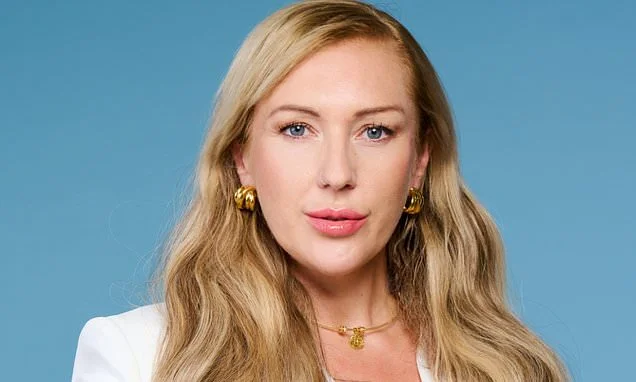
Clutching my stomach, while writhing around the hospital bed in agony, I stifled my tears, long enough to hear the doctor’s words.
‘I don’t understand why you’re back here, Miss Scott,’ he said, making absolutely no attempt to hide his frustration. ‘We’ve run the same tests as last week, and they have come back normal. You are just having a bad period.’
A bad period? ‘Bad’ didn’t even come close to what I was going through.
Yes, my periods were ‘bad’. So bad that, on this occasion, paramedics had blue lighted me to hospital, after seeing me vomiting, convulsing in pain and losing a terrifying amount of blood.
So bad I had been repeatedly hospitalised. So bad that relationships or any sort of intimacy was out of the question because sex was too painful.
My periods were so excruciating they contributed to me losing my job as an academic researcher. They dictated every element of my life.
However, none of this seemed to matter to this doctor.
‘Just continue taking the painkillers. If it was something serious, it would show up in your tests,’ he continued, before opening the cubicle curtain and signalling for me to leave.
Evelyn Scott's periods were excruciating from the get-go, caused by endometriosis in which tissue similar to the lining of the uterus grows outside it
Evelyn struggled through seven unsuccessful laproscopies, in which a camera is inserted into the tummy to inspect the organs and visible endometriosis is removed with a laser
This was a decade ago, when I was 28, but I don’t think I’ll ever forget the feeling of desolation of having my agony so quickly dismissed.
And I’ve lost count of the similar experiences since.
My ‘bad periods’ are caused by endometriosis, a chronic condition in which tissue similar to the lining of the uterus grows outside of it.
I assume I developed it soon after my periods started at 13, as they were very painful from the get-go.
I struggled through seven unsuccessful laparoscopies – surgery in which a camera is inserted into the tummy to inspect the organs and visible endometriosis is removed with a laser. Out of desperation, I eventually had a hysterectomy in February last year.
I was 37, and had been begging my NHS doctors for seven years to remove my womb, uterus and ovaries. They repeatedly refused, saying that it wasn’t a guaranteed cure and as I was of childbearing age I might regret not becoming a mother.
It didn’t seem to matter how many times I explained that, while I would have loved to be a mum, my endometriosis meant I wasn’t well enough to take care of myself, let alone a child.
Such was my desperation that when I had been hospitalised in November 2023 – in agony because the endometriosis had attached itself to my bowel causing it to become so affected that I needed enemas and laxatives – I set up a GoFundMe online fundraiser to raise £12,000 to pay for my hysterectomy privately.
I was finally wheeled into the theatre, at Frimley Park Hospital, near my home in Farnborough, Hampshire, in February 2025.
I had hoped for a miracle cure. Heartbreakingly, it was not to be.
This could be because of remaining scar tissue, or because the surgeons didn’t want to plunge me straight into menopause at such a young age, and so left behind one ovary. This means I’m still producing oestrogen – the female sex hormone that fuels endometriosis – and my pain is often as bad as ever.
I’m certainly not alone. Some 1.5million women of childbearing age in the UK – one in ten – have endometriosis.
So, back in 2019, after giving up my PhD on classical and forensic archaeology, I first had the idea of writing a book, A Bloody Scandal: How Medicine Fails Women In Pain, which exposes this outrage – the medical misogyny that deems periods like mine as merely ‘unfortunate’.
Since my agonising periods began, doctors and nurses have told me that my periods were no worse than any other woman’s.
I was repeatedly fobbed off and told that it was ‘all in my head’.
I have even had friends ask me: ‘Are you sure the pain isn’t psychological?’
Needless to say, these people are no longer my friends.
Despite my textbook symptoms, I was told that I couldn’t possibly have endometriosis because every ultrasound and blood test came back ‘normal’.
When I was 30, and once again admitted to A&E, I thought I had got lucky. An endometriosis specialist was on duty and referred me to his clinic. He explained that the only way to detect the disease was with a laparoscopy under general anaesthetic.
This procedure reveals where the errant tissue is growing – common sites include the ovaries, fallopian tubes and even the bowel and bladder.
It swells and bleeds with each menstrual cycle, causing pain, inflammation and scarring. This tissue can then be removed with either a laser or scalpel.
I remember sobbing with relief that someone, finally, was taking my pain seriously.
A few months later, I underwent a laparoscopy. Afterwards, the surgeon showed me images of my uterus, ovaries and fallopian tubes, heavily streaked with black. Pointing at these darker areas, he said: ‘This is all endometriosis, which we’ve now removed. You should be more comfortable now.’
After giving up on her PhD, she decided to write a book exposing medical misogyny
Out of desperation, Evelyn had a hysterectomy last year. But her pain remains constant and most months she ends up in hospital
My hope was rapidly dashed. Within a month, the endometriosis grew back.
Over the next seven years I had annual laparoscopies, during which the regrown endometriosis would be removed, before returning. I continued to feel like a nuisance to doctors, someone who should just put up and shut up.
And it wasn’t just male medics. Even women who haven’t experienced the agony of endometriosis can find it hard to sympathise.
One female doctor, part of a team due to perform one of my laparoscopies, told me: ‘We’re only doing this to humour you.’ She skulked away, and did not say a word when the surgeon returned after the operation to show me the substantial amount of endometriosis removed.
I haven’t had a relationship for four years. I’ve given up on finding someone who can put up with the reality of my condition.
Boyfriends soon tire of the fact that sex is, more often than not, too painful for me.
Shockingly, I’ve been with more than one man who after I told them in the throes of passion they’re hurting me, responded: ‘Don’t worry, I’ll be done soon.’
Looking back, I wonder why I didn’t say: ‘Bloody well stop!’ But I felt so guilty about inflicting my illness on other people.
Six years ago, I took a chance on another guy. When he saw me wincing in pain during sex he stopped immediately.
I was bleeding so heavily that, horrified, he called an ambulance and went with me to hospital.
But we broke up after a few months because I felt so bad about the lack of sex.
Other relationships have ended because, once the honeymoon period is over and I’m still too unwell to go to parties, or even cook dinner, I’ve been made to feel like a burden.
Unsurprisingly, I’ve had bleak times when suicide seemed like the only way out. I’ve been on anti-depressants for most of my adult life. A psychiatrist diagnosed me with Complex Post-Traumatic Stress Disorder, as a result of the intense pain that I’ve suffered since starting my periods, compounded by the distress of being repeatedly dismissed by doctors.
I hoped the hysterectomy would cure all, even though the doctors had warned me that it might not.
Endometriosis can grow outside the pelvic cavity, so removing the womb does not provide guaranteed relief. But I was desperate.
My post-surgical pain was more intense than I’d anticipated, and I felt extremely sick. I was prescribed the strong opioid Tramadol, and could barely function for six months.
I’m currently taking Zoladex, a hormone therapy that will shut down my remaining ovary while I wait on another long list to have it removed.
My pain remains constant, which I believe is exacerbated by the significant scar tissue left by my previous surgeries.
I still take a selective serotonin reuptake inhibitor (SSRI) for my depression, alongside high dose Co-codamol, a strong opioid, and Naproxen, a heavy-duty anti- inflammatory. These ease – but rarely get rid of – the pain.
When it becomes unbearable, which still happens most months, I end up in hospital where I’m given morphine. Mercifully, this brings some temporary relief.
I cannot put into words how devastating it is that, even after all these treatments, I’m still on a cocktail of medication.
I live with my younger brother, and both he and my grandmother, a former nurse, have been a huge support. They, and my beloved dogs and horses, have given me a reason to carry on and try to stay positive.
My advice to other women in a similar situation is to insist on specialist help as early as possible, and to take notes with you to appointments, so that all your questions and concerns can be answered. Doctor’s appointments can be overwhelming; notes help.
But as this is an exclusively female condition, you must be prepared to fight the medical misogyny endemic in our healthcare system.
There are no guarantees that I will ever be free of pain – a prospect so unbearable I can’t dwell on it. But I will fight on, and hope that one day I find true relief from this appalling condition.
As told to HELEN CARROLL
A Bloody Scandal: How Medicine Fails Women In Pain (£18.99, 4th Estate) is out today