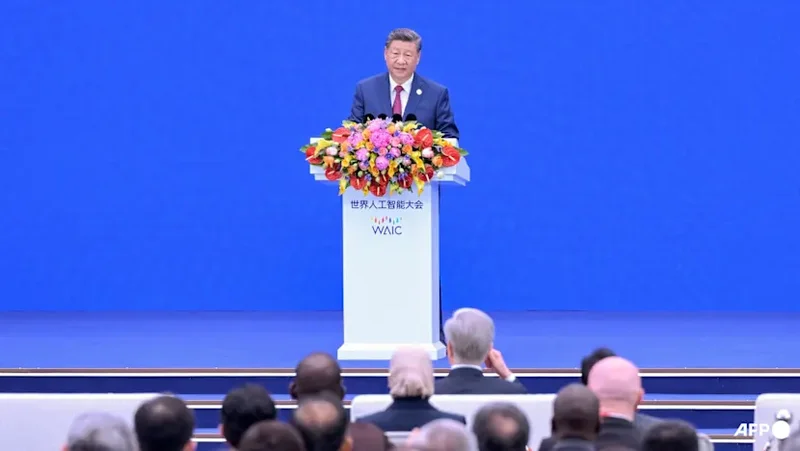
SHANGHAI: Chinese President Xi Jinping’s warning against a “new historical injustice” in artificial intelligence (AI) is a message that the next technological revolution must not repeat past patterns of inequality, say analysts.
That injustice, they say, would come if developing countries again supply data, resources and labour while others capture the wealth, influence and rewards created by AI - a divide that already appears to be forming.
Xi made the warning on Jul 17 in his very first keynote address at the World AI Conference (WAIC) in Shanghai, where he also outlined a vision of China as a steward of global AI governance.
Analysts say Xi’s broader message at WAIC served a dual purpose - presenting China as a champion of an inclusive AI order while signalling that Beijing does not intend to lag behind in another major technological transition.
"I'm not going to just be a follower, I want to be a leader,” George Chen, partner and chair of digital practice at policy advisory firm The Asia Group, said of Xi’s message, adding that the Chinese leader expressed this in a “very diplomatic way”.
But observers warned that China faces a series of challenges in translating that vision into practice, from doubts over the durability of its open-source approach to ensuring that its push does not create new forms of dependence.
WHAT INJUSTICES WAS XI ALLUDING TO?
Held over four days, the ninth edition of WAIC drew 1,117 exhibiting companies, more than 4,400 exhibits and over 400,000 visits, with delegates from 102 countries and international organisations, according to organisers and state media.