Watering a lawn or garden has traditionally relied on preset schedules that do not necessarily reflect current conditions. Connected irrigation systems are attempting to address that limitation by combining timers with environmental sensors and centralized software.
How the Pieces Connect
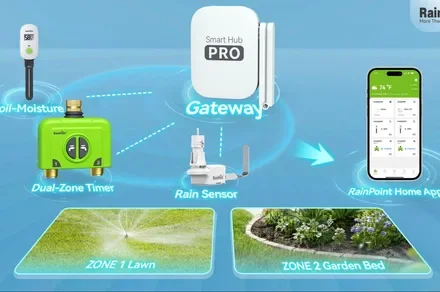
RainPoint’s smart garden system provides one case study in how manufacturers are connecting timers, environmental sensors, and software. The RainPoint Smart Irrigation Ecosystem uses a gateway to connect a dual-zone smart water timer, a soil-moisture sensor, and a rain sensor with a convenient app. The gateway acts as the communication hub, allowing readings collected outdoors to inform the system’s watering settings.
After the gateway is connected to a home Wi-Fi network, the timer and sensors can be paired through the app. Once the relevant automation rules are configured, data
from the soil and rain sensors can be used to adjust scheduled watering rather than relying solely on an established timetable.
Coordinating Separate Watering Zones
Using a dual-outlet design allows different sections of a property, such as a lawn and vegetable garden, to follow separate schedules. This reflects a wider trend in connected-home systems: using one interface to manage areas with different requirements.
Soil-moisture and rain sensors provide the information needed for users or configured automation rules to adjust, delay, or pause scheduled watering when the soil is already wet or rainfall is detected. Smart garden technology also offers features such as watering history, manual overrides, alerts, and voice-assistant compatibility with Amazon Alexa and Google Assistant.
The Demands of Outdoor Technology
Connected devices used outdoors face challenges that indoor smart-home products may encounter less often. Wireless range, gateway placement, weather exposure, battery life, and reliable communication between components can all affect performance. Sensors require periodic battery replacement, while firmware and app updates may be needed with platform changes.
RainPoint introduced its irrigation ecosystem at CES 2026, where the RainPoint Ecosystem was named a TWICE Picks Award winner for bringing multiple irrigation components into one connected platform. Its longer-term usefulness, however, will depend on factors such as dependable scheduling, sensor accuracy, and wireless performance across different properties and growing seasons.
Extending the Smart Home Outdoors
Taking a smart garden approach to irrigation highlights a broader development in consumer technology: automation is expanding beyond indoor lighting, security, and climate control into gardens and other exterior spaces. In these settings, connectivity alone may be less important than whether several devices can consistently exchange useful information.
For homeowners evaluating this kind of technology, practical considerations include the number of planting zones, the distance between devices, local weather conditions, and Wi-Fi coverage. These factors help determine whether a connected irrigation network offers a meaningful improvement over a conventional timer.
The broader test for connected irrigation is therefore not how many components can be linked, but whether the resulting system makes watering more responsive without creating disproportionate setup and maintenance demands. Smart garden programs illustrate the possibilities of outdoor automation, while questions about reliability, app support, and long-term ownership remain central to assessing its practical value.
Digital Trends partners with external contributors. All contributor content is reviewed by the Digital Trends editorial staff.