Angela Newman of Biltmore Forest, North Carolina, remembers the “bizarre” symptoms she began experiencing almost a decade ago. Blurry vision, a stiff neck, hypersensitive skin, numbness and weakness that would come and go.
She saw a variety of medical specialists, undergoing an MRI, CT scan and psychiatric assessments. The doctors often dismissed her symptoms as anxiety or depression, Newman, 57, said.
Finally, at a college reunion she mentioned her illness to a friend who recognized the mysterious symptoms as a possible case of Lyme disease.
When she called her primary doctor for a Lyme disease test, he told her, “I don’t think you have Lyme. We don’t really have that around here,” Newman said. “I said ‘I don’t care what you think. I want you to test me.’”
The results were positive, a diagnosis that took five years to make. Within days of receiving antibiotics, her symptoms started to abate. It took nearly a year to feel like her usual, energetic self.
“I knew I wasn’t crazy,” she said. “It’s frustrating to have people basically say, ‘I think you need antidepressants.’”
Newman never found a tick but had noticed a welt on her leg that looked a little bit like a spider bite.
At the time Newman was infected in North Carolina with Lyme, the disease was believed to be largely limited to the Northeast. New research published Thursday by the Centers for Disease Control and Prevention underscores how the bugs have gained a foothold in unexpected places farther south.
“It was always thought that Rocky Mountain spotted fever, which is caused by different bacteria, was our major tick-borne disease,” said University of North Carolina School of Medicine’s Dr. Ross Boyce, the CDC study’s author and a researcher who specializes in tick-borne diseases.
The new research “is the slam dunk,” he said, proving that Lyme disease should be considered a major threat to areas farther south than previously thought.
Boyce and his colleagues focused the research on Biltmore Forest, a small mountain town nestled along the scenic Blue Ridge Parkway. From November 2024 through August 2025, they canvassed 22 household lawns, collecting 373 ticks.
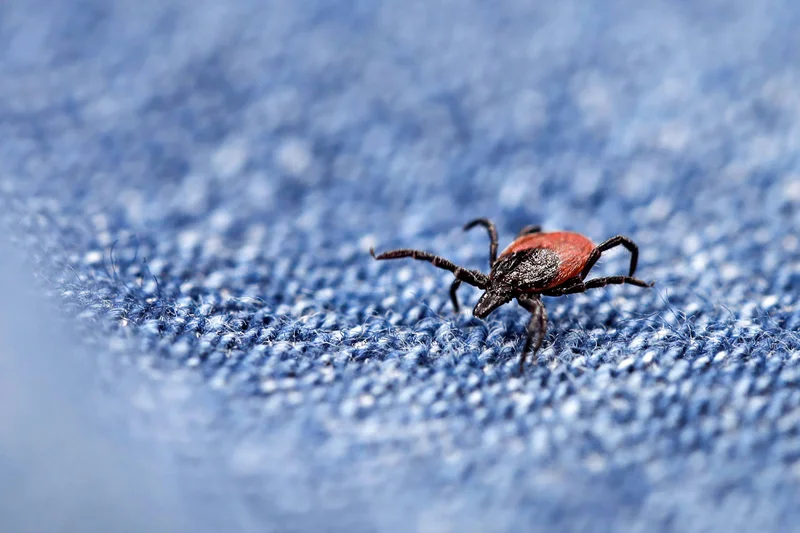
The majority, 76.9%, were blacklegged, or deer, ticks. Those are the ones known to carry bacteria called Borrelia burgdorferi, which causes Lyme disease in humans.
More than a third, 39.6%, of the adult blacklegged ticks tested positive for the bacteria. “That is a number that you might see in places like Pennsylvania, New York, New England states where Lyme is common,” Boyce said.
The research also found, for the first time, North Carolina ticks with other types of disease-causing bacteria.
Four of the ticks were found to carry Anaplasma phagocytophilum, and four others carried Borrelia miyamotoi, a bacterium that causes hard tick relapsing fever and is almost always thought to be concentrated in the Northeast and Midwest. Both types can cause flu-like symptoms in humans.
The discoveries, particularly of the new bacteria in North Carolina, are “significant,” said Mark Soloski, senior adviser of the Lyme Disease Research Center at Johns Hopkins Medicine. “Physicians and healthcare workers, especially in that region, need to be very mindful and aware that ticks infected with this bacteria have moved in.” Soloski was not involved with the new research.
Biltmore Forest is a small town, with just under 1,500 residents. While the new research found 17 Lyme disease cases in the area, Biltmore Forest town manager Jonathan Kanipe said he’d been hearing anecdotal reports of the illness for years.
The ticks that cause it were clearly abundant.
“We’ve had public works employees pulling ticks off of them at what I would call a pretty steady rate,” Kanipe said. He recalled a time when he was simply walking around a parking lot to survey where a planned trail would be built, and finding ticks on his hands. “It freaked me out because I wasn’t even walking in the woods. I was just next to grass,” he said.
Newman and Kanipe mobilized a community group to raise awareness of the tick-borne threat. The efforts caught the attention of UNC’s Boyce and led to the research published Thursday; Kanipe and Newman are citizen co-authors.
Lyme disease is the most prevalent tick-borne illness in the U.S., with cases increasing dramatically since the mid-1990s. Most infections have been concentrated in the Northeast and the Upper Midwest, where blacklegged ticks are most prevalent. It’s estimated that nearly a half million people are diagnosed every year in the U.S.
As winters become warmer, deer, mice and other rodent populations move to different parts of the country. The ticks that feed on those animals go with them, expanding the tick-borne illness landscape and increasing infections nationwide.
An increasing number of communities are at risk “as infected ticks continue to expand geographically,” Lars Eisen, a research epidemiologist at the CDC’s Division of Vector-Borne Diseases in Fort Collins, Colorado, wrote in an email. “It’s important people understand the changing risks for Lyme and other tick-borne diseases.” The Fort Collins lab provided testing for the ticks in the new research.
Another tick-borne bacteria that can cause Lyme called Borrelia mayonii was previously only ever detected in Minnesota and Wisconsin, but recently discovered in New York.
Alpha-gal syndrome, the tick-borne illness that triggers an allergy to red meat and other mammalian products, tends to be concentrated in the East and Midwest but is becoming more prevalent in the Great Lakes and the West. And Powassan virus, a rare but particularly deadly tick-borne disease that can cause brain inflammation, reached a record high number of cases in 2024.
Critical need for testing and awareness
The migration of ticks appears to have outpaced both awareness of the threats and the ability to test for the illnesses ticks cause, notably Lyme disease. Lyme and other tick-borne illnesses can be treated with antibiotics, but only if they’re accurately diagnosed.
A recent editorial published in the Journal of the American Medical Association suggested that many doctors rely on antibody tests that can take up to six weeks to generate results, delaying diagnoses and even missing early infections, according to the editorial’s author.
“Current tests are reliable once patients have been infected for several weeks and have long-term symptoms such as Lyme arthritis, a late-stage complication characterized by sudden, severe swelling in large joints,” the author wrote. “Improved tests could not only help clinicians identify Lyme disease earlier but also better characterize patients for clinical trials and biomarker research.”
Until such research is conducted, Johns Hopkins’ Soloski said emergency room doctors and primary care physicians may want to consider Lyme and other tick-borne illnesses in patients with otherwise unexplained symptoms, even in places where it’s not considered commonplace.
“The niches that these ticks can find that allow them to flourish,” he said, “is only increasing.”