Your questions about knife sharpeners answered
What is the best knife sharpener?
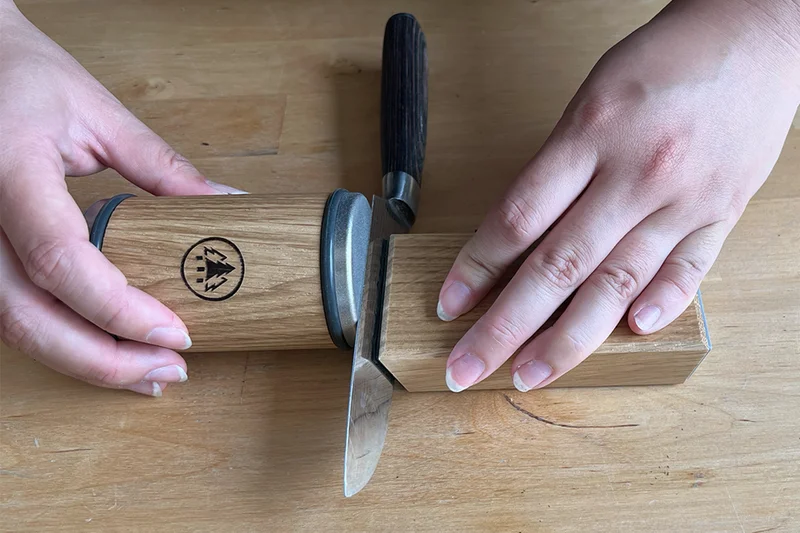
Being able to sharpen your own knives at home is an empowering kitchen skill. It means you’d never have to consider throwing out a perfectly good set of knives because they’ve gone dull or have to go without any knives for a period of time while you wait for them to be sharpened by a professional. For foolproof sharpening, I was especially impressed by the AnySharp classic pro kitchen knife sharpener, as well as the Lakeland knife sharpener and the HORL 3 rolling knife sharpener.
In terms of space-saving, which is very important in a small kitchen, Joseph Joseph’s rota red folding knife sharpener is a great option. If you are interested in learning how to sharpen knives traditionally, the Wüsthof whetstone J1000 / J3000 is an excellent place to start; and if you’re really serious about your kit, then the Tormek T-1 kitchen knife sharpener green or Chef’s Choice electric knife sharpener 15XV are as close to professional as you can get.
How I tested knife sharpeners
Pull-through sharpeners and whetstones are one of the most popular knife sharpening tools on the market. However, there are also several products that were traditionally used in commercial and industrial kitchens that have now been adapted for home use, such as electric knife sharpeners and sharpening machines. I put each tool to the test with the most dull set of knives I could think of: my mother-in-law’s knives, which have not been sharpened since she purchased them 20-odd years ago.
- Ease of use: Many people think of knife sharpening as a skill, and while this is true when using traditional methods like a whetstone, there are new knife sharpeners on the market that are much easier to come to grips with. I made sure to test the products based on how fool proof they were, but I acknowledge that some of the best results come from the more complicated methods.
- Storage: Adding a new gadget to the kitchen is only useful if it can be easily stored away, particularly in smaller kitchens. I did my best to ensure each knife sharpener could fit seamlessly into my drawers or cupboards, taking into account how much counter space they took up when in use.
- Sharpening power: Not all knife sharpeners can be used to bring a really dull blade back to life. Some are better for regular maintenance of knives that are cared for more often. I tested the more heavy duty knife sharpeners on my mother-in-law’s blunt knives to see just how well they performed, and used my own knives - which are regularly maintained anyway - to test the more everyday sharpeners.
- Post-sharpening performance: After sharpening, honing and cleaning each knife, I tested them on a number of ingredients such as onions, potatoes and tomatoes, as well as to slice fish and cut chicken into chunks. Doing so helped me test how they performed post-sharpening.
How often should I sharpen my kitchen knives?
As a rule, you should consider sharpening your kitchen knives every three to six months, but some experts think you should do it more frequently. Sushi master Endo Kazutoshi advises: “It depends on the knife and how it is used, but for someone cooking most days, I would recommend checking the edge every few weeks and sharpening whenever you notice a decline in performance.
“Many people wait until a knife becomes completely blunt. I think this is a mistake. Small, regular maintenance is much better than waiting for the knife to become very dull. Professional chefs often touch up their knives almost daily. At home, sharpening every one to three months is usually sufficient if done correctly, with regular care in between.”
Chef and supperclub host Sohini Banerjee agrees and adds: “For someone cooking almost every day a proper sharpen every four to five weeks keeps things in good shape. Think of it the way my grandmother thought about seasoning her tawa (a type of cast iron pan) - small, regular attention means you never have to do a dramatic rescue job.”
What is the difference between sharpening European vs Japanese knives?
Kazutoshi, founder and head chef at Endo at the Rotunda, explains: “Japanese knives are generally made from harder steel and are designed for more precise cutting. They often require a lower sharpening angle and benefit from being sharpened carefully on whetstones.
“European knives are usually softer and more forgiving. They are designed to withstand heavier use and can often tolerate slightly steeper sharpening angles.”
It would be a mistake to treat every knife in the same way, including the method with which you sharpen them, he adds. “Each knife has a purpose, a geometry and a character. Understanding that is part of respecting the craftsmanship behind it. As chefs, we do not sharpen a sushi knife the same way we sharpen a heavy kitchen knife. The same principle applies at home.”
Standard European knives have a 20 degree angle, whilst most Japanese knives have a 15 degree bevel. You should choose the correct knife sharpening method accordingly, or send your knives to a professional if you’re unsure.
Which knife sharpening method is the best?
This depends on what suits your own lifestyle and home kitchen needs, as well as the type of knives you own. Chefs like Banerjee and Kazutoshi prefer the traditional method of using a whetstone or a rolling kitchen sharpener for ease. Banerjee explains that a whetstone “gives you full control over the angle and lets you develop a real feel for your blade over time”.
Kazutoshi also warns against using pull-through sharpeners for high-quality Japanese knives, as these types of sharpeners tend to “remove steel very quickly and often create an edge that is convenient in the short term but damaging in the long term”.
“A knife should last for many years, sometimes generations. Every time you sharpen it, you are removing part of that knife. Therefore sharpening should be thoughtful and controlled,” he said, singing the praises of learning how to use a whetstone.
However, chef Adam Handling begs to differ. “There are so many tools out there. You don't have to use a steel like you see Gordon Ramsay using on Hell's Kitchen. You can get sharpeners where you simply pull the knife through. It keeps the angle right and is so easy to use. All my team use that type to sharpen our steak knives.”
Why you can trust IndyBest reviews
Kate Ng is a food writer. She has previously tested a range of kitchen accessories for IndyBest, including saucepans, Tom Kerridge’s cookware range, the best woks and the best knife sets, so she is well placed to put knife sharpeners through their paces. As with all IndyBest reviews, the products were tested in real-world settings to bring you practical recommendations.
For more kitchen accessories, read our reviews of the best slow cookers