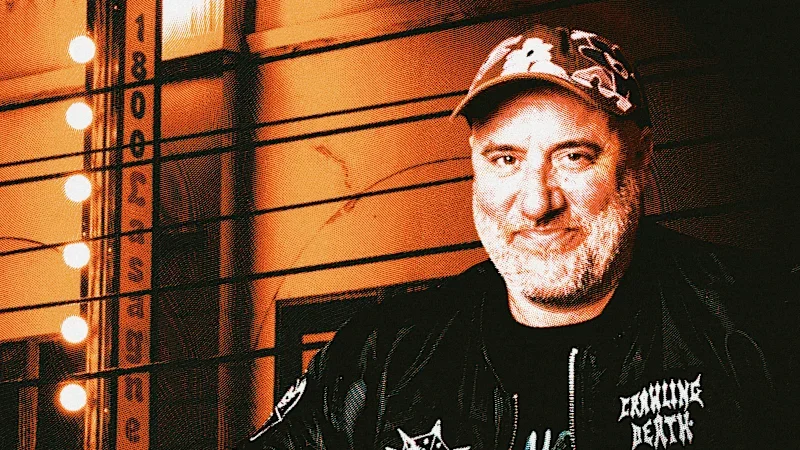
In 2020, as rolling lockdowns crippled the country’s live music scene, festival organiser Joey Kellock had a genius idea.
He would lift inner-city spirits, and turn a dollar by cooking and delivering delicious Dial-A-Lasagne.
Kellock’s business, 1800 Lasagne, was a roaring success, leading to a huge social media following and its own line of merchandise.
By November 2020, the business – which had been operating as a small-scale word of mouth venture for a few years – opened a venue on High Street in the hipster haven of Thornbury.
Soon the customers, including celebrity chef Jamie Oliver, poured in for cocktails and its famous layered pasta dish. In 2023, The Age Good Food team bestowed the venue with a coveted hat and a glowing 15 out of 20 review, describing it as the “perfect restaurant”.
Asked in a podcast why his business was so popular, Kellock said: “I just create the most nurturing, safe, loving environment that is fun, respectful, that I possibly can. This whole thing, this isn’t a business venture, it’s an art project.”
Yet beneath the glitzy reviews and heaping of praise, 1800 Lasagne was hiding multiple secrets that would eventually lead to the collapse of the business in August last year before being resold to a related entity, sparking Kellock’s return to the venue.
Kellock’s conduct at the restaurant, which included allegedly drinking and taking drugs to excess and verbally abusing his staff, was an ongoing and serious issue that risked staff safety and the reputation of the business.
At the same time, 1800 Lasagne was failing to keep up with its bills, owing $2 million to the tax office including hundreds of thousands of dollars in unpaid staff superannuation.
Josie Van Doren worked as a front of house staffer at the venue for around two years. She claims there were times the affable Kellock’s demeanour changed, the mask slipped and he would berate staff in front of customers from his regular seat at the bar.
“I once saw him down three negronis in 20 minutes,” Van Doren explains.
“There were nights where he was cut off from the bar, and because he was drunk that caused him to be verbally aggressive towards staff. He’d kind of interrogate them and ask them why, when they were looking out for his safety and also our liquor license as well,” claims Van Doren.
Van Doren said she felt at times he would appear to threaten workers’ job security and employment. “In those moments though, when you were speaking to him, it was like he would glaze over. You just knew that he’s going to wake up tomorrow and he’s absolutely not going to remember that conversation,” Van Doren says.
For the first time, the true story about Kellock’s incredible fall from grace and the devastating impact of the aftermath on both the business and its loyal staff can be told.
An investigation by this masthead can reveal Kellock agreed to remove himself from the business’ venue for a nearly two-year period between mid-2024 and March this year.
Kellock’s self-exclusion came after the business brought in an HR firm to conduct a review of his conduct after a series of social media posts made allegations against him in May 2024.
The review found Kellock had admitted to engaging in ongoing and serious misconduct towards his staff, workers were told at a meeting in July that year.
This included sexual harassment, abuse of power, abuse of alcohol and cocaine on premises and consensual but inappropriate sexual relationships with at least one employee who was significantly younger than the 48-year-old.
Despite the company seeming to take strong action in private, publicly the business sought to keep a lid on the reputation damage from the social media posts – a decision staff say failed miserably.
Within two years of Kellock’s self-exclusion, the business was in liquidation and both the tax office and 1800 Lasagne’s young staff were left nursing large debts.
Then, in a shock twist, earlier this year the business was sold back to Kellock – who made a triumphant return to the venue, sparking a mass walk out of staff.
Van Doren is one of eight former staff members who spoke to this masthead about the issues at the venue, detailing their concerns and the outcomes of the HR review.
Some have gone on the record to tell their story while others have agreed to discuss their recollections of the business under the condition of anonymity to protect their current employment.
Former bartender Billy Murphy alleges Kellock was frequently intoxicated at work and often behaved inappropriately towards female staff.
Murphy remembers feeling uneasy about Kellock’s interactions with young female employees.
“He was very touchy-feely with the female staff,” he alleges.
A senior manager also claims that over time Kellock’s conduct became an issue for staff and customers.
“I had overlooked some of his concerning behaviours until I started witnessing it, hearing complaints from staff and customers. His chaos seemed to quickly snowball in front of me.”
Kellock and the company did not respond to a lengthy list of questions from this masthead despite repeated attempts to contact them.
Business partner at 1800 Lasagne, Jeremy Gordon, emailed former staff on Friday to say the business was committed to repaying former staff the superannuation they were owed and was in the process of arranging a repayment plan.
Kellock had previously told this masthead in a statement about the business’ collapse that the hospitality industry in Melbourne had been under immense financial strain and was likely to remain challenging for some time.
“With the dedication and loyalty of suppliers, landlords, customers and staff, a business has the best chance of continuing to serve its community – which is what 1800 Lasagne has always aimed to do and hopes to continue to into the future,” he said at the time.
Joey’s perfect plan
Kellock burst onto Melbourne’s food scene in 2020, when Melbourne’s restaurant sector had been crippled by lockdowns, leaving staff out of work and the industry’s energy at an all-time low.
The business idea was simple: serve one dish perfected through years of practice; the juiciest lasagne underpinned by par-boiled pasta sheets, gooey ragu or tender eggplant and decadent bechamel.
When 1800 Lasagne opened on High Street in late 2020, the venue became one of the hottest places to work, with an expanded menu that included palate-rich pasta dishes, specials like oozing porchetta slices and a cocktail list to die for.
Customers adored the staff and the restaurant had a positive and welcoming ambience.
Its proudly slacker vibe was encapsulated by the business’ logo – of a skateboarding waiter carrying lasagne and the slogan, “Always late, always great”.
Murphy, who worked at the venue for about a year, says it was an exciting place for a young bartender to be employed, even if it lacked structure.
“I was a mid-20s, hungry bartender that wanted to be involved creatively,” he says.
Murphy says Kellock was charismatic, often chaotic. But his energy was magnetic and infectious and Murphy says it was hard not to get swept up by him.
The senior manager says bar staff were allowed to experiment with creating new cocktails, with more freedom than in previous jobs.
As the senior manager explains: “There are lots of things that felt good about Lasagne initially, but over time became tainted due to all the issues that came up.”
They add: “One of the good things about working at Lasagne was the floor and kitchen staff, we all worked so well together, supported each other, spent time together out of work hours too so we had a good community aspect going, even with some ex-employees, which I felt was really special.”
Success leads to excess
As Kellock’s success and fame grew, his conduct inside and outside the restaurant raised eyebrows.
He was letting his personal bills blow out, racking up thousands in parking fines, driving dangerously while intoxicated and breaking the alcohol interlock rules on his car repeatedly.
At the same time, Kellock signed the business up as a partner for the 2023 Porsche 944 Challenge, driving his own vintage ride in the race and brokered other promotional deals that had limited intersection with the business, like sporting merchandise.
Back at the venue, Kellock’s behaviour was also becoming a problem.
Several staff members allege Kellock would frequently arrive at the restaurant during its dinner rush already intoxicated, taking up his regular seat at the bar and smashing drinks, often to the point where he was cut off by his own staff.
“Drinking on shift isn’t new in restaurants and bars, but I think it was more for him, the amount and the frequency, and also just the person that he turned into when he was drinking. He was a lot more obnoxious. He would argue more,” the former worker says.
“He became quite an unlikable person when he was in those states. He would interrupt service to get the bartenders to make his drinks. He lost all sense of priority,” they claim.
Once sozzled, Kellock would become combative towards staff, scolding workers often in front of shocked customers.
The senior manager says it was not a case of one-off incidents.
“I started noticing Joey drinking more, bothering staff during service, behaving erratically, yelling at staff or customers, and being too close for comfort with staff members and people coming in to collaborate with the venue on projects.”
Kellock’s conduct issues continued after hours, where friends and regulars mixed behind locked doors drinking into the wee hours as part of Melbourne’s famed “lock in” culture.
It was on those nights, where the drinks flowed freely, that it’s alleged the mark between acceptable and unacceptable conduct quickly blurred.
Staff have spoken to this masthead to allege that Kellock would continue drinking and taking drugs after the venue had closed – often in the company of staff.
There were times, however, where Kellock’s behaviour crossed a line between employer and employee.
Van Doren had only been working at the venue for a few months when Kellock allegedly propositioned her.
“It was after work, after knock off, and a bunch of the staff had left because it was someone’s birthday, and they left really quickly, and I just started working there.”
As the other staff rushed off to a birthday party, Van Doren stayed behind to help Kellock finish closing the venue.
“We had a couple of wines, and when we were leaving he asked if I wanted to go back to his house and sleep there with him, and I just said no straight away.
“It was said as a passing comment, like something that was not unnatural for him. I didn’t think too much of it because I know where I stood with that but, definitely, that was my first red flag and I probably didn’t take it as seriously as I should have.”
Other former staff have painted a similar picture, noting that many of the staff employed at the venue were women under the age of 30, who often had limited experience in the workforce.
Another former employee alleges to this masthead Kellock was a “tyrant” who acted inappropriately towards his young staff.
She alleges she complained to other staff about his “touchy-feely behaviour” while working there several years ago. She left the workplace soon after making the complaint.
The social media posts
The allegations about Kellock and 1800 Lasagne might never have been known publicly if it was not for a couple of social media accounts launched during 2024.
The first of these accounts set its sights on Sydney’s hospitality scene, zeroing in on the now notorious Swillhouse hospitality group in Sydney, which sparked an award-winning expose by the Sydney Morning Herald.
The second turned its ire on Melbourne’s restaurant industry. Many of the posts related to Kellock’s alleged inappropriate conduct, drinking and drug use.
The allegations in the account spread quickly.
Within a few weeks, an upcoming residency at Sydney hotspot Gowings, a collaboration with Good Food Events where Kellock was to appear as “head chef”, was cancelled.
While 1800 Lasagne made no public comment about the social media posts, behind the scenes, the business was in a panic.
Within a short period, 1800 Lasagne had called in an independent HR firm to conduct a review of the allegations, interviewing staff to determine the veracity of the online claims.
The findings were severe.
In July that year, Kellock’s business partner, Jeremy Gordon – a noted festival producer (Big Day Out, Boogie Festival) from Sydney and an old friend of Kellock’s – nervously fronted a staff meeting at the Thornbury venue and confirmed that many of the allegations in the posts had been substantiated in the review.
Gordon told the meeting the review was based on sufficient evidence, including first-hand testimony.
The review made a number of findings where Kellock had admitted to the conduct. This included instances in the past of “excessive and inappropriate drug and alcohol use” in the workplace during and outside business hours on premises and having a consensual sexual relationship with an employee.
Gordon told the meeting the review had also substantiated allegations based on evidence collected from direct and indirect witnesses. This included instances of inappropriate behaviour, including aggression, yelling, threatening employment continuation, and poor treatment of employees; instances of inappropriate behaviour, including forming inappropriate relationships with past and present employees; abuses and misuse of power and authority and instances of sexual harassment.
Gordon said the review found there was evidence that there was a lack of awareness and education on behalf of Kellock in regards to his alleged sexual harassment and acceptable workplace behaviours.
The review also found, according to Gordon, that there had been late and non-payments of superannuation but said the issue was resolved and “historic”.
At the same time, the review also found that the allegation Kellock engaged in “instances” of non-consensual sexual conduct was not substantiated – an allegation Kellock has always strenuously denied.
Gordon also noted the review was based on interviews with current staff and that no formal complaint had been made to the company by any current or former staff members about sexual assault.
Reading from the report, Gordon said: “The director has deliberately behaved in a way that is reasonable to expect there is a possibility that the person being harassed would be offended, humiliated, or intimidated by behaviour taking place.”
Gordon then dropped a bombshell.
He told the meeting that while he believed in second chances, there needed to be consequences.
Staff were told Kellock had agreed not to attend the venue for the foreseeable future and would only work in marketing and strategy for the business going forward.
The private fall-out
If this was a victory for staff in exercising their workplace rights, it soon didn’t feel like it.
The company may have seemed sympathetic to staff’s concerns, but workers allege they were banned from speaking about Kellock’s exclusion from the business when customers or suppliers asked about the social media reports.
“None of us really wanted to be at work because we felt embarrassed that we were continuing to work for this man even though he wasn’t allowed in the venue, but it was still his face that was attached to the business,” says one former staff member.
“A lot of people were stuck between having a livelihood and having to pay rent, and then also wanting to be proud of your workplace. So some people left, and other people didn’t have the luxury to do so.
“It was hard when you have customers asking you questions [about the social media posts] and you’re almost pressured into defending the business,” they added.
The senior manager also says that the HR review seemed hollow given the staff had already banded together to seek Kellock’s removal from the business.
“Joey only stopped coming in because the staff collectively agreed that’s what needed to happen, and that from an OHS-rep perspective his presence in the venue meant staff were feeling (psychologically or physically) unsafe,” the senior manager says.
At the same time, there were signs Kellock was still significantly involved in the business despite no longer being the face of the venue – he was posting on the company’s social media feed, arranging deals with new suppliers and booking tables for friends, family and associates.
In the weeks and months following the social media posts, the venue’s cult following and customer numbers dwindled.
In October 2024, this masthead cut the venue from its Good Food Guide altogether.
In the dark period that followed the social media posts, 1800 Lasagne’s finances became very grim.
Staff allege they had to resort to using money from the tip jar or their own pocket to buy supplies, often from nearby shops – including buying bread and other supplies from Coles or a nearby Foodworks – after suppliers cut the company off.
Superannuation payments became infrequent. The allegations soon evolved into the form of stickers that would appear around Thornbury with a new slogan – “Always late with super” – and a new company name “1800 Wage Theft”.
In August 2025 – a little over a year after the social media posts were first made – 1800 Lasagne collapsed, but was allowed to keep trading due to a licensing arrangement with a related entity.
Reports from liquidators laid out the terrible financial state of the business and showed it had been financially mismanaged for years before the infamous social media posts.
According to preliminary investigations by liquidators, 1800 Lasagne was allegedly trading while insolvent from March 2021, only five months after its opening on High Street.
By the time it collapsed its total debts were $3.1 million, including $2 million debt to the ATO, which included unpaid GST, pay as you go payments deducted from wages and not passed on to the government and at least $227,000 owing in unpaid staff superannuation to 79 former workers.
One former staff member said they approached Kellock with concerns about superannuation being paid late years before the business’ collapse, concerned the business would, like so many others in the sector, leave workers short on their entitlements.
“When I brought it up and said this needs to be addressed, the owner Joey Kellock kept saying to me: ‘We’re not those people’, and he just kept repeating himself, ‘we’re not those people’,” the worker says.
A triumphant return
There would be one more twist in the 1800 Lasagne tale.
In December, employees learned liquidators had sold the business back to a company which Kellock jointly owned with Gordon.
The debts of the business, apart from the superannuation bill, were wiped clean and Kellock made a triumphant return to the venue.
When staff learned Kellock would return to an active role in the business, many chose to move on with their lives – some remaining in hospitality and others pursuing new careers.
For Van Doren and other staff said it was a sad and traumatic ending to something that had once felt like a positive and life-changing experience.
“He had such a good thing going, and we all loved working there, and we all loved each other, and he just ruined it,” she says.
Now Kellock is back at the bar, but his staff numbers are often topped up with agency workers and call-outs on social media for workers.
His dreams for two new premises are on the back burner.
And despite running gimmicks like World Lasagne Day in early August, the crowds remain much smaller and the vibe much colder.
Be the first to know when major news happens. Sign up for breaking news alertson email or turn on notifications in the app.