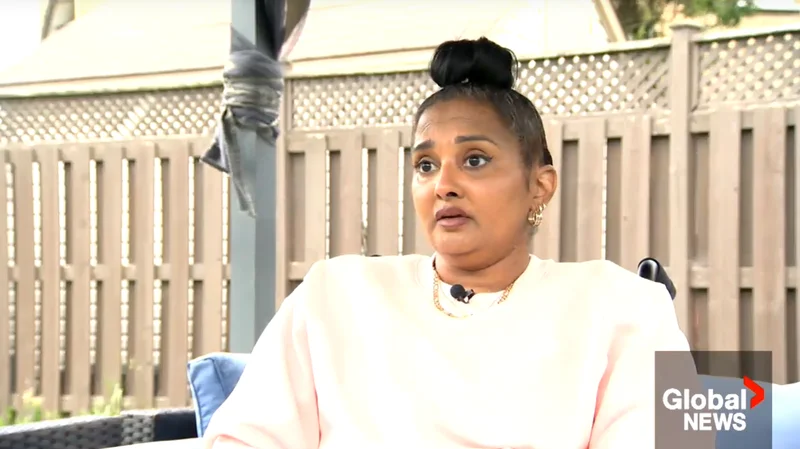
A Montreal woman who lost both her hands and both legs after a rare bacterial infection triggered septic shock is sharing her story in hopes of raising awareness about the dangers and warning signs of sepsis.
Cammeilla Ramdass, a 43-year-old esthetician and former model, said her ordeal began in January after she sought medical attention for severe back pain following a bout of the flu.
Ramdass, who lives with lupus and is immunocompromised, said she feared the pain was related to liver or kidney complications. She alleges her concerns were dismissed during an initial medical consultation.
“I’m overwhelmed with grief, I’m overwhelmed with anger,” Ramdass told Global News.
According to her family, her condition deteriorated rapidly. Her daughter, Seraiyah Ramdass, said her mother’s blood pressure had dropped significantly by the following morning, prompting relatives to rush her to LaSalle Hospital.
Story continues below advertisement
The family said her condition became critical within a day, but doctors had not yet identified the cause. They requested she be transferred to the Montreal General Hospital, where she arrived intubated.
Get breaking National news
Get breaking Canada news delivered to your inbox as it happens so you won't miss a trending story.
“She had a severe septic shock reaction and she was in stage three,” Seraiyah Ramdass said.
Doctors used high doses of vasopressors to maintain blood flow to her organs as they fought to save her life. However, the treatment restricted circulation to her extremities, ultimately leading to the amputation of both hands and both legs.
“I’m dependent on my children, I’m dependent on my family members to help me,” Ramdass said. “For someone that’s so independent, to lose all my independence, it’s hard for me to digest.”
Doctors later determined that a rare bacterium, Capnocytophaga, had triggered the infection that led to sepsis. The bacterium is commonly found in the saliva of dogs and cats, although serious infections are uncommon.
Ramdass said she does not know how she contracted the bacteria and noted that she has owned dogs for years.
Experts say the case highlights broader concerns about the recognition and treatment of sepsis, a life-threatening condition that occurs when the body’s response to an infection damages its own tissues and organs.
More on Canada
More videos
“You’ve got this combination of the public may not be aware of sepsis, and not all health professionals, and we don’t have protocols for screening,” said Dr. Alison Fox-Robichaud, scientific director of Sepsis Canada.
Story continues below advertisement
People with weakened immune systems may be at greater risk of developing severe complications from infections, experts say.
Ramdass is now undergoing rehabilitation and adapting to a dramatically different life. Her home requires modifications to accommodate her disabilities, but she says she is focused on moving forward.
“I need to find something to do,” she said with a laugh. “I’m a person who’s always going.”
Despite the challenges ahead, Ramdass said she considers herself fortunate to have strong support from her family as she continues her recovery.
2:20
Researchers warn about sepsis, say Canada needs national action plan
Previous Video
Next Video