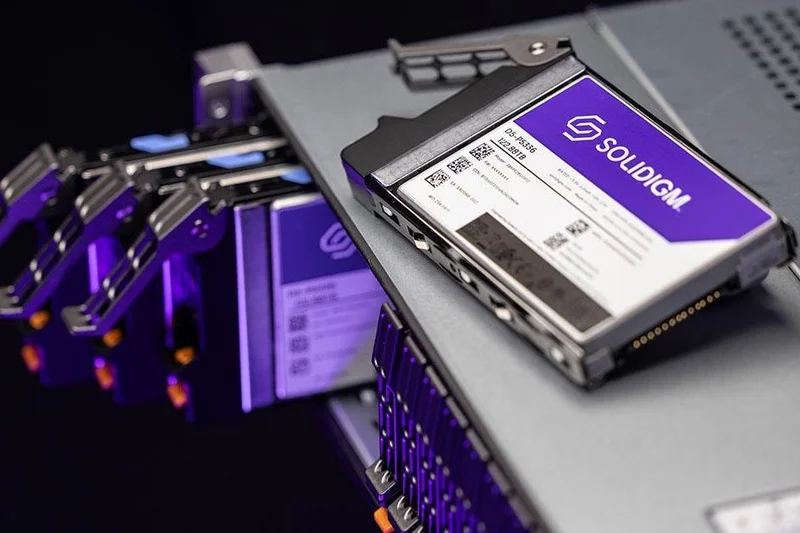
SK hynix is facing mounting backlash over a potential Nasdaq listing of its U.S. subsidiary Solidigm, with investors warning that the move could effectively create a dual-listing structure and erode shareholder value, according to industry officials, Friday.
Solidigm is reportedly exploring a pre-initial public offering (IPO) fundraising of 5 trillion won ($3.5 billion) to 10 trillion won, with Morgan Stanley and Goldman Sachs under consideration as potential underwriters.
The company is also recruiting an executive to oversee U.S. Securities and Exchange Commission filings and external financial reporting.
"If Solidigm goes public, this would amount to an unprecedented five-tier multiple-listing structure," said Rhee Nam-uh, chairman of the Korean Corporate Governance Forum. He noted that the ownership chain runs from SK Group Chairman Chey Tae-won through SK Inc., SK Square, SK hynix and SK hynix NAND Product Solutions Corp. to Solidigm.
Solidigm was established in the U.S. in 2021 after SK hynix acquired Intel’s NAND flash memory business for about $8.8 billion.
Rhee argued that the complex ownership structure and the potential separate listing are key factors behind SK hynix's severe stock market undervaluation. Bringing in outside capital and listing Solidigm separately could shift value away from SK hynix shareholders.
"The market's failure to reflect massive cash generation in SK hynix's share price stems from distrust of the controlling shareholder and management," Rhee said.
What's behind the push?
Lee Young-gon, head of the research center at Toss Securities, said the potential listing is unlikely to be driven by a need to raise capital. As of the end of the second quarter, SK hynix held 88 trillion won in cash and cash equivalents. It also raised about $26.5 billion last month through the issuance of Nasdaq-listed American depositary receipts.
The issue instead stems from constraints within SK Group's ownership structure as the group seeks greater flexibility in deploying the cash generated by SK hynix and realizing its value across its broader businesses.
For SK hynix's cash to reach SK Inc., it must first be distributed as dividends to SK Square, its largest shareholder, which must then pay another dividend to SK Inc., the group's top-level holding company. But listing Solidigm and allowing other SK affiliates to invest directly in the entity could help address the issue, according to Lee.
"SK hynix could announce plans for a Solidigm IPO alongside a shareholder return program in August or by early September at the latest," Lee said. "A sizable shareholder return package is expected to help ease investor concerns."
SK hynix said in an Aug. 5 regulatory filing that it was "reviewing various options to strengthen Solidigm’s competitiveness, but nothing has been decided yet," stopping short of ruling out a potential IPO.
SK hynix spokesperson said the company had no further comment beyond the disclosure. The company is scheduled to issue an update on Sept. 4.
The potential listing comes as the government tightens scrutiny of dual listings. Earlier this month, it began implementing new guidelines aimed at curbing the practice of listed parent companies spinning off subsidiaries and subsequently taking them public, which policymakers have cited as a key contributor to the "Korea discount."
Unlike a domestic listing, the listing of an overseas subsidiary does not require formal approval from the parent company’s shareholders. However, the company must take steps to protect shareholders, communicate with them and gauge their support, and obtain board approval.