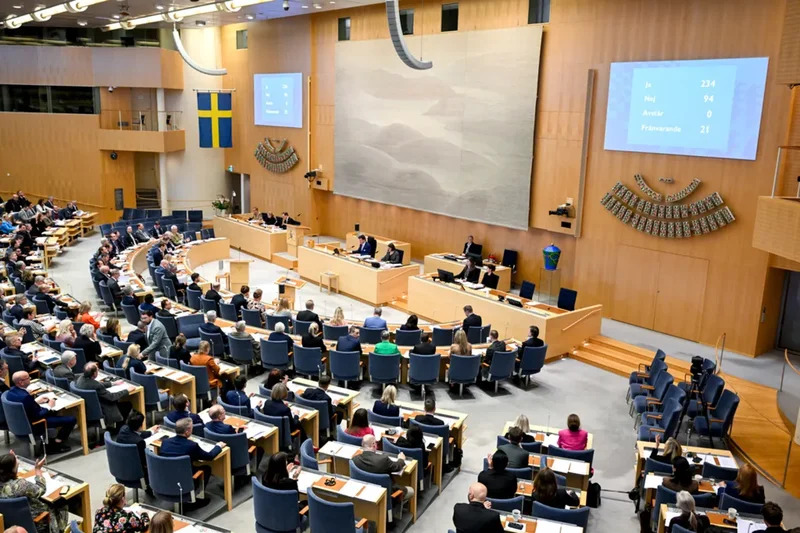
Sweden's parliament returned for a special summer session on August 12th and August 13th to debate and vote on several bills that the government would otherwise not manage to pass before the end of its parliamentary term.
As first reported by The Local last week, the opposition parties had agreed on joint reservations against two important proposals in the bill and had hoped that Liberal MPs who are not standing for re-election would join them in opposition to the government's bill.
The Liberal MPs, however, voted with the government, and the bill was passed on August 13th, 176 to 171.
Once the new law comes into force on October 1st of this year, it will: increase the maintenance requirement for foreigners wishing to bring family members to Sweden, impose a new maintenance requirement for some temporary permit extensions, and introduce a two year waiting period for foreigners bringing family members to Sweden.
"People are going to be given the choice of having an abortion or getting deported," Tony Haddou, an MP for the Left Party, said in a debate on Wednesday over the law. "That's the truth about this."
Since the law will require those extending a residency permit on the grounds of family reunion to meet maintenance and housing requirements, meaning, among other things, that if a family has another child they risk no longer meeting the requirements.
This same point was made this week on social media by both Centre Party migration spokesperson Niels Paarup-Petersen, and Green Party migration spokesperson Annika Hirvonen.
Moderate Party MP Viktor Wärnick, when it was his term to speak, protested against what he described as a "loathsome" level of debate.
"It is reasonable to support your family if you want them in Sweden. Paarup-Petersen's style of debate should not be taken seriously and he should be ashamed of it," he said.
Annika Hirvonen, immigration spokesperson for the Green Party, defended the opposition's choice of rhetoric.
"MP's for the Tidö [government-supporting] parties thought we were being overly dramatic when we pointed out that this means that a woman who becomes pregnant will be faced with the choice of having an abortion or facing deportation. But that is exactly what women will be faced with under these new rules," she said. "And we have to warn about the unreasonable consequences of the government's bill."
The fact that families risk deportation if a parent loses a job or the parents have another child was, she said, "the most cynical" part of the new law.
The bill also contains the government's solution to the so-called teenage deportations. Anyone who is under 21 years of age and has previously been granted a residence permit on the basis of attachment as a child, but who has turned 18, will be eligible for a residence permit.