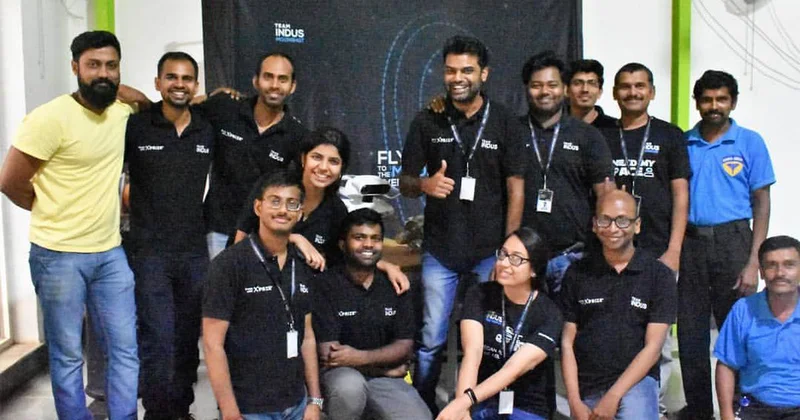
Rahul Narayan is a dreamer.
As a child, he loved watching Carl Sagan’s TV series, Cosmos. Later, it was Star Trek. Finally, Star Wars, the show that was avidly followed by an entire generation of space enthusiasts.
If you have seen an episode of Star Trek, you will remember Captain James Kirk’s mission for the Starship Enterprise:
Space, the final frontier … To explore strange new worlds, to seek out new life and new civilisations, to boldly go where no man has gone before.
The cast of Star Trek had Montgomery Scott as chief engineer. Scotty, with his quaint Scottish accent, was constantly getting everyone out of trouble. Once, after out-drinking an alien intruder, he had to repair the Enterprise while drunk.
Remember Captain Kirk’s catchphrase, “Beam me up, Scotty”, when he wanted to be teleported back to the Enterprise?
Those were the 1980s.
Rahul realised that while dreaming of space and extraterrestrial life might keep him awake at night, it could not become a career. So he studied computer science. Later, after settling into a job, Rahul’s dream of adventures in outer space never really went away.
Once, while remotely sharing a desktop with a client in the US, he noticed a poster in the background. It was an announcement of the Google Lunar X Prize (GLXP) for space exploration. To win the $20-million prize, a privately funded team had to build a rover that could land on the moon’s surface, travel 500 metres and send high-definition videos back to Earth.
Rahul decided to volunteer as a software partner with any Indian team taking part in the competition. There were none. He left word with the organisers to let him know if anyone from India registered.
Why are we following this story about Rahul?
Because it’s not just about Rahul’s dream.
Pursuing their own dreams, two students co-founded Pixxel, a company that is mapping the Earth’s surface. It all began when Awais Ahmed and Kshitij Khandelwal first met and realised they both wanted to meet Elon Musk. This chapter also describes how a group of students from MIT won a competition to find ten red weather balloons that were floating at various locations all over the US.
All these stories are linked by a common thread: The ability to think simply. Do you want to fulfil a childhood dream? A few simple mantras might help you. They are:
- Join a race
- Just do it
- Ask someone
Historically, great races have sparked innovation by spurring investments in that field. In 1919, a French hotelier, Raymond Orteig, offered a prize for the first person to fly non-stop from New York to Paris. In order to compete, well-known aviators built multi-engine aircraft that could seat two or three pilots. Charles Lindbergh, a young airmail pilot, decided to fly alone in his single-engine plane. He reached out to friends and local businesses, including members of a racquet club in St Louis, for sponsorship. To honour them, Lindbergh called his plane The Spirit of St Louis.
After flying for 30 hours, Lindbergh landed in Paris and won the prize. He became a hero and was widely celebrated in the US. The French awarded him their Legion of Honour. As a result of the publicity about the race, air traffic increased thirtyfold. It was called the Lindbergh Boom.
Inspired by Lindbergh’s story and the book he wrote on it, an American entrepreneur announced a space competition in 2004. The first team to launch a crewed spacecraft twice within two weeks would win $10 million. The largest prize at that time, it drew investments of $100 million in new technologies. Firms like SpaceShipOne and Virgin Galactic were founded during that period.
Rahul closely followed all these stories and their impact on the aviation industry.
A few days before the deadline for the GLXP, Rahul got a call. It was from the organisers who told him that no team from India had registered.
Would he like to join the competition?
Rahul called up some friends. They googled how to land a spacecraft on the moon and read the Wikipedia page that came up. With hours to go for registration, they pooled their savings and sent in the $50,000 fee. Calling themselves TeamIndus, they had T-shirts printed with the slogan: We began as wanderers and we are wanderers still.
Rahul finds it difficult to explain that decision.
It’s a lot like falling in love. Only you know the reason why it will work, and it can be difficult to articulate.
TeamIndus had joined a race that would start 3,80,000 km away.
Sheelika Ravishankar heads Outreach and People’s programmes at TeamIndus. She is the Jedi Master while Rahul is the Fleet Commander. The team has Ninjas, Skywalkers and Troopers. Sheelika, who says she is not tech-savvy, was a late entry into the team. She wanted to send a message that ordinary people can do extraordinary things.
TeamIndus would be competing with teams from across the world. Even ISRO, who have sent satellites to Mars, only soft-landed on the Moon in 2023. To avoid crashing onto the surface, the TeamIndus rover would have to hover in an orbit around the Moon and slow down before descending. At that time, only the US, Russia and China had managed to do it.
Rahul likes the metaphor of football. He said:
We are like the Mohun Bagan of India in our champions league football. We are against the Bayern Munichs, Man Uniteds, Chelseas and Arsenals.
There were three elements to the challenge: raising finances, assembling a team and developing the technology. TeamIndus soon realised that funding was going to be the most difficult.
When Rahul pitched to potential investors, he was often laughed out of the room. One day, an engineering student walked into the office seeking an internship. When asked what he knew about space travel, he sketched an outline on the way a moon landing could be achieved. Rahul now had some answers for the next investor meeting.
Over time, TeamIndus was able to attract a few investors. While getting on board, one investor described the project as audacious spunk. Another felt that the country would be proud as they were the only team representing India.
Soon, about a hundred engineers and scientists had joined TeamIndus. An Indian Air Force pilot, with a passion for space exploration, signed up as well. Besides youngsters, who were fresh out of college, seasoned space professionals wanted to be associated with the project. Many ISRO* personnel, who had recently retired, came on board. Some worked full-time without pay, others volunteered a few hours every week.
For a company involved in space exploration, it would normally have taken decades to blend together the energy and experience Team Indus now had.
TeamIndus built a prototype of their landing rover and called it Ek Choti Si Asha. The rover would reach the moon inside a six-foot-tall rocket-propelled box called a lander. Both the lander and Ek Choti Si Asha would be stowed inside an ISRO launcher. After setting it on a trajectory around the Earth’s orbit, the launcher would release its payload in the direction of the Moon.
Word soon spread about Rahul’s improbable dream. A firm making aerospace parts offered their facilities for free. Another supplied components needed for the launch and did not bill TeamIndus for them. Corporates provided technical support for fibre networks, long-range communication and telemetry.
A few high-profile investors expressed interest in the project. A local industrialist offered them space at its Bengaluru facility. Given the presence of ISRO, its networks of suppliers and the space ecosystem prevailing there, they moved to Bengaluru.
To raise awareness and create excitement about the project, TeamIndus announced a Lab2Moon campaign. Proposals were invited for a science experiment that Ek Choti Si Asha would carry on board. The theme of the competition was promoting sustainable life on the moon. It attracted 3000 responses from around the world.
Meanwhile, the organisers announced an interim Terrestrial Milestone Prize for teams who could validate their technology and had a risk mitigation strategy in place. A jury of scientists from reputed space agencies visited the teams that were still in the race. TeamIndus cleared this hurdle and received $1 million in funding.
The jury said:
One of the objectives has been to trigger innovative thinking in space exploration and the effort by TeamIndus is tantamount to how this is being achieved. From being the last team to sign up, TeamIndus has come a long way in this journey.
Fast forward to 2017.
All participating teams continued to struggle with funding, technical and regulatory challenges. It was also difficult to find a launch vehicle. TeamIndus decided to share their lander space with Hakuto of Japan, who were one of the five teams remaining in the competition. By now, the date for the competition had been extended several times, with the final deadline set for end March 2018.
The organizers reviewed the progress of all five teams. It was apparent that none of them would be able to launch a mission within the deadline. The competition was closed and the prize money went unclaimed. The GLXP ended without a winner.
Rahul and TeamIndus had failed at their moonshot. As we will see later in this chapter, their attempt was, however, not in vain.
Excerpted with permission from Simple Thinking: Tackling Problems with Simplicity, Mukesh Sud, Penguin India.
We welcome your comments at letters@scroll.in.