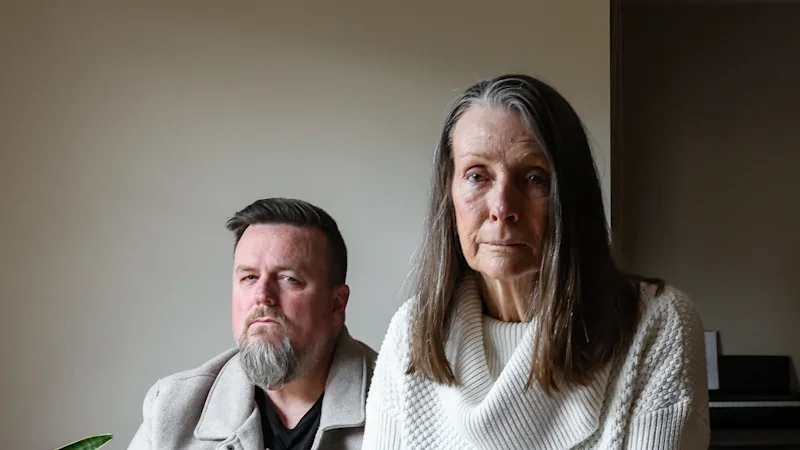
Nothing makes Helen Redmond, who lives with dementia, happier than relaxing with her friends at her local aged care community group.
Which is why it was a devastating blow when the 76-year-old and her family learnt those sessions run by Melton City Council are about to stop, as the municipality joins a growing number of Victorian councils exiting aged care – a change they blame on a federal funding shakeup.
Redmond’s son-in-law Kelsey Brookes said while the council offered to help her transition to a different service, he fears she will not be able to find a similarly meaningful community.
“Every time she comes back she’s just on such a high from enjoying her day, and it’s upsetting to have that ripped away,” Brookes said.
Busy with work and parenting teenagers, Brookes said without the Morton Homestead community group, his family would struggle to take Redmond out, other than on weekends.
Redmond would become frightened she’d been abandoned if she were one of the last to be dropped off on the group bus home – so the bus altered its route to visit her home earlier. Brookes is concerned that kind of personalised care will be missing from a new provider.
“It’s just devastating to think that might be replaced with a souless, privatised service provider,” he said.
Like many councils, Melton receives funding for its aged care services through the Commonwealth Home Support Program (CHSP), which is ending in June 2027. After that time, funding will go straight to older people under the Support at Home program, which allows individuals to choose their services and pay a means-tested co-contribution.
It’s part of a push to create one aged care system following the Royal Commission into Aged Care Quality and Safety, and comes ahead of an expected rise in Australians needing services as the population ages.
Australian Services Union branch secretary Tash Wark said dozens of workers, many of them women and employed part-time, would lose their jobs due to Melton ending its programs.
“Council has told staff this is about new regulatory requirements under the Commonwealth’s aged care reforms. We’ve asked them directly: what requirement actually stops you from providing this service? So far, we haven’t had an answer.”
Monash, Mornington Peninsula Shire and Northern Grampians councils also cited the funding change as they revealed plans to stop in-home aged care in 2027, which includes services such as providing meals and social groups.
Melton Mayor Lara Carli said the way services would be funded, regulated and delivered would change significantly, so the council was “not best placed” to continue offering the services.
“This decision has not been taken lightly by our council, and follows a detailed review of our ability to operate in an increasingly complex and changing aged care system,” she said.
Monash Mayor Stuart James said the council had “done everything we can to try and stay in as long as we can”.
“It will be a rat race to the bottom as to who can do services for the cheapest price. Unfortunately, it’s a decision that has been made at other levels of government,” he said at a May council meeting.
A June 2026 Senate inquiry report recommended the federal government continue funding the CHSP until 2030, but no decision has been made to extend funding.
Separately, Glen Eira City Council has cited higher complexity and costs linked to aged care reforms when it announced plans to transfer a 90-bed residential facility in Bentleigh East to a registered provider. Wangaratta is exiting aged care services from September due to “increased regulatory and workforce demands”, and Queenscliff is considering following suit.
More than 20 other councils will still provide in-home aged care services, which is about one in four across Victoria.
The implementation of federal aged care reforms has led to “unintended consequences” in Victoria, Council on the Ageing chief executive Ben Rodgers said.
He backs efforts to improve services but is concerned older people will have fewer choices due to the loss of trusted providers like councils, so has called on the federal government to provide a clearer pathway and more time to get the change right.
“Many [older people] have told us of their confusion and anxiety as they transition to new providers, with some losing the continuity of care they valued through longstanding relationships with council support workers,” he said.
“We have also heard concerning stories of clients seeing a different worker at every visit, or scheduled services not being delivered at all.”
Professor Libby Callaway from Monash University’s Rehabilitation, Ageing and Independent Living Research Centre said the new funding system was complex.
“It does add an additional layer of administrative and regulatory responsibility that can be hard to accommodate when providers are already delivering a range of services, in particular local councils,” she said.
Municipal Association of Victoria president Jennifer Anderson also called for the current CHSP funding to continue.
“Federal aged care funding simply doesn’t cover the real cost of care, and councils are being forced to plug the gap with ratepayer funds,” she said.
Federal Aged Care Minister Sam Rae said he was deeply disappointed councils were “planning to abdicate their responsibilities to their older residents”.
“[I] would urge others considering withdrawing to consider the role councils should play in assisting the older people they are supposed to serve,” he said.
Rae, the member for Hawke, is based in Melton and said he had met with the council to address concerns and urged councillors to reverse their decision to exit the sector.
He said the government was working on a solution that will give older Australians and CHSP providers certainty.
“Continuity of care is the No.1 priority in these transitions, and no one will be left without support,” he said.