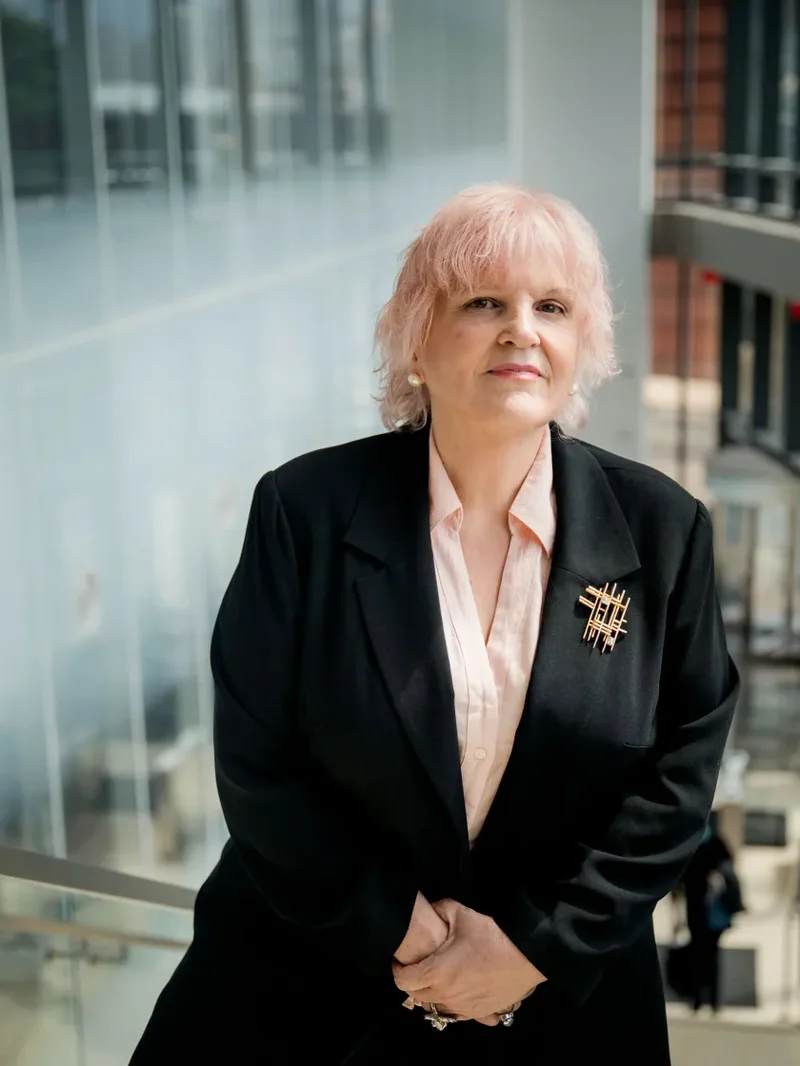
In 2017, Deanne Taylor attended a presentation at the University of Pennsylvania, just a short walk from her office. A researcher was there to unveil the Human Cell Atlas, an ambitious project that aimed to map every cell in the human body. Taylor was floored, and then concerned. As details emerged, she discovered that the project’s researchers had only made plans to study adults. “That’s when my little alarm went off,” she says. “Not again.”
Since joining the Children’s Hospital of Philadelphia (CHOP) as the director of bioinformatics three years earlier, Taylor had been disappointed by the lack of investment in medical research focused on children. The dominant view, she says, was that children are exactly like small adults. They’re not. Children’s cells are different from grownups’ cells in the way they express genes—switching them on and off or turning them up or down. Those variations can cause drastically different and even deadly responses to drugs that adults tolerate well.
The 2017 talk was the moment Taylor didn’t know she’d been waiting for. She quickly channeled her concern into a campaign, joining the Human Cell Atlas’s volunteer team and helping write a section on children for a white paper outlining the group’s goals and plans. She then rallied a cross-hospital coalition of pediatric researchers to contribute to the project and spearheaded a 2019 paper that outlined the case for studying children—a bid to attract more interest and funding to the field. “It put a flag in the ground,” she says. “Why don’t we have healthy models of children’s development?”
So far, the push has paid off. In 2021 the NIH awarded a $38.5 million grant to the Developmental Genotype-Tissue Expression Project (dGTEx), a major initiative aimed at establishing the first comprehensive database of healthy pediatric tissue. The project banks samples collected from otherwise healthy children who have died and whose parents agreed to donate their bodies, and maps how genes across all the major organ systems are expressed. Taylor and her team curate and standardize the information associated with each tissue donation, including family history and details about the samples. A separate group does analysis on the samples themselves, and then all the information is combined to create a database—a baseline of what gene expression looks like in children. It’s the first step to enabling research that could advance our knowledge of normal development, disease, drug effectiveness, and other phenomena.
The dGTEx team will eventually feed its data into the Human Cell Atlas, which, thanks to Taylor and many of the coauthors of the 2019 paper, now includes a pediatric section.
Taylor’s primary responsibility may be collecting and organizing data for dGTEx, but colleagues say she’s also the glue holding diverse research projects together. That’s especially important for the Human Cell Atlas, which depends on contributions from a loose coalition of researchers, all pursuing their own objectives. “Deanne took a big-picture view and said, We don’t just need to understand the pediatric kidney or the pediatric brain or the pediatric immune system. We need a holistic view of pediatric development,” says Sarah Teichmann, a cofounder of the Human Cell Atlas. “She embodies that interdisciplinary spirit.”
A healthy baseline
Taylor describes her career as a “random walk,” driven by a singular intensity she now attributes to undiagnosed autism and ADHD. At five, she began reading her mom’s medical texts. By 12, she was checking out physics books from the library. Physics provided mysteries to solve, and she wanted to understand how things worked.
Taylor got her PhD in biophysics, in 2001, but was inspired by the then-active Human Genome Project to change gears and take on a postdoc at Pfizer, writing code to handle complex data in rare-disease research. Then she moved to reproductive medicine, where she worked on some of the first computer programs to screen embryos for chromosomal abnormalities—many of which are still in use today.
Despite this seemingly winding road, Taylor says her focus has always been on understanding why the same illness hits people differently. How can two people carry the same disease-associated gene variant, but only one get sick?
The Human Cell Atlas—including all the data feeding into it from dGTEx and other projects—could at last help researchers find answers. The effort is a natural extension of the Human Genome Project. That initiative, which wrapped up in 2003, helped researchers link specific genes to specific diseases. But a map of the genome is a bit like a DIY kit with all the parts and no assembly manual. It doesn’t tell you where and how cells use each gene throughout the body.
After all, “we’re just older kids,” Taylor says. “By ignoring the pediatric side of things, I think people are missing a window of intervention in human disease.”
For that, you need to know how the genes are expressed. Gene expression generally involves making a protein that does a specific job in the body, like building tissue or sending signals. Unlike DNA, which largely remains the same throughout our lives, the way the genes in DNA are expressed changes as we develop.
Differences in gene expression can determine whether a therapy will work—or could harm more than it helps. Because of the way cardiac genes are expressed in children, chemotherapy drugs can attack not only tumors but also children’s developing hearts, potentially causing lifelong damage. Other treatments can affect the entire body, sometimes triggering a reversible but potentially fatal immune-system reaction called cytokine release syndrome.
The dGTEx database aims to create a baseline for gene expression in children—a molecular map of how the body’s roughly 20,000 genes do their work in healthy tissue cells. It is only one of the collaborations Taylor manages. She’s a principal investigator for the Kids First Data Resource Center, which sequences diseased tissues collected from children enrolled in other studies nationwide. And she has been collaborating with researchers on HubMAP, an effort that’s building a resource complementary to the Human Cell Atlas, to secure funding to create 3D maps of children’s cells like the ones it’s already made for adults.
Extending such initiatives to children is important, Teichmann argues. Much of human development happens in childhood; key brain cells called astrocytes form in the first five years, for instance, and the immune system matures in puberty. “Those changes are really important to understand from a disease point of view,” she says. A granular view of how individual cells work “will change pediatric medicine, for sure.”
Herding cats
Taylor helps the dGTEx machine run, coordinating researchers across multiple organizations that each contribute different pieces to the puzzle. These include a nonprofit group that secures tissue samples from deceased children soon after death and CHOP pathologists who assess each sample’s quality and type. Tissues are frozen and stored for future researchers to use with the group’s permission, while samples are sent to organizations including the nonprofit Broad Institute, which analyze gene expression. Data streams in at all these steps—information that the Human Cell Atlas effort can eventually draw on.
This coordination is “like herding cats,” says Rebecca Linn, a pediatric pathologist at CHOP. “So many individuals with different goals.” Taylor says an important part of her role is mediating among participants. That means, for example, explaining to researchers who want to use dGTEx’s tissues that it’s impossible to divide a one-month-old’s tiny testes 20 ways.
Colleagues describe Taylor as a well-connected collaborator who unites people across diverse specialties—essential qualities for a multidisciplinary, international effort like the Human Cell Atlas. It also helps that Taylor is full of surprises. She has tattoos of Schrödinger’s and Boltzmann’s equations and dabbles in painting and photography; a nondescript rock from Burning Man, where she volunteered in the kitchen, sits on her desk. “She can make friends and be memorable through her interests and knowledge and questions about all these different subjects. It really draws you in,” says Linn.
Taylor, however, believes the life-changing potential of the work itself is enough to motivate colleagues. Comparing a sick person’s cells with the healthy, age-matched baseline the Human Cell Atlas provides could yield biomarkers of health and disease that could serve as drug targets or diagnostic markers. A pediatric chapter in that atlas could produce similar insights for children—and strengthen our understanding of how our genetics and environments affect health and disease at various stages of development.
Extending the atlas to children may even help reveal how adult diseases trace back to distinct signals in childhood, raising the possibility that we could screen for and treat chronic conditions years or even decades before they surface. That could not only improve outcomes but help people prevent debilitating symptoms before they ever develop. After all, “we’re just older kids,” Taylor says. “By ignoring the pediatric side of things, I think people are missing a window of intervention in human disease.”
Taylor hopes the project will shift how research views pediatrics. It’s a big goal, one that will require big data—and forces like her to help pull everything together.
Colleen de Bellefonds is a science journalist based in Paris.
Deep Dive
Biotechnology and health
Sperm donors need limits, says a European fertility group
Some donor-conceived people are finding hundreds of siblings. An international cap on donations could help prevent that.
Stripe, Anthropic, and OpenAI are backing an effort to stop respiratory infections
Intercept, a new nonprofit, will focus on countering the common cold and the flu.
Stay connected
Get the latest updates from
MIT Technology Review
Discover special offers, top stories, upcoming events, and more.