Japan, Russia, and the Northern Territories
Politics## Still No World War II Peace Treaty
The Northern Territories issue is the largest unresolved dispute between Japan and Russia. These islands were annexed by the Soviet Union at the end of World War II and remain under Russian control, but are also claimed by Japan. In the 1956 joint declaration, which ended the state of war and restored diplomatic relations between Japan and the former Soviet Union, no agreement was reached over the return of the territory, but there was a statement that the Habomai and Shikotan Islands would be handed over to Japan after a peace treaty had been signed. However, even today the two countries have not signed a treaty to officially end World War II hostilities.
On November 14, 2018, Prime Minister Abe Shinzō met with Russian President Vladimir Putin in Singapore and they agreed to work toward a peace treaty based on the Joint Declaration. However, in December of the same year, Putin expressed concerns about the possibility of US troops being deployed in the Northern Territories after a treaty was signed. In July 2020, Russia amended its constitution to explicitly prohibit the ceding of any territory, slowing peace negotiations.
After Russia invaded Ukraine in February 2022, Prime Minister Kishida Fumio’s administration imposed economic sanctions, leading Russia to refuse to participate in negotiations over territory or a peace treaty. Visa-free exchange programs and visits to graves by former residents of the four islands have also been suspended since they were originally halted in 2020 due to the COVID-19 pandemic.
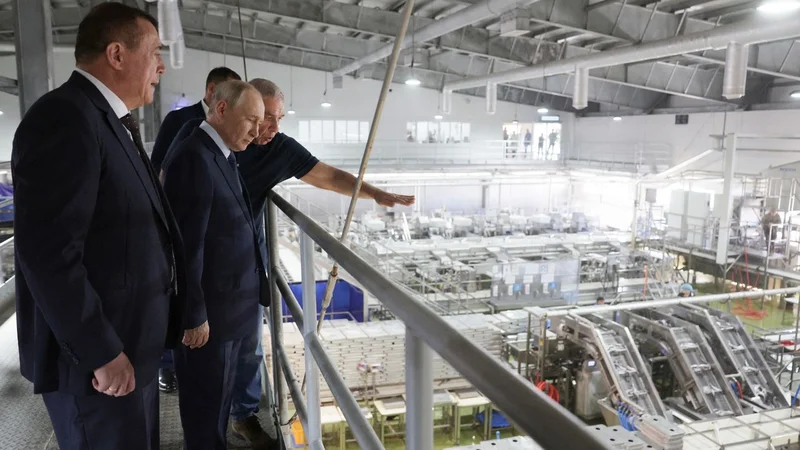
In August 2026, Putin went to Etorofu Island, where he inspected sites including a seafood processing facility. This was his first ever visit to the Northern Territories.
Below is a summary of the main developments since the 1956 joint declaration.
October 1956
- Soviet-Japanese Joint Declaration signed by Prime Minister Hatoyama Ichirō and Soviet Premier Nikolai Bulganin.
- End of state of war and restoration of diplomatic relations. Agreement not reached on the sovereignty of the Northern Territories. Statement that the Habomai and Shikotan Islands will be handed over to Japan following the signing of a peace treaty.
1992
- Visa-free exchanges start, with several trips between Japan and the islands taking place each summer.
October 1993
- Tokyo Declaration signed by Prime Minister Hosokawa Morihiro and Russian President Boris Yeltsin.
- The parties list the four islands and note the necessity of resolving the issue of their attribution, stating that negotiations will continue in order to achieve early conclusion of a peace treaty.
November 1997
- Krasnoyarsk Agreement signed by Prime Minister Hashimoto Ryūtarō and President Yeltsin.
- This agreement sets the goal of signing a peace treaty based on the Tokyo Declaration by 2000.
April 1998
- Kawana Proposal signed by Prime Minister Hashimoto and President Yeltsin.
- The parties propose demarcating Japan’s territory to the north of the four islands, but agreeing that Russia will continue to govern the islands for the time being.
September 2000
- President Vladimir Putin visits Japan.
- While he states that the Soviet-Japanese Joint Declaration is valid, he also says that the Kawana Proposal does not match Russia’s thinking at all.
March 2001
- Irkutsk Statement signed by Prime Minister Mori Yoshirō and President Putin.
- The statement confirms that the Soviet-Japanese Joint Declaration is the starting point for negotiations about the islands.
January 2003
- Japan-Russia Action Plan signed by Prime Minister Koizumi Jun’ichirō and President Putin confirms economic cooperation.
November 2010
- President Dmitry Medvedev visits Kunashiri Island, becoming the first Russian leader to visit the territories.
July 2012
- Prime Minister Medvedev visits Kunashiri Island again, declaring that not one inch of Russian territory will be handed over.
August 2015
- Prime Minister Medvedev visits Etorofu Island.
December 2016
- President Putin visits Japan.
- He agrees to launch talks on joint economic activities on the four islands in the Northern Territories.
September 2018
- President Putin proposes signing a peace treaty within the year with no preconditions.
November 2018
- Japan-Russia Summit held between Prime Minister Abe Shinzō and President Putin.
- Agreement to work toward conclusion of a peace treaty based on the Soviet-Japanese Joint Declaration.
June 2019
- Japan-Russia Summit held between Prime Minister Abe Shinzō and President Putin at the G20 Osaka Summit.
- Agreement to continue negotiations based on the Soviet-Japanese Joint Declaration.
August 2019
- Prime Minister Medvedev visits Etorofu Island again.
July 2020
- Russia’s amended constitution, prohibiting the ceding of any territory, comes into effect.
September 2020
- Prime Minister Abe steps down, bringing an end to proactive efforts to negotiate with Russia.
July 2021
- Prime Minister Mikhail Mishustin visits Etorofu Island.
February 2022
- Russia invades Ukraine and Japan imposes economic sanctions on Russia.
March 2022
- Russia breaks off peace negotiations with Japan, cancels exchange programs and visa-free visits to Northern Territories (dormant since the start of the pandemic in 2020), and withdraws from talks on joint economic activities.
September 2022
- Russia suspends the agreement on exchange programs and visa-free visits.
August 2026
- President Putin visits Etorofu Island.
Compiled by Nippon.com based on data from the Cabinet Office and Ministry of Foreign Affairs websites and various news reports.
| Name: Area, Population | Description |
|---|---|
| Habomai Islands: 95 km 2, uninhabited | Consist of a number of small islands. |
| Shikotan Island: 249 km 2, 3,000 | Gentle hills covered in green vegetation. |
| Kunashiri Island: 1,489 km 2, 8,000 | Relatively flat on the Pacific Ocean side with a natural harbor. |
| Etorofu Island: 3,167 km 2, 6,000 | Rich in fishery resources, including yields of 20,000 tons of salmon and trout. |
| Total: 5,003 km 2, 17,000 | A group of islands just northeast of the Hokkaidō mainland. |
Compiled by Nippon.com based on information from the Northern Territories Issue Association, Cabinet Office website. Population figures are for Russian residents.
(Translated from Japanese. Banner photo: Russian President Vladimir Putin at a seafood processing facility on Etorofu Island in August 2026. © AFP/Jiji; pool photo.)