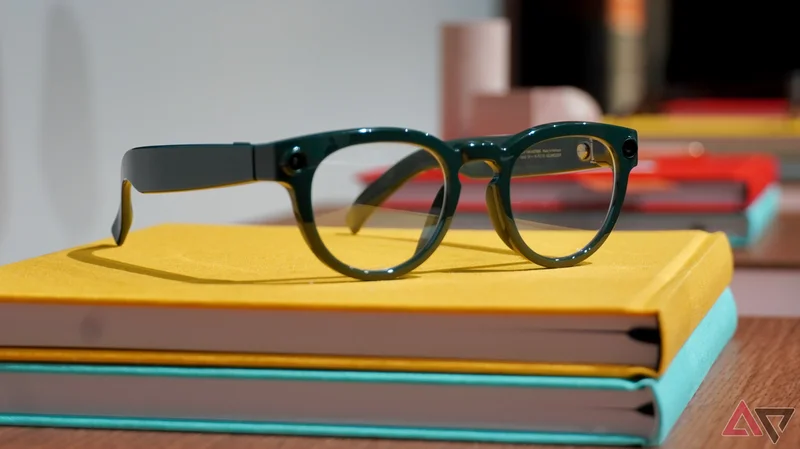
While the new Galaxy Z Fold 8, Galaxy Z Fold 8 Ultra, and Galaxy Z Flip 8 took center stage at Samsung’s July Unpacked 2026 event, the company also gave those attending a detailed first look at its forthcoming smartglasses too.
On display were the first models from its Gentle Monster and Warby Parker partnerships, and although it was great to handle them, Samsung’s still playing things close to its chest.
Related
Google and Samsung hand design duties over to Warby Parker and Gentle Monster to save smartglasses from the ugly-tech trap.
In hand, but not on face
Not quite ready yet
Samsung was happy to show some of the designs for the first models, but despite saying they had operational software installed, attendees could only hold the models, not try them on or use any of the features.
This limited our impressions, but we could still form some early thoughts about Samsung and Google’s big play to take on Meta and Ray-Ban.
Samsung has taken some design inspiration from the popular Ray-Ban Meta models, as a camera sits in the temple on both models, and there’s an on/off slider on the inside of the Warby Parker frame too.
Although direct comparisons weren’t possible at the time, both Gentle Monster and Warby Parker seem to have kept the weight low, as both felt seriously light. Low weight will be an essential ingredient to success.
Clever design decisions
Not a carbon copy
Both Warby Parker and Gentle Monster pairs are made of acetate, or plastic, and didn’t feel particularly expensive. My Ray-Ban Meta have a pleasing heft and solidity to them, while Samsung’s models felt lighter and potentially, less confidence-inspiring when it comes to durability.
An interesting design decision was found on the arms of the Warby Parker model, where the material was transparent to show off the components inside. It’s a subtle way to say ‘yes, I’m wearing smartglasses,’ without going over the top.
There were sunglasses and models with clear lenses on display. The Gentle Monster sunglasses were clearly aimed at women, ready to take on Meta’s collaboration with Kylie Jenner, and in keeping with its brand identity.
What’s more, not every pair was black, and a splash of color makes smartglasses more interesting. It’s great to see such variety. It does seem there will be something for everyone, which is exactly how a range of eyewear should be.
What Samsung said about its smart glasses
Sorry, intelligent eyewear
During Galaxy Unpacked 2026, Samsung spoke for a short while about some of the features and hardware specs.
We’re to expect around nine hours of general use time on a single battery charge, and an additional seven times that using the case’s internal battery.
The smartglasses will use the Qualcomm Snapdragon AR1 Gen 1 processor. This is the same chip found in the Ray-Ban Meta, and it was released in 2023. It has since been joined by a Snapdragon AR1+ Gen 1 chip.
Most interesting of all is how the smart glasses will fit into Samsung’s device ecosystem. For example, when used with a Galaxy Watch smartwatch, you’ll be able to use it as a viewfinder for the camera. A genuine disadvantage on the Ray-Ban Meta is not seeing the photo you are taking.
Elsewhere, the smartglasses will connect with various apps including Google’s suite of apps, and Samsung apps including Notes.
Samsung has been notoriously bad at bringing its devices together into a coherent, useful ecosystem, but it does seem to be making an effort here. It’ll be essential too, and a genuine selling point over Ray-Ban Meta.
How will Samsung address privacy?
And will it make any difference?
Samsung and Google are a little late to the smartglasses party, with Meta cornering the consumer market over the past few years with its models made in partnership with Ray-Ban and Oakley.
However, the pair will have been watching the growing backlash against the Ray-Ban Meta's cameras being used to invade people’s privacy. Both the Warby Parker and Gentle Monster models also have cameras.
Samsung’s models will have an LED indicator to show when wearers are using the camera, plus similar protections to the Ray-Ban Meta such as disabling the camera when the LED is covered up.
These basic measures won’t make the privacy problem go away, and it seems unlikely that it will die down over the next few months either, or that the public will suddenly accept potentially covert video recording.
It will be interesting to see how Samsung and Google address this closer to launch, or whether the issue will continue to be largely ignored by brands until legislation comes in to “fix” it.
Coming soon
The gradual rollout of information about Samsung’s intelligent eyewear is only making me more keen to try them out.
Privacy issues aside, the designs look good, the weight reduction noticeable and welcome, plus it’s great to see Samsung leverage its extensive range of existing wearables to work with the smartglasses. All this means even without trying the software, there's enough here to keep Meta on its toes, and that's great news.
We can expect to hear a lot more about Samsung and Google’s intelligent eyewear push over the coming months, and the launch is expected sometime in the fall.