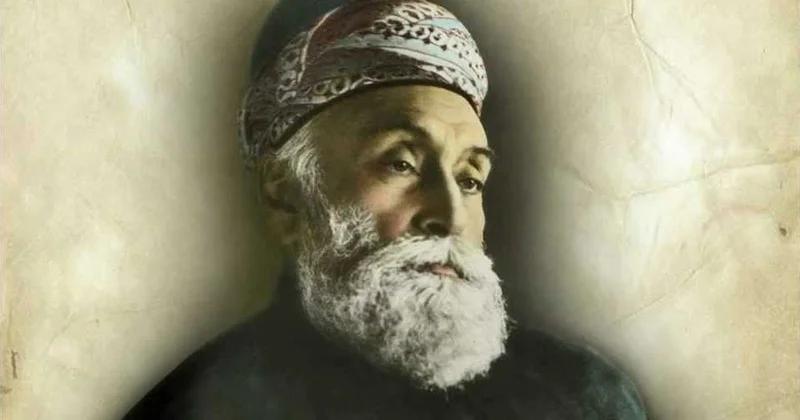
Early in 1864, a young Parsi merchant from Bombay named Jamsetji Nusserwanji Tata set sail for England, carrying a set of bills of exchange backed by a consignment of Indian cotton. By the time the ship docked in Liverpool, the price of cotton had fallen so quickly that the bills became worthless. Un- expectedly forced to manage the liquidation of his father’s firm, Jamsetji took time to observe the workings of the textile mills in Lancashire, the heartland of the Industrial Revolution. When he returned to India a few months later, he found Bombay in the grip of a disastrous financial crisis. The whole of the city, Jamsetji’s first biographer later recalled, “was sitting on the stool of repentance, with sackcloth and ashes; while the disconsolate creditors held Dharma at the door of their ruined debtors.” Out of this chastening experience arose India’s own Industrial Revolution, more modest and limited in scope than its British counterpart but all the more impressive for the constraints it had to overcome.
The outbreak of the Civil War in the United States in 1861 launched a speculative frenzy among Indian merchants eager to supply Britain’s cotton needs following the naval blockade of the American South. As the tide turned in favour of the Union around 1864 and shipments resumed, the ensuing price col- lapse devastated not only Bombay but also Liverpool, Egypt, and other far-flung outposts of the global “empire of cotton.” In response, many Parsi and Gujarati merchants diversified into manufacture. Within two de cades, the skyline of Bombay was dotted with the smokestacks of cotton mills owned and operated by Indians. Few as they were in number, India’s industrialists emerged from the colonial port city, posing a challenge to long- standing Eurocentric assumptions about the origins of modern capitalism. Max Weber’s General Economic History (1923) firmly held that “capitalism in the west was born in the industrial cities of the interior, not in the cities which were centres of sea trade.” Parsis typified the religious minority exempt from ritual restrictions of caste and guild systems, much like European Jews. But they were not yet ready to make the full leap from commerce to the rational organisation of production Weber regarded as fundamental to modern capitalism.
No single figure was more closely identified with that leap than Jamsetji Tata. Building on substantial but fickle fortunes made in the cotton and opium trades, his firm led the way in the industrialisation of India: first in textiles, then in more capital-intensive and technologically complex sectors such as iron and steel and hydroelectric power. Con temporary admirers saw him as em- bodying the spirit of swadeshi or self- sufficiency “long before Swadeshism was boomed in Bengal” as a self-consciously nationalist movement at the turn of the twentieth century. Instead of boycotts and bonfires of imported cloth, hallmarks of the movement, Jamsetji Tata struck a blow for India’s freedom through sheer entrepreneurial ambition. Yet in many ways, he was an imperfect standard-bearer for the nationalist cause.
What did it mean to be swadeshi in late colonial India? The term encompassed multiple meanings, holding together the economic and the political in uneasy tension. The most ostensibly modern section of Indian big business, led by the Tata family, turned out to be the least overtly nationalist. Their attitude to the major campaigns led by the Indian National Congress in the 1920s and 1930s, which involved the mass mobilisation of workers and peas- ants, swung between cautious engagement and open hostility. Economically, being swadeshi meant producing goods for home consumption and, as far as possible, training Indian technical staff to assume responsibilities previously held by foreigners. The Tatas made slow progress on this count, employing American, British, and other European professional managers to a greater extent than their rivals. The markets for their products, from cotton cloth to pig iron and finished steel, were truly global. A clear shift toward domestic markets did not take place until the mid-1930s, when Tata joined other big business houses in pursuing a rapprochement with the Indian National Congress and acting in concert against foreign business interests. In the wake of another unexpected financial crisis, they adopted a new strategy of internal consolidation at the expense of maintaining financial and trading connections beyond India’s shores. Tata became swadeshi belatedly and contingently, not as a foregone conclusion.
The Tatas’ ambivalence toward nationalism may be explained by the technical complexity and high capital requirements of their pioneering ventures, which required a broader outlook from the start. Nationalist swadeshi rhetoric, which drew increasingly strict boundaries between the nation and the world, has obscured the persistence of commercial and financial connections beyond the British Empire, particularly with China, Japan, and the United States. Historians have focused their attention on shifts in tariff policy in London and Delhi, or on different factional business associations in Bombay and Calcutta and their relationship with expatriate British managing agencies. The impact of other players who forged global connections, such as trading companies, Marwari intermediaries, and foreign technical experts, has been neglected or imperfectly glimpsed.
The post-Civil War crash and the transition to industry in the late 1860s halted Tata’s involvement in trade only temporarily. Two little-known subsidiary companies, RD Tata & Co. in Shanghai, Kobe, and Paris, and Tata Limited in London, made possible the firm’s expansion and diversification. Legally separate from the parent firm in Bombay and acting in a semi- autonomous capacity, these companies facilitated the export of cotton and pig iron, remitted profits, and helped finance large, capital- hungry enterprises in India such as the iron and steel plant and the hydroelectric power companies. Maintaining a widely dispersed network of agents and go-betweens, many of them family members, enabled Tata to overcome the constraints of a colonial economy even as it increased exposure to volatile global markets. Vulnerable to speculation and fraud, Tata & Co and Tata Limited were ultimately costly failures, which restricted the scope of the parent firm’s activities beyond India.
Since Tata and other urban capitalists could never establish full control over the movement of goods “from field to factory or port,” they depended on Marwari intermediaries to connect them with inland markets. Shrewd merchants and bankers originating in the deserts of Rajasthan, Marwaris controlled key entrepôts throughout central and northern India and grew rich through complex futures trading in commodities. Colonial officials and business rivals alike regarded them with suspicion. Marwaris’ secretive, family-based business culture was seen as governed by custom rather than law, thereby distorting “true” market practices. Yet, even firms organised on the joint- stock principle and trading on the nascent Bombay share market resorted “to the bazaar and to social networks” when necessary, frequently engaging in speculative behaviour.
Behind the scenes, Marwaris permeated the Tata organisation as selling agents, partners, and shareholders. Their importance only came to light during moments of financial crisis, when account books were thrown open and reckonings had to be made. As Tata sought to cultivate a reputation for fiscal probity and capture internal markets for themselves, Marwari intermediaries were gradually displaced.
The final piece of the puzzle of Tata’s remarkable rise to prominence was a continual recourse to American expertise and technology. Early nationalists pursued closer relationships between fledgling Indian enterprises and the United States as a means of countering British domination. From World War I to the Great Depression, the American connection allowed the Tatas to circumvent restrictive colonial state policies and save troubled companies from mismanagement and bankruptcy. In turn, Tata served as a key point of entry for American influence in India, which grew more intense during World War II as in dependence neared. But India was not brought into the fold of an informal “American technological empire” without resistance. Political controversies swirling around the Tatas’ reliance on foreign capital and expertise exposed the contradictions between lofty swadeshi aspirations and the harsh constraints of industrialisation in a colonial setting.
Excerpted with permission from Tata: The Global Corporation That Built Indian Capitalism, Mircea Raianu, Harvard University Press.
We welcome your comments at letters@scroll.in.