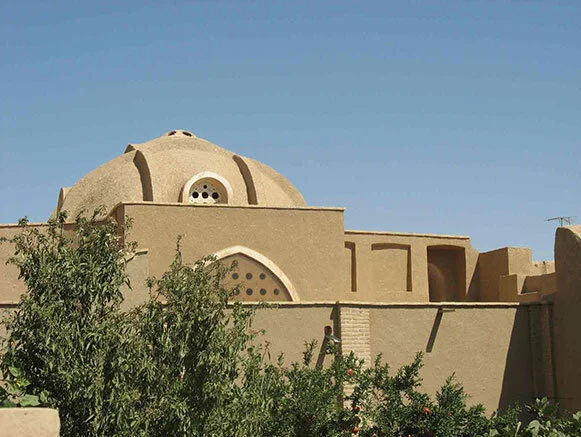
Mulla Sadra house in Qom to become hub for astronomy and philosophy tourism
TEHRAN – Local officials plan to turn the historic house of philosopher Mulla Sadra in Kahak, Qom province, into a hub for astronomy and philosophy tourism, under a cooperation agreement aimed at promoting the city’s cultural attractions and strengthening its tourism economy.
Behnam Ahmadi-Farsani, director general of Cultural Heritage, Tourism and Handicrafts of Qom province, announced the plan on Wednesday, following the signing of a memorandum of understanding among the provincial department, Kahak governorate and Kahak municipality.
The agreement is intended to promote Mulla Sadra house and develop the value chain of religious, literary and philosophical tourism in the city, according to the provincial cultural heritage department, Miras Aria reported.
Under the agreement, the historic house and its associated structures will be used more extensively for astronomy-related tourism and cultural and artistic events.
Ahmadi-Farsani said astronomy-related equipment has been installed at the centuries-old house and that the property will be made available to a knowledge-based company as a venue for astronomy and philosophy tourism events.
The official added that the initiative would also seek to connect tourism, handicrafts and cultural events. Plans include establishing a handicrafts bazaar at the historic house and organizing philosophical tourism events focusing on Mulla Sadra and his intellectual legacy.
The events will be incorporated into Qom province’s tourism calendar, which has been approved by the provincial department’s technical council, he said.
“The aim is to introduce the capacities of Kahak to pilgrims and tourism enthusiasts,” Ahmadi-Farsani said, adding that the province hoped to better promote Kahak’s cultural heritage, tourism and handicrafts potential.
Located in Kahak, about 30 kilometers from Qom, the provincial capital, the house is associated with Sadr al-Din Muhammad Shirazi, better known as Mulla Sadra, who lived in Kahak during a period of withdrawal from public life. Sources describing the monument identify it as a Safavid-era building constructed from adobe, mud mortar and timber. Its plan follows a cross-shaped layout, with a central domed space and surrounding rooms.
The house is an Iranian national heritage property registered under No. 1821. Its architecture includes a domed roof and simple plasterwork, while historical descriptions of the building note the use of raw mud brick, clay mortar and wooden structural elements.
The proposed tourism program would add a contemporary cultural and educational function to the historic property while retaining its role as a monument associated with one of Iran’s most influential philosophers.
Mulla Sadra was born in Shiraz around 1571–1572 and died in Basra around 1635–1640, although scholarly sources differ on the exact year of his death. The Stanford Encyclopedia of Philosophy gives his dates as approximately 1571–1636 and describes him as one of the most significant Islamic philosophers after Avicenna.
He developed al-hikmah al-muta‘aliyah, commonly translated as the “Transcendent Theosophy” or “Transcendent Wisdom,” a philosophical approach that brought together elements of Islamic philosophy, theology and mysticism. His work drew on earlier traditions including Avicennian philosophy, Illuminationism and Islamic mystical thought.
AM