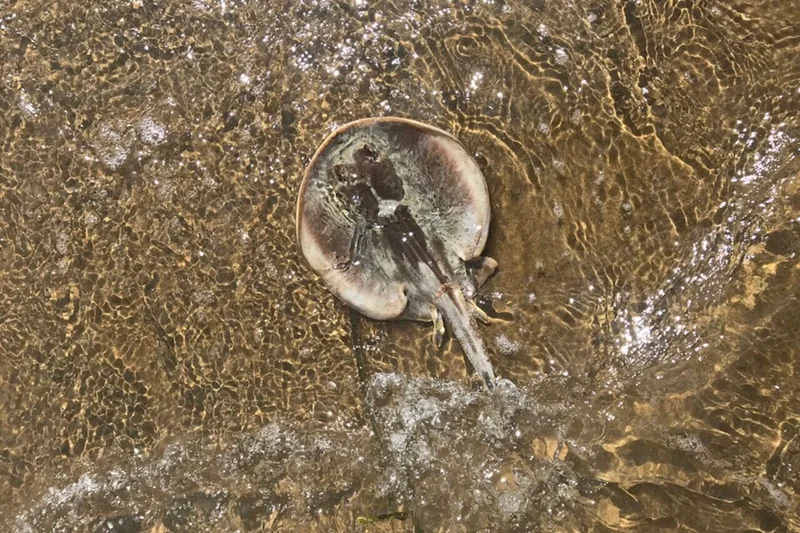
Just when you thought it was safe to go back in the water, tropical stingrays are now swarming Californiaâs beachesâviolently impaling (i.e., poking) summer tourists at nearly double the rate of attacks (defensive strikes) recorded by this time last year (in select locations). In all candor, itâs still fairly safe, albeit with an elevated risk of painful and annoying injury or potentially a worse allergic reaction of the exact kind that could sour oneâs vacation day.
Marine biologists say this summerâs record-setting, El Niño-fueled, marine heatwave has drawn more round stingrays (Urobatis halleri) up the California coast than usual, overcrowding the shorelineâs warm shallow waters. These stingrays, which are naturally camouflaged to blend in with the surrounding sand, have reportedly stung beachgoers over 3,100 times at Bolsa Chica and Huntington State beaches, according to lifeguard data cited by the Associated Press. Thatâs twice the number of attacks recorded in 2025. And, along San Diegoâs beaches, according to that same data, over 900 further stingray attacks were documented in the first six months of 2026: more than these beaches have reported in the first half of any of the past five years.
You could be forgiven for thinking of it as a premeditated stingray invasion, but thatâs not quite whatâs happening, as marine biologist Chris Lowe, director of the Shark Lab at California State University, Long Beach (CSULB), explained it to the wire service.
âTheyâre really a subtropical species that is thriving at the end of its range because of climate change,â Lowe told the AP. âThere can be so many that they actually carpet the bottom, like you canât see sand.â
What to do if you get stung
Californiaâs state parks service has solid advice for both avoiding getting stung by a stingray and treating a wound in the unfortunate event that you or someone you know has been stung.
The recommended best practice to avoid getting stung, as goofy as this sounds, is to avoid stepping or clomping around through shallow water at these beaches, instead sliding your feet through the top layers of sand in a move known as the âstingray shuffle.â
Things get a little more complicated if you are actually stung. The parks service advises flushing out the wound with hot water for âat least 30 to 90 minutesâ at a temperature between 104 and 113 degrees Fahrenheit (40 and 45 degrees Celsius). Stingray venom is a heat-labile toxin, which means it will break down into more inert compounds under this sustained mild temperature increase. That said, all of this is moot if the stung individual is showing signs of an allergic reactionâlike trouble breathing, wheezing, nausea, or hivesâor if the stingray attack looks like it is leading to an infection. In those cases, itâs time to seek professional medical attention.
âHospital treatment will also start with hot water, but the wound care will be more in depth,â according to a pamphlet by the Los Angeles Fire Department. âX-ray images will be taken, and all remnants of the [stingray stingerâs] spine and any sand or dirt must be removed.â
Ray tracing
Jokey Jaws references aside, stingrays are actually closely related to sharks, like their fellow batoid, the guitarfish, according to Loweâs Shark Lab at CSULB. Despite the troublesome influx, the labâs researchers note that stingrays do serve Californiaâs beach ecosystem, aerating sediment via their bottom-feeding foraging for small clams, marine worms, and other creatures.
According to Shark Lab, climate change has only been one factor in the increasing number of stingray incidents across the state. âThe historic depletion of large predators of round stingrays (sharks, giant sea bass, sea lions) has resulted in a population left largely unchecked resulting in population increases over the last 50 years,â Loweâs team notes on its stingray fact page.
Lifeguards currently treat as many as 10,000 stingray injuries in Southern California in a single year, according to Lowe. So, watch where youâre stepping, California!