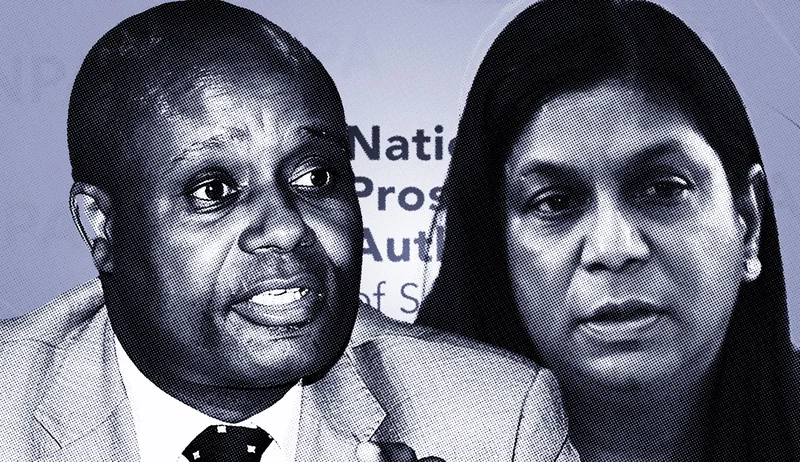
Two days after KwaZulu-Natal Police Commissioner Nhlanhla Mkhwanazi held a press conference last year and warned that a cartel had infiltrated the state, Investigating Directorate Against Corruption (Idac) head Andrea Johnson called a meeting with some staffers.
Idac prosecutor Drushantha Ramsamy was among those present at the meeting and testified about it on Friday, 14 August 2026, at the Madlanga Commission of Inquiry.
Ramsamy said it had emerged that Johnson wanted a snapshot analysis to check for possible links between the electronic communication devices of organised crime accused Vusimuzi âCatâ Matlala and other individuals, including Gauteng South Director of Public Prosecutions Andrew Chauke.
âVery, very strangeâ
According to Ramsamyâs testimony, Johnson wanted this done because the matter had been referred to her by the National Director of Public Prosecutions at the time, Shamila Batohi.
Ramsamy said: âOnce again, I found the timing very, very strange.â
The request came shortly before Chauke was suspended and in the run-up to President Cyril Ramaphosaâs announcement of a commission of inquiry into Chaukeâs fitness to hold office, set up at Batohiâs behest.
Chauke was later cleared in that inquiry, from which Batohi had controversially withdrawn, citing âhostilityâ.
Ramsamyâs testimony at the Madlanga Commission on Friday, which she concluded after several intermittent days on the witness stand, now raises more questions about Batohiâs intentions regarding Chauke.
It also adds to controversies piling up involving Johnson.
Johson recently resigned as Idac boss after starting her testimony at the Madlanga Commission, which may still call her back to the witness stand.
Mkhwanaziâs moment
Ramsamy, resuming her testimony on Friday, referred to the meeting that Johnson had called on 8 July 2025.
This was two days after Mkhwanazi held the press conference during which he made staggering accusations that a drug cartel had infiltrated South Africaâs criminal justice system, politics and private security
Among those he named as being part of this was organised crime accused Vusimuzi âCatâ Matlala, who now faces various criminal charges and allegations of having corrupt relationships with certain police officers.
Mkhwanaziâs accusations resulted in Ramaphosa ordering the creation of the Madlanga Commission and they continue to have an impact on the law enforcement arena.
In the aftermath, police minister Senzo Mchunu was placed on special leave and Shadrack Sibiya, the deputy national commissioner for crime detection, was suspended.
Mkhwanazi also subsequently alleged that a rogue element running was through Idac, which Johnson had initially denied.
But now, based on testimony including Ramsamyâs, Mkhwanaziâs assertion appears to be true.
After Mkhwanaziâs bombshell accusations, Idac arrested several police officers, including national police commissioner Fannie Masemola.
The intent behind some of these arrests is now being scrutinised, given mounting accusations against Johnson, and because it appears Idac may have targeted certain police officers for untoward reasons.
âMost distressingâ and âvery concerningâ
Ramsamy testified on Friday that in the meeting with Johnson two days after Mkhwanaziâs press conference, it emerged that Johnson wanted an investigation into whether Matlalaâs electronic communication devices could be linked to several individuals.
Those individuals included Mchunu and his predecessor Bheki Cele, Sibiya, Masemola and his daughter, and Chauke.
Based on Mkhwanaziâs press conference and what has emerged since then, an investigation into potential links connecting Matlala to Mchunu, Cele and Sibiya seemed justified.
Ramsamy on Friday testified that âGeneral Masemolaâs name seemed misplaced to meâ.
She added that what âwas most distressing to meâ was the inclusion of Masemolaâs daughter on the list of those whose devices were to be investigated for links to Matlalaâs devices.
Ramsamy said an element she found âvery concerningâ was how Johnson and Batohi had got hold of information that could potentially link Chauke to Matlalaâs devices.
This was never explained to those present at the 8 July 2025 meeting with Johnson.
âJohnson compromised Idacâs integrityâ
According to Ramsamy, she had found the timing of the meeting and the requested investigations into links to Matlala strange because about two months later Ramaphosa had announced the Nkabinde Inquiry into Chaukeâs fitness to hold office.
This was done on Batohiâs insistence.
Batohi retired at the start of the year, and Chauke was subsequently cleared.
Last month, the Presidency issued a statement saying: âIn view of these and other findings that exonerate Adv Chauke, President Ramaphosa is satisfied that there is no basis upon which to conclude that Adv Chauke is unfit to hold office as Director of Public Prosecutions.â
This, together with Ramsamyâs testimony on Friday, raises more questions about Batohiâs actions around Chauke and what she and Johnson may have got up to.
Ramsamy, wrapping up her time on the witness stand, said: âIn conclusion, let me say that I have had to strike a balance between the good Idac and the bad Idac as General Mkhwanazi called it.
âThere are very good people who work at Idac and who do amazing work in the pursuit of justice. I hope that we will not all be painted with the same tainted brush as Advocate Johnson and [â¦certain] investigators that she allowed to compromise the integrity of Idac as an institution.â DM