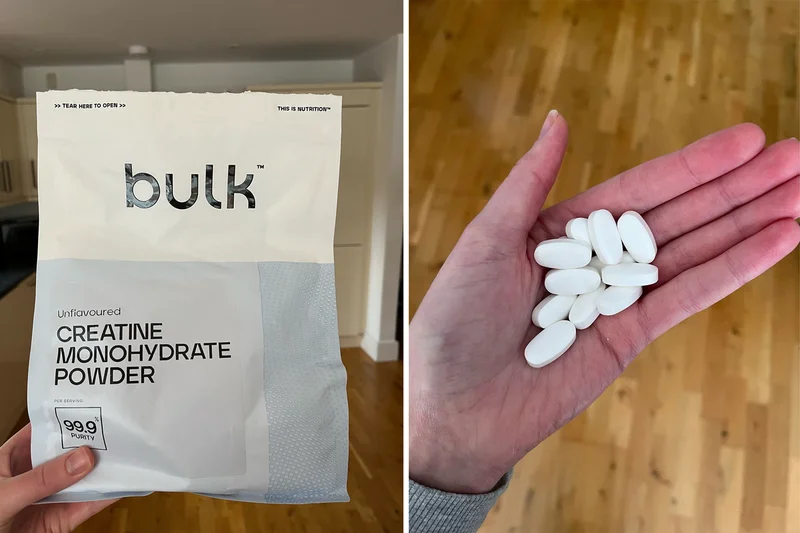
The best creatine supplements are now one of the most popular, widely used and researched sports nutrition supplements. As it supplies energy to your muscles, athletes, bodybuilders, and everyday gym-goers take creatine for its impact on strength and recovery, while there’s also research that shows its effects on brain health and healthy ageing.
The downside that many are bound to have experienced, including myself after testing more than a dozen formulas, is that creatine doesn’t always dissolve well in water, leading to a lump of powder at the bottom of the glass. Enter creatine pills, a solution to the off-putting texture of creatine powder.
But how do they compare? I spoke to registered nutritionist and author of The Complete Guide to Sports Nutrition Anita Bean to get the low down.
Read more: Best protein powders, tested
How do creatine powder and creatine pills compare?
“Creatine powder and creatine pills contain the same active ingredient, creatine monohydrate, so they work in exactly the same way,” Bean says. “Creatine pills are simply creatine powder compressed into a pill. Once in your digestive system both break down and are absorbed in the same way.”
It's in the intake where they differ: “The main difference is convenience: powder needs mixing into a drink, while pills are easier to take on the go.”
After testing countless creatine formulas, I’d add you should note that creatine pills can contain other ingredients like bulking agents and caking agents to make them into a tablet form. But according to Bean, “these are generally considered safe in the amounts used, so for most people the choice really comes down to cost and convenience rather than health”. If you’re after a simple ingredient list, often creatine powder is a better bet.
Creatine powder vs pills: what's more effective?
“Neither is more effective than the other,” Bean explains. “As long as you're taking the same daily dose of creatine monohydrate – around 3–5 g – you'll get the same muscle building and performance benefits, regardless of whether it comes as a powder or a pill”.
Creatine powder vs pills: what are the pros and cons?
“Powder is usually much better value and allows a more flexible dose, but you need to mix it into a drink (e.g. water, smoothie or protein shake),” she explains. But if you’re often on the go, “mixing up a drink isn’t always practical”.
“Pills are more convenient, especially when travelling, but they're generally more expensive.” Bean notes that: “Most pills provide only 1g of creatine, so you may need to take several to reach the recommended dose.”
Read more: Best clear whey protein powders, tested
Creatine powder vs pills: are there any side effects?
Bean clarifies: “Creatine is one of the most researched sports supplements and is considered safe for healthy adults when taken at recommended doses, although some people may experience mild stomach discomfort if they take too much at once”.
Best creatine pills and powder
After testing dozens of creatine supplements, my top buy was the Myprotein impact creatine. It’s affordable, dissolves well in water, third-party tested and holds the ‘Informed Choice’ badge, meaning that it’s been tested for banned substances and meets strict manufacturing standards.
In my Myprotein creatine powder review I noted: “The packaging is pretty utilitarian and the scoop is small, so it's susceptible to becoming buried. But in terms of quality and testing scrutiny, this promises bang for your buck.”
The creatine pills from the same brand, Myprotein, also impressed me. While I tend to prefer creatine powder for their one ingredient list, these pills are a low-faff way of supplementing.
In my Myprotein creatine tablets review I said: “The tablets are fairly large, which might put some off, though I found them easy to take. For those unfazed, the pill form can be a convenient alternative to powder on the go. I can imagine popping some in a container to take before my workout or while travelling.”
Keep in mind that to get 3g of creatine monohydrate (the recommended daily dose), you need to take three tablets, which might be a lot to swallow alongside other supplements.
Meet the expert
- Anita Bean is a registered nutritionist (AfN-accredited); author of more than 30 books on nutrition and fitness, including The Complete Guide to Sports Nutrition; health writer and former British Bodybuilding Champion. In her work, she aims to help athletes and active people to achieve their fitness goals through evidence-based nutrition.
Read more: These are healthiest meal deals from supermarkets