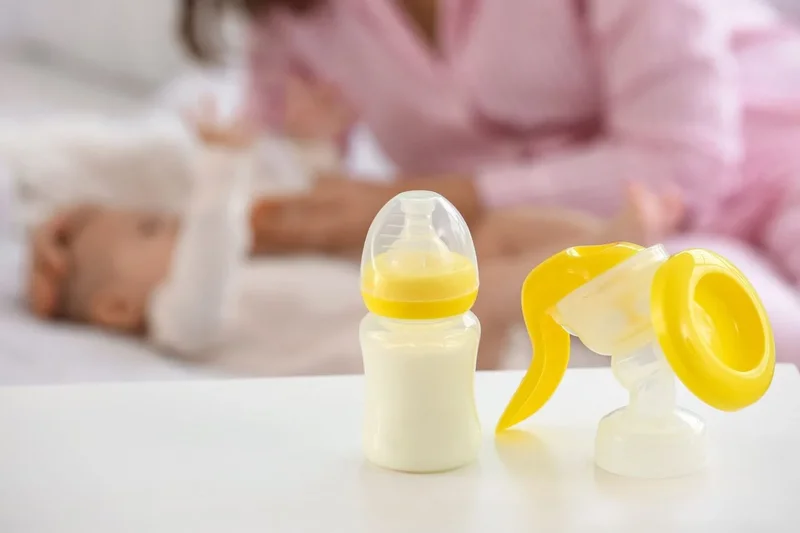
A California woman’s gesture of donating her breast milk could have had serious and potentially life-changing consequences.
In a recent case report, local health officials detailed how the woman tested positive for HIV after she had started donating her raw breast milk through informal social media groups. Amazingly, though at least one sample of milk tested positive for the virus, none of the children identified as recipients contracted the infection. Still, the incident illustrates the added dangers of unregulated breast milk donation, the authors say.
“Patient education regarding the health risks associated with unpasteurized breast milk obtained through social media groups or directly from another person can help mitigate potential exposures,” they wrote in their paper, published Thursday in the Morbidity and Mortality Weekly Report, the flagship journal of the Centers for Disease Control and Prevention.
A close call
HIV is spread through contact with certain bodily fluids, which can include breast milk if viral levels are sufficiently high enough. Though antiretroviral treatments today can virtually eliminate the risk of any transmission once the infection is well-controlled, an unknowingly infected woman could still transmit it to others via her breast milk.
According to the report, the woman was a mother to a two-year-old daughter and had recently gotten pregnant. She had tested negative for HIV during a prenatal screening in 2023, but during her latest prenatal screening on October 10, 2025, her test came back positive. She revealed that she was currently breastfeeding her daughter as well as donating her milk through two social media groups. A week later, officials with the County of Santa Clara Public Health Department (SCCPHD) were notified about the case and began to investigate the potential risk of further spread.
This investigation didn’t go smoothly at first. The officials had difficulty being accepted into the private groups. And even once accepted, the administrators reportedly refused to allow any general messages from the investigators to be posted. Through a combination of interviewing the woman and combing through the posts offering to share her breast milk between May 2025 and October 2025, they identified five potentially exposed infants. They then contacted the families through direct social media messages or through other contact information obtained from medical records or other public databases. While the officials did present themselves as working for the health department, at least some of the families were initially skeptical about the legitimacy of their messages, however.
One mother had never used the donated breast milk, keeping it frozen instead. This sample did test positive for HIV, but seemingly at lower viral levels than usually required for transmission; still, it’s unknown whether it could have been infectious. The investigators couldn’t definitively confirm whether any of the other four infants had consumed the donated breast milk, but all tested negative for infection.
The mother herself was placed on antiretroviral treatment in late October. However, she also disclosed that she was remarkably still breastfeeding her daughter following the positive test. She was advised to stop breastfeeding, and the daughter was given postexposure prophylaxis; fortunately, the child avoided infection.
The takeaway
There are many health benefits linked to breast milk, though infant formula remains a valuable alternative. Still, many mothers unable to breastfeed themselves may want to use donated breast milk instead.
The officials note there are accredited milk banks that can ensure the safety of donated milk. It’s ideally through these places that families should be looking to obtain their supply, not unregulated social media groups or individual donors, the authors say. And at the very least, parents should be aware of the increased risks they’re exposing their children to by using such groups.
“Women unable to produce sufficient breast milk can safely obtain pasteurized donor human milk through these milk banks, which screen donors for infectious diseases and medication use and pasteurize the breast milk, providing a safe alternative for parents who want their children to be fed with breast milk,” they wrote.